Finance · Markets
Hong Kong Pension Lobby Pushes ETF Access for 4.8 Million Workers
Business chamber calls for regulatory shift to expand investment options in city's mandatory retirement system

KEY TAKEAWAYS
- ·The Chamber of Hong Kong Listed Companies is urging the pension regulator to expand ETF access for 4.8 million Mandatory Provident Fund members.
- ·Proponents argue exchange-traded funds offer lower management fees and stable returns compared to traditional MPF investment options.
- ·Any regulatory shift would require approval from the MPF Schemes Authority and could channel billions into Hong Kong's capital markets.
Pressure Mounts on Regulator
The Chamber of Hong Kong Listed Companies is pressing the city's pension watchdog to loosen restrictions that currently limit how Mandatory Provident Fund members can access exchange-traded funds. The proposal, if adopted, would affect investment choices for 4.8 million workers enrolled in the compulsory retirement system.
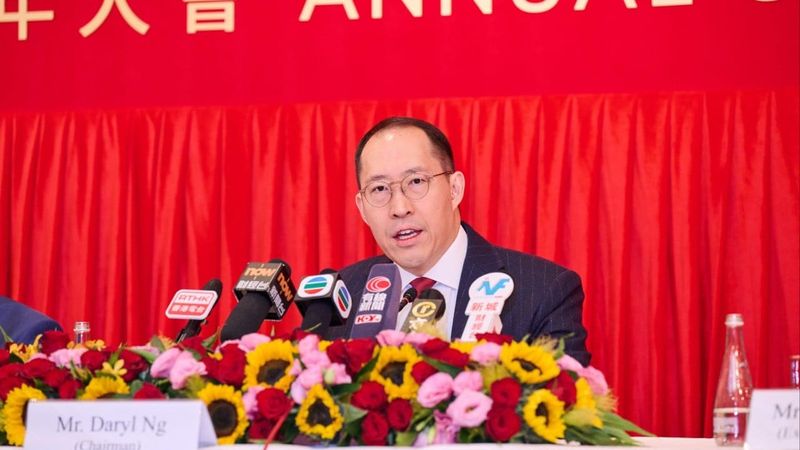
Chan Ka-keung, chairman of the chamber, laid out the case during a media briefing last week. He argued that ETFs deliver consistent performance while imposing management charges well below those of traditional MPF options. Expanding access, he said, would simultaneously widen the menu available to savers and inject fresh liquidity into Hong Kong's capital markets.
Cost and Choice at Center of Debate
The chamber's intervention comes as fee levels in the MPF system remain a long-running point of friction. Many retail investment products carry expense ratios that erode returns over the multi-decade horizon of retirement savings. Exchange-traded funds, by contrast, typically charge a fraction of the fees levied by actively managed unit trusts or insurance-linked schemes.
Chan's argument hinges on a dual benefit. For individual members, lower costs compound into materially larger nest eggs by the time they retire. For Hong Kong's financial ecosystem, a regulatory green light would channel billions of dollars of long-term capital into locally listed ETF products, deepening trading volumes and reinforcing the city's claim as a regional fund hub.
Current rules tightly govern which securities MPF trustees can include in their lineups. While some ETF exposure exists within certain funds, direct member selection of individual ETF products remains constrained. The chamber is advocating for a framework that treats ETFs on par with other approved instruments, subject to appropriate risk disclosures and diversification guardrails.
Regional Context and Competitive Pressure
Hong Kong is not alone in grappling with pension-system design. Across Asia, regulators in Singapore, Tokyo, and Seoul have progressively liberalized retirement account structures, allowing savers to self-direct portions of their portfolios into equities, bonds, and passive index products. That trend has spurred competition among fund managers and driven down fees, to the benefit of workers.
The MPF, established in 2000, has accumulated more than HKD 1.1 trillion in assets, making it one of the largest pools of retirement capital in the region. Yet critics have long complained that returns lag behind inflation and regional benchmarks, in part because of fee drag. Industry observers note that even modest reductions in annual charges can translate into tens of thousands of dollars in additional retirement income over a 40-year career.
For Hong Kong's asset-management industry, the stakes are equally high. The city has positioned itself as a gateway for mainland Chinese capital and a listing venue for international fund products. Expanding ETF uptake within the MPF would create a captive domestic investor base, stabilizing flows and underpinning the business case for new product launches.
What Comes Next
The chamber's proposal now sits with the Mandatory Provident Fund Schemes Authority, the statutory body responsible for supervision and rule-making. Any policy shift would require consultation with trustees, consumer advocates, and the broader financial-services sector. Previous reform efforts have moved slowly, reflecting the regulator's cautious approach to safeguarding retirement savings.
Still, the political and economic backdrop may favor change. Hong Kong's government has made capital-market development a policy priority, seeking to reverse a multi-year slide in IPO volumes and trading activity. Unlocking MPF assets for ETF investment would align with that agenda, offering a domestic demand anchor at a time when foreign inflows remain uneven.
Whether the regulator will act remains uncertain. But the chamber's public campaign signals growing impatience among market participants who see low-cost passive products as both a fiduciary imperative and a competitive necessity in a region where pension reform is accelerating.
RELATED STORIES

China's Social Security Fund Doubles Offshore Holdings to $86 Billion
Jun-ho Seo · 3 min

Shein Drops 4% in Hong Kong Debut as Tariff Pressure Weighs on Valuation
Priyanka V. Rao · 4 min
Sino Land Posts 14% Profit Increase Despite Core Business Headwinds
Cheng Wei-Lun · 3 min

Shein Stumbles in Hong Kong Debut After Years of IPO Delays
Cheng Wei-Lun · 3 min
Spot something wrong? Email editor@briefasia.com. We log every correction publicly.