Asia · Politics
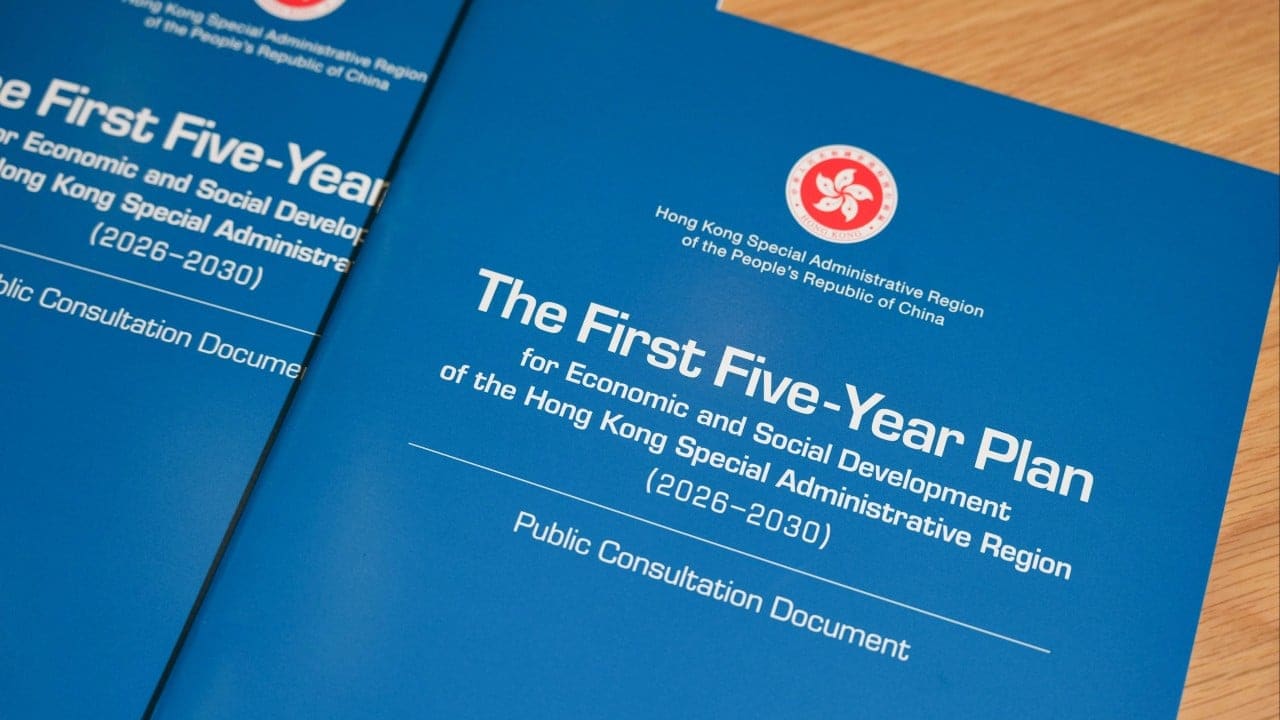
Hong Kong Launches Public Input Round on First National Five-Year Blueprint
Consultation phase opens as city seeks to embed growth targets within broader mainland development framework through 2030
KEY TAKEAWAYS
- ·Hong Kong has opened public consultations on its first five-year economic plan, designed to align the city's growth with China's national development strategy through 2030.
- ·The plan is expected to prioritize financial services, technology innovation, and logistics, with measurable targets for sectors including offshore renminbi clearing and venture capital deployment.
- ·Implementation will test Hong Kong's ability to balance integration with Beijing's centrally planned economy while maintaining its appeal to international investors and capital markets.
A Planning Process Arrives in Hong Kong
Hong Kong has begun gathering public input for what will be its first formal five-year economic plan, a document intended to map the city's development trajectory alongside mainland China's national strategy through the end of the decade. The consultation period, launched this month, invites feedback from residents, businesses, and sector organizations on how the city should position itself within the broader national economy.
The exercise marks a departure from Hong Kong's traditionally laissez-faire approach to economic planning. For decades the city operated without centralized industrial policy, relying instead on market forces and a regulatory framework designed to attract capital. The introduction of a structured, multi-year planning cycle represents a shift toward greater coordination with Beijing's economic apparatus, which has employed five-year plans as its core policy instrument since the 1950s.
According to officials, the plan will identify specific sectors where Hong Kong can contribute to national priorities while leveraging the city's existing strengths in finance, trade, and professional services. The consultation document asks respondents to weigh in on infrastructure investments, talent development programs, and cross-border integration measures that could deepen economic ties with the Greater Bay Area, the Pearl River Delta manufacturing belt that includes Shenzhen, Guangzhou, and Macau.
Alignment with National Objectives
The timing of the consultation aligns with the final years of China's 14th Five-Year Plan, which runs through 2025, and the preparatory phase for the 15th iteration. Beijing's current plan emphasizes self-reliance in critical technologies, expansion of domestic consumption, and tighter integration of Hong Kong and Macau into national development frameworks. Hong Kong's own plan is expected to echo these themes, translating them into actionable goals for the city's unique position as an international financial hub operating under the "one country, two systems" framework.
Regional governments across Asia have long used multi-year planning cycles to steer investment and coordinate public-private partnerships. Singapore's economic strategies, updated every few years, have guided the city-state's transition from manufacturing to high-value services. South Korea's five-year plans helped orchestrate its industrial rise in the 1970s and 1980s, though the approach has since evolved into more flexible frameworks. Japan's regional development plans similarly set infrastructure and innovation priorities across prefectures.
What distinguishes Hong Kong's effort is the explicit goal of meshing with a much larger, centrally planned economy. The city's plan must reconcile its role as a gateway for international capital with Beijing's push for technological autonomy and reduced dependence on Western markets. This balancing act will test whether Hong Kong can maintain its appeal to global investors while meeting expectations from the central government.
Sectors in Focus
Early indications suggest the plan will prioritize financial services, technology research, and logistics. Hong Kong remains the largest offshore renminbi clearing center and a preferred listing venue for mainland companies seeking international capital. The city processed over USD 800 billion in stock market turnover in 2025, according to Hong Kong Exchanges and Clearing, and continues to attract asset managers looking for exposure to Chinese equities and bonds.
Technology and innovation have emerged as policy priorities in recent years, with the government allocating billions of Hong Kong dollars to research parks, university partnerships, and startup incubators. The five-year plan is expected to outline targets for patent filings, venture capital deployment, and collaboration with Shenzhen's tech sector, which has become a global hub for hardware manufacturing and artificial intelligence development.
Logistics and trade facilitation also figure prominently. Hong Kong's container port, once the world's busiest, has ceded volume to Shenzhen and Shanghai but retains advantages in high-value cargo and transshipment. The plan may propose upgrades to port infrastructure, streamlined customs procedures for cross-border e-commerce, and integration with the Belt and Road Initiative, Beijing's global infrastructure program.
Public Engagement and Implementation
The consultation phase is structured to solicit input from multiple stakeholder groups. Business chambers representing finance, shipping, and retail sectors have been invited to submit position papers. Professional associations for accountants, lawyers, and engineers are expected to weigh in on regulatory harmonization and credential recognition across the Greater Bay Area. Community organizations and labor unions have also been asked to contribute views on housing, education, and social services that would support the plan's economic goals.
Hong Kong has historically struggled to build consensus on long-term policy, with political divisions and competing interest groups often stalling major initiatives. The success of the five-year plan will depend in part on whether the consultation process generates genuine buy-in or is perceived as a formality. Officials have committed to publishing a summary of feedback and explaining how public input shaped the final document, due for release later this year.
Implementation will require coordination across multiple government bureaus, each with its own budgetary authority and policy mandate. The plan is expected to include measurable targets, such as growth rates for specific industries, employment levels in priority sectors, and investment thresholds for infrastructure projects. Monitoring mechanisms will track progress annually, with adjustments made as economic conditions shift.
Regional Implications
Hong Kong's move toward formalized planning reflects a broader trend among Asian financial centers seeking to define their roles in an increasingly multipolar economic landscape. Singapore has doubled down on green finance and digital assets, positioning itself as a hub for sustainable investment and fintech innovation. Tokyo has pursued financial deregulation to attract asset management firms relocating from Hong Kong, while Seoul has invested heavily in semiconductor research and battery technology to anchor its manufacturing base.
For Hong Kong, the challenge lies in articulating a value proposition that neither duplicates what mainland cities offer nor alienates international partners wary of Beijing's influence. The five-year plan will serve as a signal to both audiences: to Beijing, it demonstrates commitment to national priorities; to global investors, it offers clarity on the city's strategic direction and regulatory environment.
The consultation period runs through the end of the third quarter, with draft proposals expected by year-end. How Hong Kong navigates the tension between local autonomy and national integration will shape not only its own economic future but also the trajectory of cross-border capital flows across Asia.
RELATED STORIES
Cathay Pacific Cargo Reports 9% Tonnage Growth in First Half
Cheng Wei-Lun · 3 min
Hong Kong and China Regulators Announce Market Integration Reforms
Cheng Wei-Lun · 3 min

Crude Surges Past $90 as Hormuz Talks Stall
Cheng Wei-Lun · 3 min
Shein Retreats From Vietnam Warehouse Bet as China Manufacturing Proves Irreplaceable
Cheng Wei-Lun · 4 min
Spot something wrong? Email editor@briefasia.com. We log every correction publicly.