Technology · AI
Hong Kong Pitches AI Infrastructure Push to Regional Investors
City's chief executive outlines five-year economic blueprint linking artificial intelligence ambitions to mainland China's national planning cycle
KEY TAKEAWAYS
- ·Hong Kong's Chief Executive announced the city's first five-year economic blueprint will align with China's 15th national plan, prioritizing AI development as part of a superconnector strategy.
- ·The policy framework aims to position Hong Kong as a bridge for AI investment and talent between mainland China and international markets, leveraging its legal system and proximity to Shenzhen manufacturing.
- ·Lee's announcement at a regional business conference drew hundreds of senior executives and policymakers, with his upcoming policy address expected to detail funding commitments and infrastructure timelines.
The Superconnector Pitch
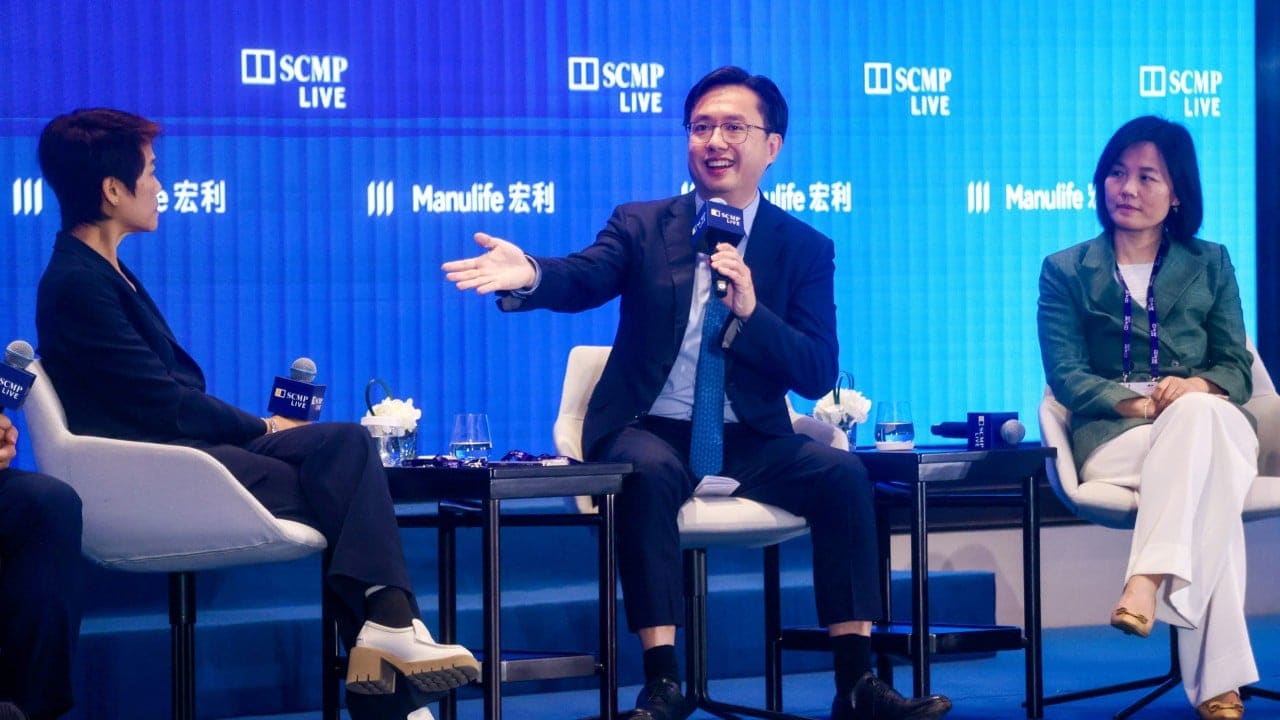
Hong Kong's government is doubling down on its role as a technology bridge between mainland China and international markets, with artificial intelligence now at the center of its economic strategy. Chief Executive John Lee Ka-chiu laid out the framework at a regional business conference on Tuesday, speaking to senior policymakers, executives, academics, and venture investors gathered in the city.
Lee confirmed that Hong Kong's first five-year economic blueprint will align with China's 15th five-year plan, with AI development embedded as a priority. The announcement signals how the city intends to leverage its position as both a Special Administrative Region of China and an international financial center with distinct legal and regulatory frameworks.
The term "superconnector" has become shorthand for Hong Kong's ambition to serve as a conduit for capital, talent, and technology flows across borders. In the AI era, that means facilitating partnerships between Chinese tech firms and overseas investors, hosting data infrastructure that straddles regulatory regimes, and attracting research talent that can operate in both Mandarin and English-speaking ecosystems.
Policy Alignment with the Mainland
Lee indicated that his upcoming policy address will detail how Hong Kong's AI strategy integrates with national priorities set in Beijing. China's 15th five-year plan, covering 2021 to 2025, emphasizes self-reliance in critical technologies, including semiconductors, quantum computing, and AI. Hong Kong's own blueprint extends that timeline and adapts those goals to the city's unique economic structure.
The synchronization reflects a broader trend of tighter economic coordination between Hong Kong and the mainland since 2020, particularly in areas where the city can offer specialized services. For AI, that includes access to international venture capital, cross-border data exchange within legal guardrails, and a regulatory sandbox environment for testing applications before scaling them across the Greater Bay Area.
The conference, which drew hundreds of attendees, underscored the city's convening power. Participants included representatives from both state-owned enterprises and private-sector startups, a mix that reflects Hong Kong's role as a neutral platform where different ownership structures and capital sources can meet.
What the Blueprint Means for Investment
Hong Kong's five-year economic plan is expected to outline specific incentives for AI companies, including tax breaks, subsidized office space in designated innovation districts, and streamlined visa processes for foreign researchers. The city has been competing with Singapore, Tokyo, and Seoul for leadership in Asia's AI investment landscape, and the blueprint aims to clarify what Hong Kong offers that rivals do not.
One advantage is proximity to Shenzhen, the mainland hub for hardware manufacturing and electronics supply chains. AI applications often require tight integration between software algorithms and custom chips or sensors, and Hong Kong's location allows companies to prototype in the city while sourcing components and manufacturing capacity across the border.
Another factor is the city's legal system, based on common law, which provides a familiar framework for international investors negotiating intellectual property rights, data ownership, and liability in AI contracts. As regulatory scrutiny of AI intensifies globally, Hong Kong is positioning itself as a jurisdiction where companies can navigate both Chinese data laws and international compliance standards.
The Conference Context
The event where Lee spoke brought together a cross-section of Asia's business and policy elite, reflecting the city's ambition to remain a first-tier venue for regional dialogue. The agenda covered economic development, technology policy, and investment trends, with AI emerging as a unifying theme across sessions.
Attendees included venture capitalists evaluating opportunities in generative AI applications, corporate executives exploring automation for supply chain management, and government officials comparing regulatory approaches. The mix of perspectives reinforced Hong Kong's self-image as a place where public and private sectors, and Chinese and international stakeholders, can find common ground.
Lee's remarks were part of a broader effort by Hong Kong's government to articulate a vision for high-quality economic growth, a phrase that echoes Beijing's emphasis on shifting from quantity-driven expansion to productivity and innovation-led development. For Hong Kong, that means moving beyond its traditional strengths in finance and logistics to capture a larger share of the technology value chain.
The Road Ahead
The upcoming policy address will be closely watched for details on funding commitments, infrastructure projects, and timelines. Key questions include how much capital the government will allocate to AI research institutes, whether Hong Kong will build or subsidize data centers capable of training large language models, and what partnerships with mainland tech giants or international firms will be formalized.
Hong Kong's ability to execute on its AI ambitions will depend on factors beyond policy. Talent acquisition remains a challenge, as the city competes with higher salaries in the United States and more favorable immigration policies in Canada and Australia. Real estate costs, already among the world's highest, can deter startups that lack venture backing. And geopolitical tensions between China and Western governments create uncertainty for companies trying to operate across both markets.
Still, the city's track record in financial services offers a template. Hong Kong has successfully maintained its role as a global capital-raising hub even as political and regulatory landscapes shifted. Whether it can replicate that resilience in technology depends on how well it translates the superconnector concept from aspiration to operational reality.
RELATED STORIES
Hong Kong Debuts Robot-Run Convenience Store in Commercial Automation Push
Cheng Wei-Lun · 3 min
CaoCao Mobility Bets on Autonomous Taxis as Revenue Tops RMB 10 Billion
Cheng Wei-Lun · 3 min

Hong Kong Wealth Hub Resilient Despite Beijing Investment Restrictions
Cheng Wei-Lun · 3 min
Hong Kong Awards First Northern Metropolis Land to Mainland-Local Consortium
Cheng Wei-Lun · 3 min
Spot something wrong? Email editor@briefasia.com. We log every correction publicly.