Technology · Dev
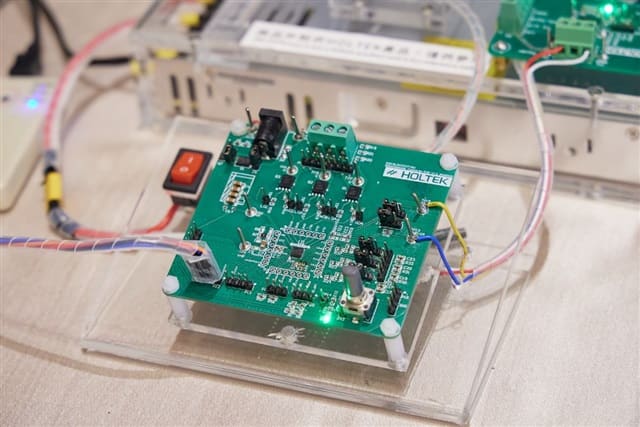
Holtek Lifts MCU Prices Up to 20% as Foundry Costs Squeeze Chip Suppliers
The Taiwan chipmaker's first company-wide price hike since the pandemic reflects rising wafer and assembly costs across Asia's semiconductor supply chain
KEY TAKEAWAYS
- ·Holtek Semiconductor raised microcontroller prices by up to 20% across its entire product portfolio, the first company-wide increase since the pandemic.
- ·The adjustment reflects sustained cost pressure from wafer fabrication and outsourced assembly providers in Taiwan's semiconductor supply chain.
- ·Other MCU suppliers in Asia may follow with their own pricing adjustments if foundry and OSAT service costs remain elevated through year-end.
First Broad Adjustment Since Pandemic
Holtek Semiconductor has implemented price increases reaching 20% across its entire microcontroller unit lineup, the first company-wide adjustment the Taiwan-based supplier has made since the COVID-19 pandemic disrupted global chip markets. The move affects the company's full portfolio of MCUs, components that serve as the control brains in everything from home appliances to industrial equipment.
The decision arrives as foundry costs and outsourced semiconductor assembly and test (OSAT) service prices continue their upward trajectory across Taiwan and broader Asia. Holtek's adjustment reflects cost pressures that have accumulated over several quarters, forcing chipmakers without their own fabrication facilities to pass expenses downstream to customers.
Cost Structure Under Pressure
Wafer fabrication prices have climbed steadily as foundries contend with higher raw material expenses, energy costs, and capacity constraints. OSAT providers, which handle the packaging and testing of finished chips, face similar dynamics. These assembly houses have raised their own rates multiple times over the past year, compressing margins for fabless and fab-lite semiconductor companies that rely on their services.
Holtek's MCU products span applications in consumer electronics, automotive systems, and industrial automation. The company competes in a segment where price sensitivity runs high, yet input cost inflation has left little room for suppliers to absorb further increases without damaging profitability.
The 20% ceiling represents the upper bound of Holtek's new pricing structure. Specific increases vary by product line and order volume, with legacy designs and high-volume components typically seeing smaller adjustments than specialized or lower-volume parts.
Regional Supply Chain Dynamics
Taiwan's position as a hub for both wafer fabrication and OSAT services means cost movements ripple quickly through the island's semiconductor ecosystem. Foundries serving the MCU market operate on thinner margins than those focused on cutting-edge logic chips, leaving less cushion when input costs rise.
Energy prices in Taiwan have edged higher, and the island's push to secure stable power supplies for its semiconductor sector has added infrastructure expenses. Water scarcity during dry seasons also periodically tightens costs for fabs, which consume vast quantities of ultrapure water in chip production.
OSAT providers face their own challenges. Labor costs in Taiwan have risen as the industry competes for skilled technicians, and investments in advanced packaging technologies require capital outlays that eventually flow into service pricing. Substrate shortages for certain package types have also periodically constrained capacity, giving assembly houses leverage to adjust rates.
Broader Industry Pattern
Holtek is not alone in confronting this cost environment. Other MCU suppliers in Asia have either raised prices or signaled that adjustments are under consideration. The MCU segment saw dramatic price volatility during the pandemic, when supply shortages sent spot market rates soaring and lead times stretched to a year or more. As inventories normalized and demand cooled, prices retreated, but the underlying cost base for manufacturing never fully returned to pre-pandemic levels.
Chip distributors and electronics manufacturers now face the task of absorbing Holtek's increases or negotiating alternative supply arrangements. In many cases, switching MCU suppliers requires redesigning circuit boards and requalifying components, a process that can take months and carry its own costs. This design-in stickiness gives MCU vendors some pricing power once their chips are embedded in customer products.
What Comes Next
The timing of Holtek's announcement suggests the company expects elevated input costs to persist rather than retreat in the near term. If wafer and OSAT prices stabilize or decline, chip suppliers could face pressure to roll back increases, but there is little indication that foundry or assembly costs will ease significantly in the coming quarters.
For buyers, the price hike adds another variable to procurement strategies already complicated by geopolitical tensions, export controls, and the ongoing race to secure supply for AI-driven chip demand. MCUs occupy a different tier of the semiconductor market than high-performance compute chips, but they share the same supply chain infrastructure, and competition for foundry and OSAT capacity affects all segments.
Holtek's move will likely serve as a benchmark for other MCU suppliers weighing their own pricing decisions. How customers respond, whether by accepting higher costs, seeking alternative sources, or redesigning products to reduce chip content, will shape the market's trajectory through the remainder of 2026 and into next year.
RELATED STORIES

Taiwan's AI Supply Chain Posts Record $89.7 Billion in August Revenue
Jun-ho Seo · 2 min
Itochu and Taiwan IT Leader Back Taiwanese Chip Firms' Kyushu Push
Cheng Wei-Lun · 3 min
Tokyo Summit Pushes Trilateral Tech Alliance Among Taiwan, Japan, and US
Cheng Wei-Lun · 3 min
AI Demand Tightens Memory Markets as HBM4 Production Strains Supply
Cheng Wei-Lun · 3 min
Spot something wrong? Email editor@briefasia.com. We log every correction publicly.