Asia · Trade
German Chancellor Calls Yuan Undervalued by 30%, Floats Plaza Accord Revival
Friedrich Merz warns Beijing's export subsidies threaten global economic stability, echoing 1985 currency intervention blueprint
KEY TAKEAWAYS
- ·German Chancellor Friedrich Merz claims China's yuan is 30% undervalued and calls for Plaza Accord style intervention to counter state subsidized exports flooding global markets.
- ·China maintains capital controls and over $3.2 trillion in reserves that would insulate the yuan from coordinated selling pressure used against Japan in 1985.
- ·G7 trade ministers meet in September with China's industrial subsidies on the agenda, but prospects for multilateral currency action remain low amid internal divisions.
Germany Joins Currency Pressure Campaign
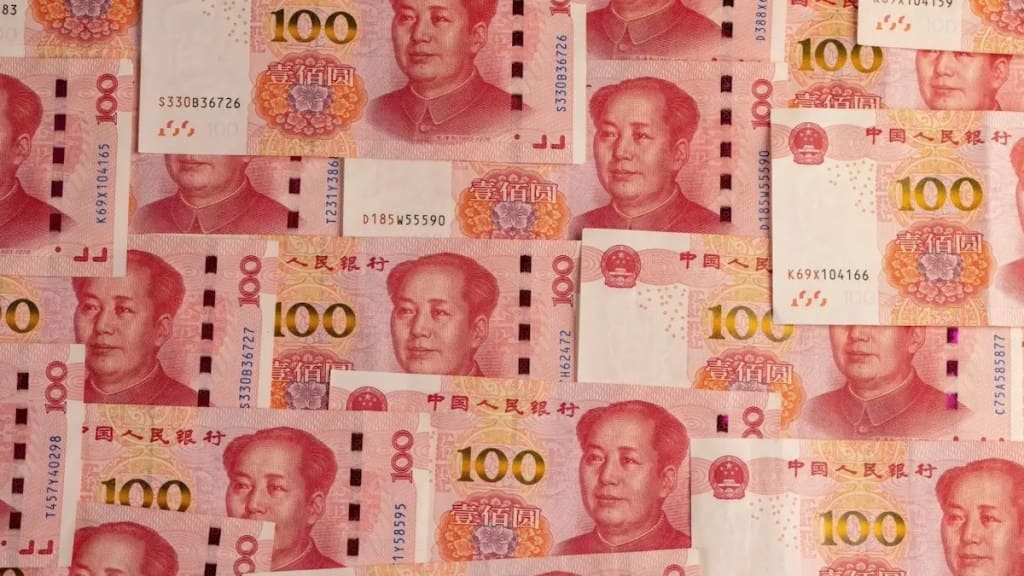
German Chancellor Friedrich Merz has become the latest Western leader to argue for coordinated intervention to weaken China's export advantage, claiming the yuan trades 30% below fair value. Speaking in Tokyo, Merz invoked the 1985 Plaza Accord as a potential template for addressing what he described as Beijing's currency manipulation and state-subsidized overcapacity.
The remarks position Germany alongside a growing chorus of trade hawks pushing for collective action against China's manufacturing dominance. Merz specifically accused Beijing of flooding global markets with artificially cheap goods, a charge that has gained traction across Europe as Chinese electric vehicles, solar panels, and steel products capture market share at unprecedented rates.
The original Plaza Accord saw five major economies - the United States, Japan, West Germany, France, and the United Kingdom - coordinate currency interventions that forced the Japanese yen and German mark to appreciate sharply against the dollar. The agreement succeeded in its narrow objective of rebalancing trade flows, but economists remain divided over its longer-term consequences for Japan's economy.
The Mechanics of a Modern Intervention
Any Plaza Accord-style arrangement targeting the yuan would face structural hurdles absent in 1985. China maintains capital controls that limit foreign exchange market access, and the People's Bank of China manages the yuan within a daily trading band rather than allowing free float. Beijing sets a daily reference rate and permits 2% movement in either direction, a system that insulates the currency from the kind of coordinated selling pressure that worked against the yen four decades ago.
Currency strategists note that China's foreign exchange reserves, which stood above $3.2 trillion as of mid-2026, give Beijing substantial firepower to defend the yuan's level. The central bank has repeatedly demonstrated willingness to intervene when depreciation accelerates, selling dollars and buying yuan to stabilize the exchange rate during periods of capital outflow.
Merz's 30% undervaluation claim rests on purchasing power parity models that compare domestic price levels across countries. These theoretical frameworks often diverge significantly from market exchange rates, particularly in economies with different productivity levels and non-tradable sectors. Independent estimates of yuan misalignment vary widely, with some analysts placing fair value within 10% of current levels.
Export Subsidy Ecosystem Under Scrutiny
The German chancellor's remarks focused as much on industrial subsidies as currency levels. European officials have grown increasingly vocal about China's support for strategic sectors including semiconductors, green energy, and advanced manufacturing. These programs combine direct grants, low-cost financing through state banks, tax incentives, and preferential access to land and utilities.
Trade data show Chinese exports surged 8.4% year-on-year in the first half of 2026, driven by electric vehicles, lithium batteries, and solar equipment. European manufacturers argue this growth reflects artificial cost advantages rather than genuine competitiveness, pointing to production capacity that far exceeds domestic Chinese demand in multiple sectors.
Germany's own export-oriented economy faces particular pressure from Chinese competition in automotive and industrial machinery markets. The country's trade surplus with China has narrowed sharply over the past three years as Chinese brands gain share in third markets across Southeast Asia, Latin America, and Africa.
Political Feasibility Remains Low
Despite Merz's call for coordinated action, prospects for a multilateral currency agreement appear remote. The United States has shown limited appetite for formal intervention frameworks, preferring bilateral pressure and tariff threats. Japan, which experienced two decades of economic stagnation following the Plaza Accord, remains wary of similar arrangements.
China has consistently rejected external pressure on currency policy, framing exchange rate decisions as sovereign matters. Officials in Beijing argue the yuan's value reflects market forces within the managed float system and point to periods of appreciation as evidence against systematic undervaluation.
The European Union faces internal divisions over China policy, with export-dependent member states reluctant to escalate trade tensions. Eastern European countries, in particular, have pursued closer economic ties with China through infrastructure investment and technology partnerships.
What Comes Next
Merz's comments signal that currency valuation will remain a flashpoint in Western relations with China as trade imbalances persist. European leaders face growing domestic pressure to protect manufacturing jobs while navigating complex supply chain dependencies on Chinese inputs.
The yuan traded at 7.26 per dollar in early July 2026, relatively stable compared to volatility seen in 2023 and 2024. Markets showed little reaction to Merz's remarks, suggesting investors view coordinated intervention as unlikely absent a broader crisis.
Trade ministers from G7 countries are scheduled to meet in September, with China's industrial policy expected to feature prominently on the agenda. Whether that gathering produces concrete action beyond rhetoric remains to be seen, but the Plaza Accord comparison has entered the policy vocabulary in European capitals.
RELATED STORIES
Honda Demands 30% Price Cuts From Suppliers in $9.4 Billion Cost Plan
Cheng Wei-Lun · 3 min
Malaysia's Rare Earth Deposits Draw Foreign Interest Ahead of China Export Controls
Priyanka V. Rao · 3 min

Beijing Warns Domestic EV Makers Against Overseas Price Wars
Cheng Wei-Lun · 3 min
China's Manufacturing Index Holds Below Expansion Threshold for Second Month
Cheng Wei-Lun · 5 min
Spot something wrong? Email editor@briefasia.com. We log every correction publicly.