Finance · Markets
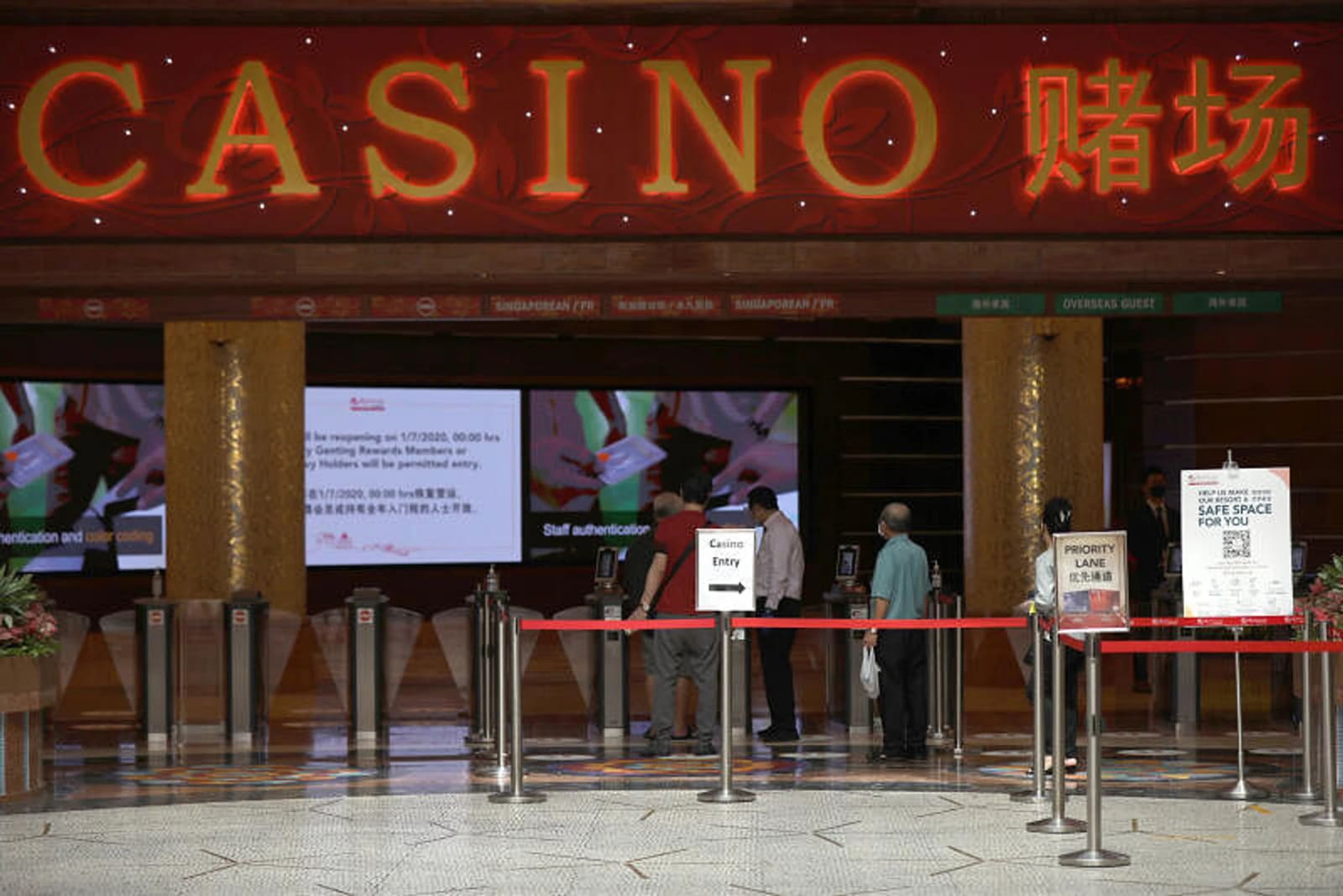
Genting Singapore Stock Climbs Despite 33.5% Profit Decline
The casino operator's shares jumped 4.8% as non-gaming revenue offset weaker earnings driven by depreciation and refresh costs
KEY TAKEAWAYS
- ·Genting Singapore shares rose 4.8% to S$0.655 despite H1 profit dropping 33.5% to S$156.1 million, driven by higher depreciation and asset refresh costs.
- ·Non-gaming revenue climbed 6% year on year to S$388.6 million, cushioning a modest 0.9% overall revenue decline to S$1.2 billion.
- ·Investors appear focused on operational momentum and tourism recovery rather than near-term profit compression from planned capital work.
Market Defies Earnings Weakness
Genting Singapore shares climbed as much as 4.8% on Friday morning, an unusual move for a company that just reported a 33.5% profit decline for the first half of the year. The casino and resort operator's counter reached S$0.655, gaining roughly S$0.03 in the opening five minutes as 29.5 million securities traded hands.
The disconnect between earnings and market sentiment suggests investors are reading beyond the headline numbers. Genting Singapore reported net profit of S$156.1 million for the six months ended June, down from S$234.7 million in the same period a year earlier, according to the company. The drop was driven primarily by higher depreciation charges, lower interest income, and costs related to asset refresh projects across its Resorts World Sentosa property.
Non-Gaming Revenue Provides Cushion
Revenue held relatively steady, declining just 0.9% to S$1.2 billion. The resilience came from the non-gaming segment, which posted revenue of S$388.6 million, up approximately 6% year on year, Genting Singapore announced. That growth in hotels, dining, attractions, and retail appears to have reassured investors that the integrated resort model remains intact even as gaming revenue faces headwinds.
The non-gaming performance is particularly significant in the context of Singapore's tourism recovery. International visitor arrivals to the city-state have been climbing steadily through 2026, and Resorts World Sentosa has positioned itself as a family-oriented destination beyond the casino floor. The 6% uptick in non-gaming revenue signals that strategy is gaining traction, offsetting some of the volatility inherent in gaming operations.
Depreciation and Refresh Costs Weigh
The profit compression reflects the operational reality of running a large-scale integrated resort. Depreciation expenses rose as the company cycled through capital investments made in prior years, while asset refresh works required to maintain competitiveness in Singapore's duopoly casino market ate into margins. Genting Singapore noted these factors explicitly in its results, framing them as necessary costs to sustain long-term positioning rather than structural weaknesses.
Lower interest income also contributed to the earnings decline, a function of shifting yield curves and cash deployment strategies. With Singapore's policy rates having moved through a tightening cycle, the interest rate environment for corporate treasuries has evolved, impacting the financial income line for cash-rich operators like Genting.
Investor Calculus
The market's positive response suggests investors are weighing the near-term profit dip against longer-term operational momentum. The modest revenue decline combined with solid non-gaming growth indicates underlying business health, even as accounting charges and one-off costs temporarily depress the bottom line. Trading volume in the opening minutes was robust, pointing to genuine buying interest rather than a technical bounce.
Genting Singapore operates in a tightly regulated duopoly alongside Marina Bay Sands, and both properties are subject to periodic refresh mandates and competitive pressure to upgrade facilities. The asset refresh costs disclosed in the H1 results are likely seen by the market as investments in maintaining market share rather than distress spending.
The stock's gain also comes amid broader optimism around Singapore's tourism sector and the resumption of travel flows from Greater China and Southeast Asia. While gaming revenue remains sensitive to high-roller activity and regional economic conditions, the diversification into non-gaming segments provides a buffer that the market appears to be pricing in.
Genting Singapore's ability to hold revenue nearly flat while growing its non-gaming business by 6% in a period of higher costs and lower financial income suggests operational discipline. For investors, that discipline may matter more than a single half-year profit figure shaped by accounting treatments and planned capital work.
RELATED STORIES

Genting Singapore Profit Drops 33% as Casino Revenue Declines
Priyanka V. Rao · 2 min
Olam Group Shares Slide 8.5% as Core Operations Profit Falls 66%
Priyanka V. Rao · 3 min
First Resources Reports Strong Growth as Austindo Acquisition Fuels Revenue Surge
Priyanka V. Rao · 2 min
DBS Reshuffles Senior Leadership Across Three Asian Markets
Priyanka V. Rao · 3 min
Spot something wrong? Email editor@briefasia.com. We log every correction publicly.