Technology · Startups
Filipino Micro-Brands Scale Through TikTok Shop and Shopee
From contact lenses to indigenous honey, a new generation of Philippine entrepreneurs is turning social commerce platforms into growth engines, bypassing traditional retail barriers.
KEY TAKEAWAYS
- ·Four Philippine micro-brands have scaled through TikTok Shop and Shopee, with one company growing sales 300% after expanding livestream use and another employing around 400 people.
- ·Over 90% of sellers on TikTok Shop's Philippine platform are local businesses, reflecting social commerce's role in lowering barriers for enterprises without capital for traditional retail.
- ·Platform dependence poses long-term risks, but for many Filipino founders the trade-off is access to integrated infrastructure versus remaining invisible in traditional channels.
Student Venture Becomes National Brand
Bridget Cortez launched Eyeconic at 22 while still enrolled in Business Management at the University of the Philippines. The contact lens brand started in 2020 with a P15,000 loan from her grandmother and an initial model of reselling existing designs. Within a few years, Eyeconic had shifted to developing proprietary designs with manufacturing partners and serving customers across the Philippines and internationally.
The constraint facing any young brand without capital remained visibility. Traditional advertising channels demanded budgets that most student entrepreneurs could not access. Eyeconic instead adopted TikTok Shop's model, which allows sellers to demonstrate products through short-form video, live commerce sessions, and creator partnerships.
According to Eyeconic, TikTok Shop has become the company's primary sales channel. The format has also generated part-time employment for university students who host livestream selling sessions around their class schedules.
"We don't need a massive marketing budget to be seen," Cortez noted, describing the platform's appeal for micro and small enterprises.
Indigenous Supply Chains Meet Digital Distribution
In Pampanga, Emmanuel Gantalao and Bryan Lagman founded Naturefood to bridge a different gap. The company sources honey from Mangyan communities in Mindoro, an indigenous group with generations of beekeeping expertise but limited market access. Naturefood handles repackaging, digital marketing, fulfillment, and nationwide distribution for products that previously reached only local buyers.
After expanding its use of TikTok livestreams and affiliate seller networks, Naturefood reported a 300% increase in sales. The company now employs more than 130 people and maintains partnerships with multiple farming communities and regional suppliers.
Gantalao pointed to a recurring challenge: many Filipino small businesses produce quality goods but lack access to the digital infrastructure and education required to scale.
TikTok Shop stated that over 90% of sellers on its Philippine platform are domestic businesses. The figure reflects a broader pattern across Southeast Asia, where social commerce has become a primary channel for micro-enterprises that lack the resources to establish independent e-commerce operations or negotiate shelf space in organized retail.
Pivoting From Agriculture After Crisis
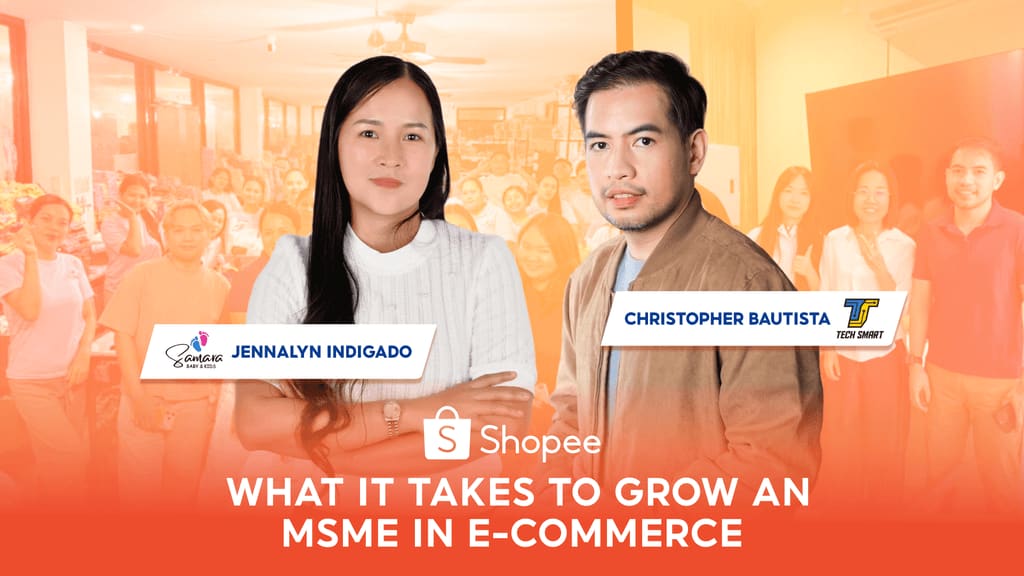
For Jennalyn Indigado, e-commerce represented not expansion but survival. Her family had raised hogs for five decades before African Swine Fever swept through the Philippine swine industry in 2019, decimating herds and forcing thousands of producers to exit.
The idea for Samara Baby & Kids emerged from a practical problem. While searching Shopee for tie-side shirts for her infant daughter, Indigado realized a gap in the market for specific baby garment styles. She had no prior experience in textiles, digital marketing, or online retail.
Indigado credited Shopee's seller education programs and account management support with teaching her inventory control, pricing strategy, customer segmentation, and financial planning. Eight years later, Samara Baby & Kids operates roughly 700 product listings, has accumulated 1.7 million Shopee followers, and employs around 400 people, according to the company.
The trajectory illustrates how platform-provided infrastructure can lower barriers to entry in unfamiliar sectors. For displaced workers or entrepreneurs shifting industries, access to structured onboarding and operational support can determine whether a venture survives its first year.
Gadget Hobbyist Builds Trust-Based Business
Christopher Bautista started Tech Smart Philippines to solve a personal frustration. As a technology enthusiast, he regularly encountered delays and markups when trying to acquire the latest devices in the Philippines. He listed a single power bank online as an experiment.
Eight years on, Tech Smart Philippines maintains more than 2,200 product listings on Shopee, a 4.9 customer rating, and a 100% chat response rate. Bautista attributed the company's growth to reputation management and customer service consistency, noting that trust allows a seller to command slightly higher prices without losing volume.
The emphasis on chat responsiveness and rating maintenance reflects the mechanics of platform algorithms, which prioritize sellers with strong engagement metrics and low dispute rates. In social commerce ecosystems, customer service becomes a direct input into visibility and ranking.
Platform Economics and Employment
The four cases share a common structure. Each founder lacked access to traditional retail channels or the capital to build standalone e-commerce infrastructure. Social commerce platforms provided integrated payment processing, logistics partnerships, customer acquisition tools, and in some cases, education and account management.
The trade-off is dependence. Sellers operate within platform rules, face algorithm changes, and compete in crowded marketplaces where visibility is mediated by engagement metrics and paid promotion. For many micro-enterprises, however, the alternative is not independence but invisibility.
The employment impact extends beyond the founders. Eyeconic created flexible work for students. Naturefood employs over 130 people and supports farming communities. Samara Baby & Kids has a workforce of approximately 400. These are not unicorn valuations, but they represent tangible job creation in an economy where micro, small, and medium enterprises account for the majority of employment.
As social commerce matures in Southeast Asia, the question is whether platform-dependent growth can translate into durable businesses. For now, a generation of Filipino entrepreneurs is building on infrastructure they do not own, betting that access today outweighs control tomorrow.
RELATED STORIES

Koloma Targets Fourth Philippine Hydrogen Block in Offshore Palawan Push
Tran Quoc Bao · 3 min

GCash Parent Mynt Clears Final Regulatory Hurdle for Manila IPO
Mariel D. Santos · 3 min

Philippine Capital Inflows Slide as Foreign Firms Curtail Local Lending
Tran Quoc Bao · 3 min

When Paper Wealth Outpaces Real Revenue: The Villar Land Valuation Puzzle
Anand Sundaram · 7 min
Spot something wrong? Email editor@briefasia.com. We log every correction publicly.