Lifestyle · Culture
Fast Food Chains Pile Into China's Growing Burger Market
Pizza Hut, hotpot operators, and coffee brands are opening burger counters as demand for affordable, portable meals rises across China's cities.
KEY TAKEAWAYS
- ·Yum China expanded its Pizza Hut Burger Bar format to over 200 outlets in six months and plans 500 to 600 by year-end.
- ·China's burger segment generated 18.4 billion dollars in 2025 revenue and is forecast to grow 8.7 percent annually through 2035.
- ·Hotpot chain Haidilao and coffee brand M Stand have launched burger concepts, while Wendy's plans up to 1,000 China locations over ten years.
A New Battleground Emerges
China's fast-food landscape is undergoing a sharp transformation. The burger segment, once the quiet domain of a handful of Western chains, has become a competitive arena drawing players from across the restaurant industry. Pizza operators, hotpot chains, and coffee brands are launching burger formats as demographic shifts and economic caution reshape what Chinese consumers want from a quick meal.
Yum China expanded its Pizza Hut Burger Bar concept to more than 200 locations within six months, the company disclosed in July. The format places a burger counter inside existing Pizza Hut restaurants. Management projects the model will reach 500 to 600 sites by year-end, representing roughly one-tenth of the Pizza Hut network in China.
The influx reflects a wider recalibration in consumer behavior. Household sizes are shrinking, economic uncertainty is curbing discretionary spending, and urban workers increasingly prioritize speed and value. Burgers fit that profile: they are portable, individually portioned, and priced below sit-down restaurant meals.
New Entrants Test the Waters
Haidilao, best known for hotpot service, launched Huanxianbao last month. The chain sells burgers alongside pizza, pasta, and fried chicken. Coffee brand M Stand has opened burger-focused locations in select cities, signaling that even beverage operators see opportunity in the category.
The Western fast-food market in China was valued at 499.65 billion yuan in 2025, according to iiMedia Research, and is forecast to reach 587.09 billion yuan by 2027. Burgers ranked as the top preference among consumers surveyed, with 55 percent selecting the category.
The burger segment itself generated 18.4 billion dollars in revenue during 2025, Emergen Research data shows. The firm projects compound annual growth of 8.7 percent through 2035, making it one of the faster-growing niches within China's broader fast-food sector.
Economics and Household Structure Drive Demand
Price sensitivity is a key factor. Wang Fang, a Beijing university student, said burgers have become a regular lunch choice for her and classmates because they cost less than ordering multiple dishes at a traditional restaurant. She noted that a burger combines protein, vegetables, and bread in a single item, delivering nutrition at a manageable price point.
Zhu Danpeng, a food industry analyst covering China, emphasized the value equation. In an environment where consumers remain cautious about spending, burgers offer a filling meal without the overhead of table service or multi-course orders.
Demographic trends amplify the appeal. The number of single-person households is rising, families are smaller, and young professionals in urban centers favor meals that can be eaten quickly or taken away. Yum China has cited these shifts as tailwinds for its burger rollout and other grab-and-go formats.
Pizza Hut introduced burgers to its menu in 2024. By 2025, the category accounted for a mid-single-digit share of Pizza Hut sales. The company expects burgers to generate more than one billion yuan in revenue this year, equivalent to 5 to 6 percent of the brand's total.
Delivery Infrastructure Supports Growth
Burgers align well with China's delivery habits. Yum China noted that 43 percent of Chinese consumers order food delivery at least once per week, compared with a global average of 23 percent, citing Euromonitor data. The burger format travels well and holds up during transit, making it suited to takeaway and third-party delivery platforms.
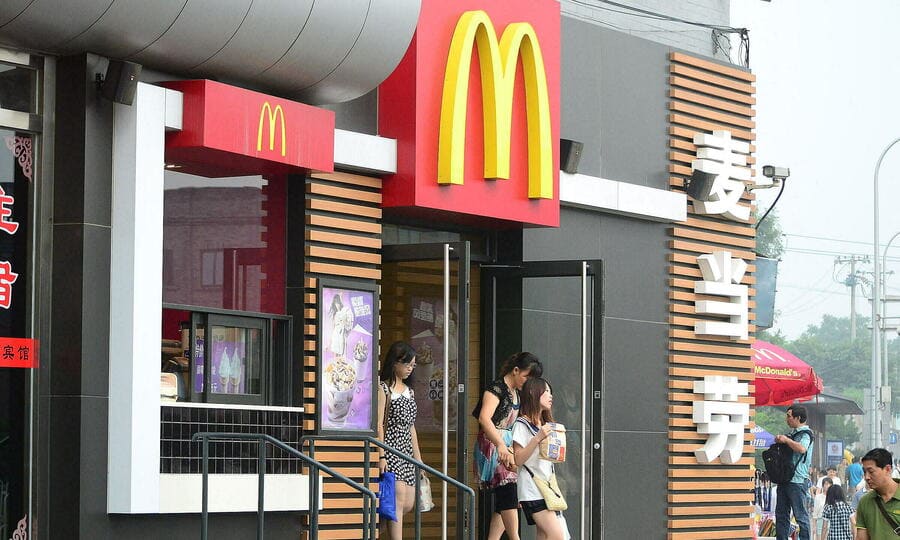
Domestic chains such as Tasiting are competing directly with McDonald's, KFC, and Shake Shack. International brands are also expanding their footprint. Five Guys opened outlets in Beijing earlier this month, drawing wait times exceeding two hours. Wendy's announced plans in May to enter China and open as many as 1,000 franchised locations over the next ten years.
Liu Tao, a 48-year-old musician in Beijing, takes his 11-year-old son to McDonald's most Sundays between tutoring sessions. With only an hour between math and English classes, he values the speed and consistency. His son eats the burger in the car during the short drive to the next lesson.
What This Means for the Sector
The rush into burgers illustrates how quickly restaurant operators in China are adapting to macroeconomic and demographic pressure. Chains that can deliver affordable, familiar food in formats suited to delivery and solo consumption are finding traction. The segment remains small relative to China's overall dining market, but its growth trajectory and the diversity of entrants suggest it will become more crowded in the next few years.
For legacy fast-food brands, the burger boom represents both validation and intensified competition. McDonald's and KFC built their China presence on the category, but they now face challengers with local market knowledge, established logistics, and diversified menus. How these incumbents respond to the new wave of burger operators will shape the next chapter of China's fast-food evolution.
RELATED STORIES

China's Burger Rush Draws Everyone From Hotpot Chains to Coffee Shops
Cheng Wei-Lun · 3 min
Geely Auto Appoints New Chairman as Founder Steps Back from Listed Unit
Cheng Wei-Lun · 2 min

Hong Kong Moves to Expand Treasury Centre Tax Breaks
Cheng Wei-Lun · 2 min
Taiwan Think Tank Warns of China's National Push in Physical AI and Robotics
Cheng Wei-Lun · 3 min
Spot something wrong? Email editor@briefasia.com. We log every correction publicly.