ExclusivePerspectives · Founders
The One-Way Ticket and the Standard No One Can Copy
Vietnam closed 2025 with a record 21.2 million international arrivals, and everyone in the industry agrees on the binding constraint: not rooms, not routes, but people. Elegance Hospitality Group, the Hanoi-born boutique chain whose La Siesta hotels keep beating the world’s giants in guest-voted rankings, has spent two decades building an unusual answer. Its chairman, Do Van Dan, treats service culture the way an engineer treats a structure: designed, load-tested, and measured by how it behaves when no one is watching. BriefAsia spent a morning on the floor with him.
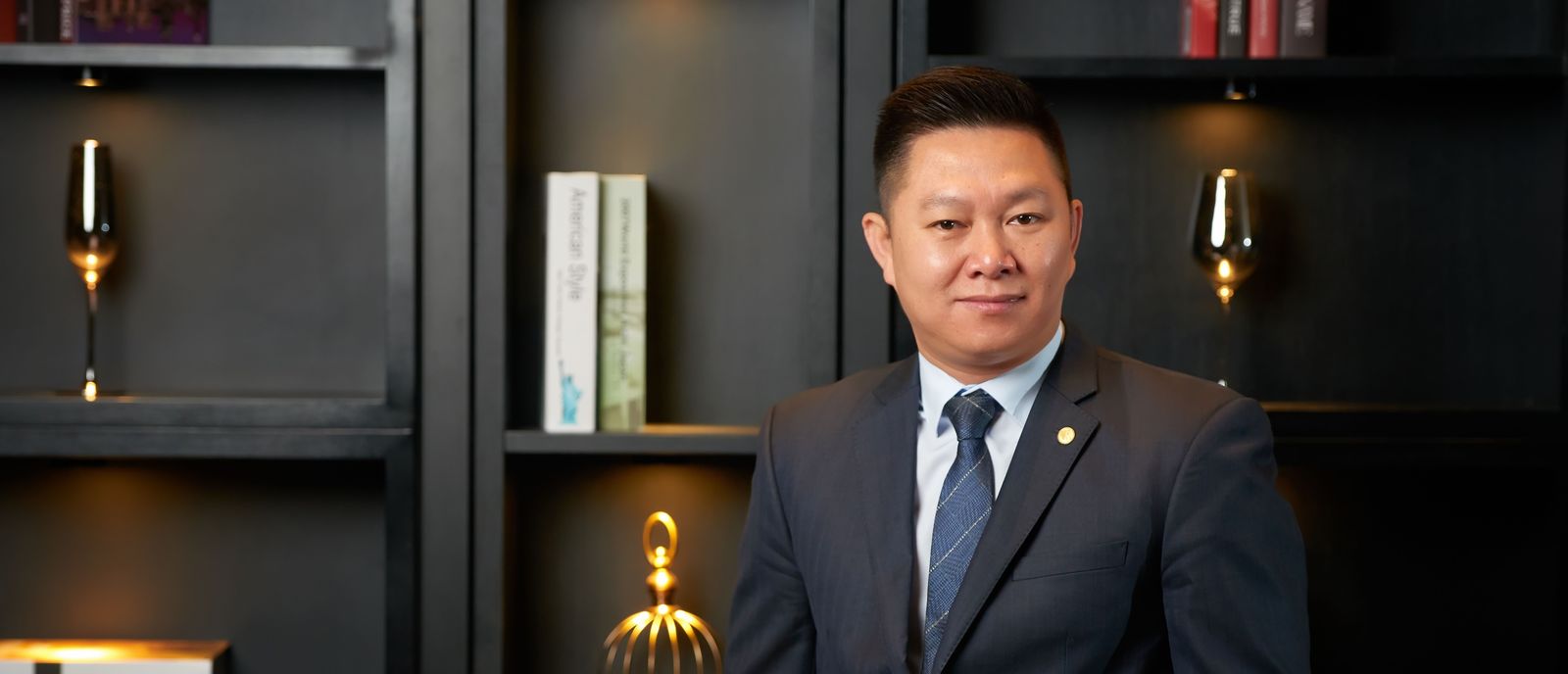
KEY TAKEAWAYS
- ·La Siesta's seven properties have ranked among the world's best on TripAdvisor for a decade, a scoreboard built from guest reviews that capital cannot buy back.
- ·Chairman Do Van Dan promotes last, not first: elevating staff before the knowledge is there puts them on a "one-way ticket" out of the company.
- ·His answer to Vietnam's hotel talent crunch is in-the-moment coaching framed as a gift, and a culture judged by how staff behave with no cameras and no inspectors.
The first thing the chairman offers is a cold brew.
He does not make it himself, a staff member does, unhurried and quietly proud of it, but the drink is his idea, and he watches it arrive the way an architect watches a detail he has argued for. A cold brew is an odd item, at first, in a country that practically runs on hot, dark, condensed-milk-sweetened caffeine. Then he explains. “A lot of people can’t actually drink coffee, strong Vietnamese coffee makes them dizzy,” he says. “So I care about the people who don’t drink much coffee.”
It is a small thing. It is also, if you sit with him long enough, the entire company in one glass: notice the guest nobody else is designing for, and design for them. The idea is the chairman’s; the hands that carry it out belong to his people. Which, it will turn out, is the whole story.
A few minutes later, a young server carries out a bowl of pho. The service is quick, polished, warm. The chairman thanks him, and then, in front of everyone, points out the one detail missing from the tray, and why it matters. This is not staged for visitors; it is, staff say, simply what happens when the chairman is in the building. And in the way that tiny correction is given, and received, lies a working answer to the biggest unsolved problem in Vietnamese tourism.
A record with a bottleneck
The macro numbers have never looked better. Vietnam ended 2025 with roughly 21.2 million international arrivals, an all-time record, and is targeting 25 million in 2026. New airports, new resorts, new routes: the hardware of the boom is being built at speed.
The software is another matter. Ask any general manager in Da Nang or Phu Quoc what keeps them awake and the answer is rarely occupancy; it is the churn of trained staff, the thinness of middle management, the difficulty of teaching genuine warmth at scale. International chains answer with academies, manuals and brand standards. Most Vietnamese independents answer with wages, and lose people anyway.
The interesting question is whether a third answer exists. EHG is the outlier suggesting it does.
A scoreboard kept by the guests
On paper, Elegance Hospitality Group should not trouble anyone. It runs seven properties under the La Siesta brand (four boutique hotels in Hanoi’s Old Quarter, two in Ho Chi Minh City, one resort in Hoi An), plus a family of restaurants, sky bars and spas. No global loyalty programme, no billion-dollar development pipeline, no army of brand auditors.
Yet for a decade the group has kept appearing where emerging-market boutiques are not supposed to appear. In 2017, a La Siesta hotel ranked eighth among TripAdvisor’s top 25 hotels in the world. In 2018, two EHG properties made the global top 25 at once. In 2026, the group again swept “Best of the Best” honours in the platform’s Travelers’ Choice Awards. These are not juried industry prizes; they are compiled from guest reviews, which is to say, they measure precisely the thing that cannot be bought: how staff actually behave when nobody is checking.

It is worth pausing on what kind of competition this is. In Vietnam’s hotel market, two different logics are now contesting the same guest. Global operators sell demand: a big-brand flag comes bundled with distribution (European wholesale channels, Northeast Asian booking platforms, loyalty ecosystems), and an owner buys access to travellers he could never reach alone. EHG sells the other thing: an experience so consistent that guests do the distribution themselves, one review at a time. Both models work. But only one of them can be replicated with capital. The other has to be grown slowly, person by person, which is exactly why the rankings above are so hard for larger rivals to take back.
So how does a group without a global chain’s budget manufacture that? The answer Dan gives is not a training programme. It is a set of convictions about time, gifts, and one-way tickets.
Feedback, served fresh
Management orthodoxy says: praise in public, correct in private. Dan does the opposite, deliberately, and his reasoning is about physics as much as psychology. “If I see something and keep it to myself, the moment loses its immediacy, it gets buried, and it’s forgotten,” he says. “Correct it right now, at the right moment, and the person remembers for a very long time. They change immediately.”
Timeliness, in his vocabulary, is what separates coaching from criticism. A correction delivered weeks later in a review meeting is an accusation; the same correction delivered in the moment, in the middle of service, is information, and, crucially, it is framed as something else entirely. Internal memos at EHG carry titles built around the idea of sending a gift. The premise is that a leader’s attention, even corrective attention, is the scarcest resource in the company, and staff should learn to experience it that way.
Does anyone actually believe this, or do they just nod? The most persuasive testimony in the room comes not from the chairman but from a staff member of nearly five years, who describes the first time Dan corrected him directly: nerve-racking, he admits, and then, over time, something else. “When the chairman takes time to guide you, that’s your opportunity, a gift, not pressure,” he says. “To improve, you need the experience of the people who went before you. Now when he calls, we act immediately.”
One employee’s testimony proves nothing on its own. Ten years of guest-voted world rankings suggest the multiplication is real.
The one-way ticket
Where Dan becomes genuinely contrarian is on promotion, the tool most companies reach for first when they want to keep people. He reaches for it last, and he has a name for what happens when it is used too early: the one-way ticket.
“Promote someone before the knowledge is there, and you’ve put them on a train with no return,” he says. “They can’t perform at the new level. But they can’t come back down either, because the loss of face is unbearable. So they leave. The company loses a good person it could have kept, at the exact moment it invested most in them.”
It is a talent-management insight rarely said out loud in an industry that hands out titles as retention currency. And it comes paired with a framework for who should be promoted. People, Dan argues, meet opportunity in one of three postures: those who stand and wait for it; those who hold their arms open, ready if it happens to arrive; and those who run toward it. “Everyone has the same opportunity,” he says. “The difference is the posture.” Only the runners, the ones who treat the company’s problems as their own before anyone assigns them, are safe to promote.
He turns the lens on managers, too. To a supervisor proudly claiming that 99 per cent of her 200 staff love and follow her, his reply is a question: “Then what did you do, today, this week, this month, so that your people could grow? Or are you just standing there, waiting, loved?” Affection without development, in his ledger, is a liability wearing a compliment’s clothes. The company he wants is not a thousand people waiting to be inspired by the chairman: “I want a thousand people inspiring me.”
The hotel without cameras
Every founder-led service culture eventually faces the same arithmetic: the founder cannot be everywhere. Dan asks the question of himself, out loud: “Who replicates me? How can I possibly walk every hotel we have?”
His measurement system is disarmingly analog. A culture is working, he argues, when it functions unobserved, “no cameras, no inspectors, no one standing watch”, when staff share knowledge in team groups and huddles without being ordered to, when the correction a chairman would have made happens anyway, made by a colleague, in his absence. The scaling mechanism is not surveillance but transmission: every coached moment is designed to be retold, every “gift” re-gifted downward, until the habit becomes reflex, “so that emotion rises to where you understand what the guest wants before they say it.”
This is where the honest caveat belongs: a culture measured by observation is a culture that resists audit, and EHG should be pressed for the numbers behind the philosophy: staff retention, average tenure, the share of managers promoted from within. But the external scoreboard already exists, and it is unusually hard to game: millions of guests, voting one review at a time, have ranked this Vietnamese group among the world’s best for a decade.

Packing culture into a coffee cup
Which brings the story back to that cold brew. The glass on the table is not a hobby: La Siesta has quietly begun building a coffee brand of its own, still in its earliest branding phase. Read one way, it is a hotel group wandering into one of the most crowded F&B markets on earth. Read the way Dan seems to intend it, it is something more interesting: a test of portability.
A hotel wraps its service culture in architecture: lobbies, spas, breakfast rooms, three days of contact in which to win a guest over. A takeaway coffee strips all of that away. The culture must survive in ninety seconds at a counter, carried by one person and one cup. If EHG’s warmth-by-design transfers to that format, the culture is a product: packageable, exportable, franchisable. If it does not, then it was the buildings all along. Notably, the brand extension begins exactly where the hotels began: with a guest other people overlooked, the one who “can’t drink strong coffee” but wants to be part of the table anyway.
What’s left when AI can do everything
For a man who coaches by hand, one server at a time, Dan is strikingly unsentimental about knowledge itself. University curricula, he notes, are obsolete within five years; technology now answers in seconds what training once took years to impart. “Type in a question and you get ten options and an answer,” he says. “So knowledge is not the differentiator anymore. The mindset is: are you ready to learn, and do you treat the work as your own? That is what matters now.”
It is, whether he frames it this way or not, a thesis about hospitality in the age of AI. Booking, check-in, translation, even guest messaging are being automated across Asia’s hotel industry. What is left, the only thing left, is the part EHG has been engineering all along: the human on the floor who notices the guest who can’t drink strong coffee. In that reading, a decade of hand-coached, camera-free culture is not a charming anachronism. It is a defence built years in advance around the one asset machines cannot yet replicate.
What the industry can take home
Strip away the awards and the aphorisms, and the EHG story leaves Vietnamese tourism with three propositions worth testing at national scale. That the industry’s people problem is not primarily a wage problem but a development problem, solved not by academies but by leaders willing to coach in real time, on the floor, at the moment of error. That promotion used as flattery destroys the very people it is meant to keep. And that the correct KPI for service culture is behaviour when nobody is watching, a standard that costs nothing to adopt and everything to meet.
Vietnam will get its 25 million visitors. Whether they come back is being decided not in ministries or master plans, but in ten thousand small moments like the one on that morning floor: a bowl of pho, a missing detail, and a chairman who believes the correction, delivered now, delivered kindly, is a gift.
There is time for one last question: by 2030, when the world hears “Vietnamese hospitality”, what should it think of? For once, the chairman does not pause. “Of being different,” he says. “Of chỉn chu, meticulous care in every detail, in a place where the guest truly is the centre.”
Market statistics from Vietnam’s National Statistics Office and the Vietnam National Authority of Tourism; EHG portfolio, headcount and award history from ehg.com.vn, The EHG Post and information confirmed by the group; quotations from a July 2026 conversation with Chairman Do Van Dan, reconstructed and confirmed by him.
COMING IN DECEMBER 2026: A forthcoming book, its title to be announced, tells the story of how EHG does hospitality differently: the service excellence that has repeatedly carried a Vietnamese boutique hotel brand into the ranks of the world’s best hotels. One for the shelf of anyone who works in, or cares about, the craft of hospitality.
RELATED STORIES
Vietnam's Offshore Oil Find Tests Hanoi's Will Against Beijing
Priyanka V. Rao · 5 min
-800x471.jpg?prefix=brief-asia)
Cover the logo. They'll still know who you are.
Simon Ng · 9 min
The pianist who goes looking for forgotten music
Manh Khang · 8 min
Mixue Shutters 89 Stores Across Southeast Asia Amid Profit Decline
Siti Nuraini · 3 min
Spot something wrong? Email editor@briefasia.com. We log every correction publicly.