Finance · Markets
Dollar Gains Ground Against Vietnamese Dong Amid Regional Currency Pressures
The greenback rose 0.08% at major Vietnamese banks while broader Asian currency volatility continues to test central bank defenses across the region.
KEY TAKEAWAYS
- ·The U.S. dollar strengthened to VND26,270 at Vietcombank, a 0.08% gain, while the State Bank of Vietnam lowered its reference rate by 0.02% to VND25,561.
- ·Japan's yen has surrendered half its intervention gains, trading near 159.36 per dollar, while South Korea's won showed greater stability with only a 0.6% weekly decline.
- ·Vietnam's central bank balances export competitiveness against inflation risks as the dong weakens, using incremental reference rate adjustments rather than aggressive intervention.
Vietnam's Dong Weakens as Dollar Demand Persists
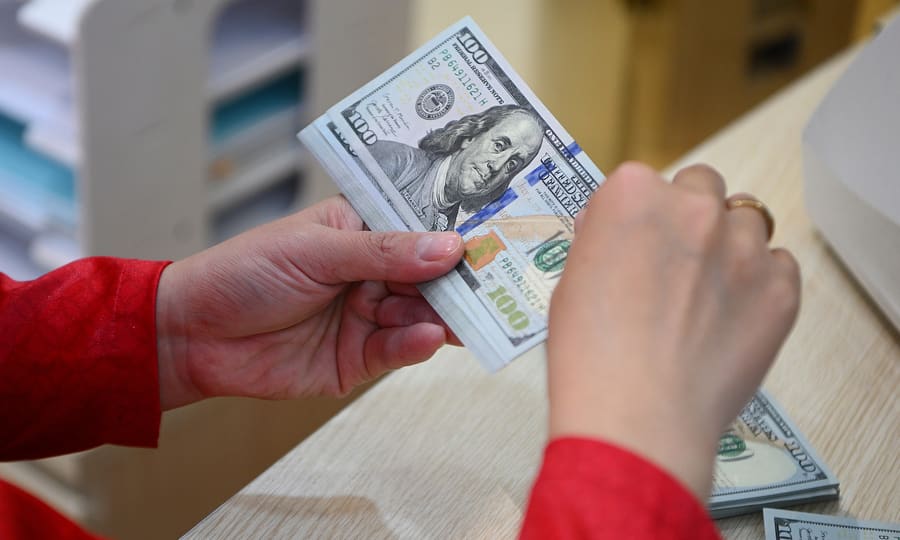
The U.S. dollar climbed against the Vietnamese dong Friday morning, with Vietcombank selling the greenback at VND26,270, marking a 0.08% increase from the previous session. The move reflects continuing pressure on regional currencies despite relatively calm global forex markets.
Black market rates told a different story, with the dollar trading near VND25,990, maintaining a notable discount to official banking channels. The State Bank of Vietnam adjusted its daily reference rate downward by 0.02% to VND25,561, continuing its recent pattern of modest interventions through the fixing mechanism.
The dong's slide comes as Vietnam navigates a complex external environment. While the country's export sector has shown resilience, currency management remains a delicate balancing act for Hanoi. The central bank has tools at its disposal, from direct market operations to reference rate adjustments, but must weigh competitiveness concerns against inflation risks tied to a weaker currency.
Regional Currency Dynamics Shift
Vietnam's currency movement sits within a broader Asian context where intervention strategies are showing mixed results. Japan's yen traded at 159.36 per dollar Friday, hovering dangerously close to the 160 threshold that previously triggered coordinated buying operations by Tokyo and Washington last month.
That joint intervention, aimed at steadying the yen, has proven short-lived in its impact. The Japanese currency has surrendered roughly half its post-intervention gains, declining about 1% over the week to 159.43 per dollar. The trajectory underscores a fundamental challenge: when market forces and interest rate differentials favor the dollar, even heavyweight central bank action delivers temporary relief at best.
South Korea's won has demonstrated greater stability following similar official support last month, though it still posted a 0.6% weekly loss against the dollar. The divergence between Seoul's relative success and Tokyo's struggle highlights how intervention effectiveness varies based on underlying economic conditions, reserve capacity, and market expectations about future policy paths.
Global Backdrop Offers Mixed Signals
The broader currency market has traded within a narrow range this week, with competing forces keeping major pairs relatively anchored. Higher oil prices and escalating Middle East tensions typically bolster the dollar's safe-haven appeal, but those tailwinds have been offset by recent U.S. economic data.
Benign jobs and inflation reports from the United States reduced expectations for aggressive Federal Reserve rate hikes, removing some upward pressure on the greenback. The euro edged 0.2% lower to $1.1536 over the week, while sterling held flat at $1.3489. The Australian dollar traded near $0.7060, reflecting commodity market dynamics and domestic growth prospects.
For Asian economies like Vietnam, this mixed global picture creates both opportunities and risks. A moderating Fed trajectory could eventually ease pressure on regional currencies, but any renewed dollar strength from geopolitical shocks or energy price spikes would quickly reverse those gains.
Vietnam's Currency Management Calculus
The State Bank of Vietnam faces competing priorities as it manages the dong. A weaker currency supports exporters, a critical constituency in an economy where shipments to the U.S., Europe, and elsewhere drive growth and employment. Manufacturing competitiveness hinges partly on exchange rate positioning relative to regional peers like Thailand, Indonesia, and China.
At the same time, dong depreciation raises the cost of imported inputs, from energy to industrial components, feeding through to domestic inflation. With consumer prices already a concern for policymakers, allowing excessive currency weakness risks eroding household purchasing power and complicating monetary policy.
The central bank's incremental approach through small reference rate adjustments and occasional market operations suggests a strategy of managed flexibility rather than rigid defense of a specific level. This pragmatism reflects lessons learned across Asia from past currency crises: inflexible pegs invite speculative attacks, while complete free floats can generate excessive volatility.
The gap between official bank rates and black market pricing, while modest, indicates some degree of capital control leakage and unmet dollar demand in informal channels. This dynamic is familiar across frontier and emerging markets, where regulatory frameworks don't fully capture cross-border flows and hedging activity.
What Comes Next for Asian FX
The coming weeks will test whether recent currency pressures represent a temporary adjustment or the start of a more sustained dollar rally. Much depends on U.S. data releases, Fed communications, and geopolitical developments that could shift safe-haven flows.
For Vietnam specifically, export performance and foreign direct investment trends will shape currency demand fundamentals. Strong manufacturing orders and continued FDI inflows would support the dong, while any slowdown in external demand or capital flow reversals would intensify depreciation pressure.
Regional central banks are likely watching each other's moves closely. Coordinated action, as seen with Japan and the U.S. last month, remains possible if currency volatility threatens financial stability. But absent a crisis, most authorities prefer incremental adjustments over dramatic interventions that drain reserves and may not succeed against determined market forces.
The dong's trajectory will ultimately reflect Vietnam's economic fundamentals, policy credibility, and its position within regional supply chains. For now, the currency faces headwinds, but the central bank retains tools to manage the descent and avoid disorderly moves that could spook investors or destabilize trade flows.
RELATED STORIES

Vietnamese Dong Strengthens as Dollar Trades Near Two-Month Low
Cheng Wei-Lun · 2 min

Vietnam Banks Lower SME Lending Rates as Credit Growth Reaches 9 Percent
Priyanka V. Rao · 3 min
Vietnamese Dong Climbs to Five-Month High Against the Dollar
Cheng Wei-Lun · 3 min

Vietnam Gold Climbs Despite Global Dip as Gulf Tensions Muddy Fed Rate Outlook
Priyanka V. Rao · 4 min
Spot something wrong? Email editor@briefasia.com. We log every correction publicly.