Finance · Markets
Vietnam Gold Climbs Despite Global Dip as Gulf Tensions Muddy Fed Rate Outlook
Domestic prices inch higher while spot gold slips, with traders caught between easing inflation signals and persistent shipping risks in the Strait of Hormuz
KEY TAKEAWAYS
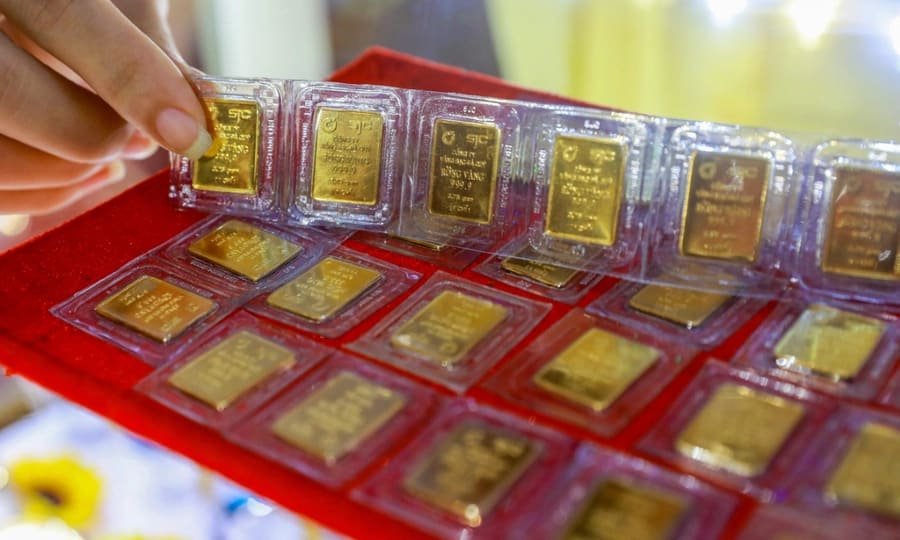
- ·Saigon Jewelry Company gold bars rose 0.21 percent to VND144.6 million per tael on Thursday, while global spot gold slipped 0.22 percent to $4,398.10 per ounce.
- ·Cooler U.S. July inflation data reduced expectations for a September Federal Reserve rate hike and eased Treasury yields, supporting non-yielding metals like gold.
- ·Unresolved U.S.-Iran talks keep the Strait of Hormuz constrained, elevating oil prices above $85 per barrel and complicating the Fed's rate-relief trade.
Domestic Market Defies Global Trend
Vietnam's gold market moved counter to global momentum on Thursday, with Saigon Jewelry Company's gold bars climbing 0.21 percent to VND144.6 million per tael (approximately $5,555). Gold rings posted a slightly stronger gain of 0.34 percent, reaching VND146 million per tael. A tael equals 37.5 grams.
The uptick in domestic prices contrasts with the broader international picture, where spot gold slipped 0.22 percent to $4,398.10 per ounce. The divergence underscores the local supply-demand balance and currency dynamics that often decouple Vietnam's physical gold market from London and New York benchmarks, particularly during periods of regional currency volatility or capital-flow shifts.
Despite Thursday's rise, Vietnamese gold remains down 5.4 percent year-to-date, a decline that mirrors profit-taking after the metal's 2025 rally and reflects reduced safe-haven appetite as equity markets in Ho Chi Minh City and Hanoi have stabilized.
Inflation Data Cuts Rate-Hike Bets
The modest decline in global spot gold followed a late-Wednesday bounce triggered by cooler U.S. July inflation figures. The data reduced market expectations for a Federal Reserve rate increase in September and prompted a pullback in Treasury yields, which tend to weigh on non-yielding assets like gold.
Lower yields typically enhance gold's relative appeal, since the metal offers no coupon or dividend. The July consumer price index came in below consensus, reinforcing the view that the Fed's tightening cycle may be nearing its end. That dynamic helped gold recoup some ground in New York trading hours, even as Asian spot prices remained under pressure from profit-taking.
The interplay between inflation prints and Fed policy remains the primary driver for dollar-denominated gold, with each basis-point move in the ten-year Treasury yield translating into directional pressure on bullion.
Gulf Shipping Constraints Keep Oil Elevated
Yet the inflation-driven tailwind for gold is complicated by persistent geopolitical risk in the Middle East. The Strait of Hormuz, which channels roughly one-fifth of global oil supply, remains partially constrained by unresolved U.S.-Iran negotiations. Iran's top security official has linked any reopening of the strait to conditions including the release of frozen assets and progress on regional conflicts.
Shipping through both the Strait of Hormuz and the Bab el-Mandeb strait at the southern end of the Red Sea continues to face delays and higher insurance premiums, keeping oil prices elevated. Brent crude has held above $85 per barrel for the past month, a level that feeds into inflation expectations and complicates the Fed's calculus on rate cuts.
For gold, the result is a two-sided setup. On one hand, falling Treasury yields and dovish Fed signals support prices. On the other, stubbornly high oil costs threaten to reignite inflation concerns, which could prompt the central bank to maintain a restrictive stance longer than markets currently anticipate.
Asia's Role in the Gold Equation
The tension between these forces is especially pronounced in Asia, where central banks have been steady buyers of gold over the past two years. Institutions in Singapore, Thailand, and India have added to reserves as a hedge against dollar volatility and as part of broader reserve diversification.
Vietnam's domestic gold premium, the gap between local and international prices, has narrowed in recent months as the State Bank of Vietnam has auctioned bullion to stabilize the market. Those auctions, which began in early 2026, have helped ease the import premium that once reached several percentage points, bringing domestic quotes closer to global parity.
The country's jewelry and investment demand remains robust, supported by a cultural preference for physical gold as a store of value. Retail investors in Ho Chi Minh City and Hanoi continue to view gold as a hedge against dong depreciation and property-market uncertainty, even as equity valuations have recovered from their 2025 lows.
What Traders Are Watching
In the near term, gold's trajectory will hinge on three variables. First, the August U.S. jobs report, due in early September, will shape expectations for the Fed's next move. A weaker print would reinforce the case for a pause or pivot, lifting gold. Second, any breakthrough in U.S.-Iran talks could ease oil-market tightness and reduce the geopolitical premium embedded in crude, indirectly pressuring gold by lowering inflation fears.
Third, central-bank buying patterns in Asia will matter. If institutions continue to accumulate, physical demand will provide a floor under prices even if speculative positions in futures markets decline. Data from the World Gold Council shows that Asian official-sector demand accounted for more than half of global central-bank purchases in the first half of 2026.
For Vietnamese traders, the immediate focus is on the dong's stability and any further State Bank auctions. A weaker currency would widen the domestic premium and draw in more retail buying, while additional bullion sales by the central bank would cap local prices regardless of international moves.
The interplay of Fed policy, Gulf geopolitics, and Asian demand ensures that gold remains a three-dimensional trade, with no single narrative driving the market in isolation.
RELATED STORIES

Ho Chi Minh City Courts Investors for International Financial Centre Push
Priyanka V. Rao · 3 min

Vietnam Eyes Security Framework as Tokenised Asset Markets Gain Traction
Priyanka V. Rao · 4 min
Vietnamese Dong Climbs to Five-Month High Against the Dollar
Cheng Wei-Lun · 3 min

Vietnam Bank Launches FDI Package With $40,000 Fee Waivers
Priyanka V. Rao · 2 min
Spot something wrong? Email editor@briefasia.com. We log every correction publicly.