Real Estate · Land
DMCI Homes Bets on Transit Corridors as Manila Subway Network Takes Shape
Philippine developer positions residential towers near rail stations ahead of 2028 transit-oriented development rollout
KEY TAKEAWAYS
- ·DMCI Homes is positioning residential projects near Metro Manila rail stations as the government targets mainstream transit-oriented development by 2028.
- ·Properties including The Oriana, Infina Towers and The Erin Heights are located near existing LRT-2 and MRT-3 stations and planned Metro Manila Subway stops.
- ·The strategy anticipates regulatory shifts that will tie housing density and zoning approvals more closely to proximity to mass transit infrastructure.
Clustering Around Rail Nodes
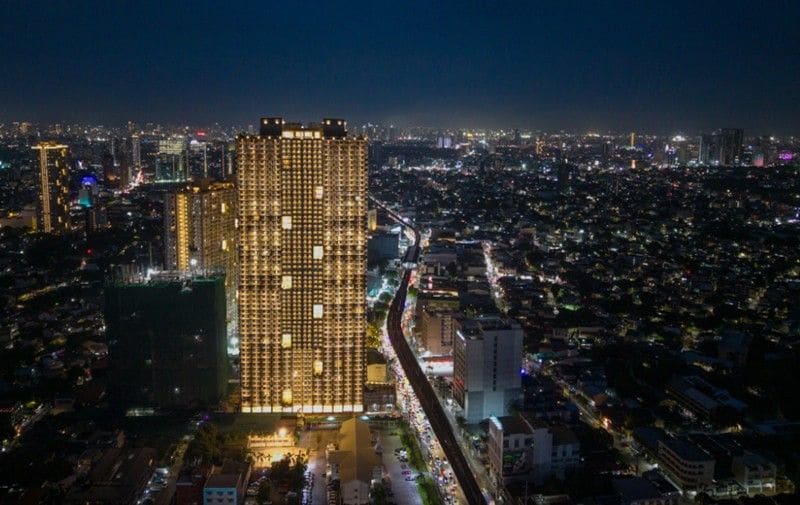
DMCI Homes, the property arm of DMCI Holdings, has concentrated its latest residential pipeline around Metro Manila's growing rail network, placing towers within walking distance of existing and under-construction stations across Quezon City, Pasig, Caloocan and Mandaluyong.
The strategy aligns with a national policy framework from the Department of Human Settlements and Urban Development that aims to mainstream transit-oriented development across major rail corridors by 2028. The framework promotes compact, mixed-use communities anchored by transport hubs, covering lines including the Light Rail Transit, Metro Rail Transit, the Metro Manila Subway Project and the North-South Commuter Railway.
According to DMCI Homes, properties such as The Oriana and Infina Towers along Aurora Boulevard in Quezon City sit near both LRT-2 Anonas and Katipunan stations, and will benefit from the planned Anonas stop on the Metro Manila Subway. The Oriana, recently delivered, also lies within the university belt near Ateneo de Manila University, Miriam College and the University of the Philippines Diliman.
The Erin Heights, positioned on Commonwealth Avenue at the intersection with Tandang Sora Avenue, is within reach of the future Tandang Sora Station on MRT-7, a line designed to connect North Avenue in Quezon City to San Jose del Monte in Bulacan.
Subway Convergence Points
The Metro Manila Subway Project, stretching from Valenzuela to Taguig with a spur to Ninoy Aquino International Airport Terminal 3, is expected to create convergence points where multiple rail systems intersect. DMCI Homes has positioned The Crestmont on Panay Avenue near both the MRT-3 Quezon Avenue Station and the future subway stop at the same location.
In Pasig, The Valeron Tower will be close to the planned MRT-4 Tiendesitas Station and within reach of subway stations at Ortigas and Shaw. The Calinea Tower in Caloocan sits near LRT-1 Monumento Station and the alignment of the North-South Commuter Railway, which will eventually link Clark International Airport to Calamba in Laguna.
Sage Residences in Mandaluyong and Fortis Residences in Makati, both near MRT-3 stations, target residents prioritizing shorter commutes to central business districts.
Long-Term Value Calculus
Dennis Yap, vice president for project development at DMCI Homes, said the company views proximity to transport infrastructure as a driver of accessibility and property value over time. "The shift toward transit-oriented development is an important direction for the industry," Yap noted, adding that the firm continues to expand its presence in key transit corridors with additional projects in development.
The developer, which holds a Quadruple A rating in the Philippines, operates projects across Mega Manila, Baguio City, Tuba in Benguet, San Juan in Batangas, Boracay, Cebu City and Davao City. Its parent company, D.M. Consunji Inc., has more than 70 years of construction and engineering experience in the country.
Policy Tailwinds
The government's transit-oriented development framework is part of a broader push to integrate housing with mass transit, reducing urban sprawl and travel times in the congested capital region. As rail infrastructure construction accelerates, developers are recalibrating site selection to capture demand from households seeking reduced commute times and better access to employment centers.
Stations at Quezon Avenue, Anonas and Ortigas are projected to significantly cut travel times between residential zones and business districts, reshaping accessibility dynamics across the metro. The regulatory shift toward transit-linked planning is expected to influence zoning and density rules in the coming years, making proximity to rail nodes a more explicit factor in development approvals.
DMCI Homes is positioning its portfolio to capture this shift, betting that the completion of major rail projects will drive sustained demand for residential units in transit corridors.
RELATED STORIES
Seventeen Firms Compete for Manila's $200 Million Geothermal Risk Fund
Priyanka V. Rao · 3 min
JCR Holds Philippines at A- as Growth Slows to Mid-3% Range
Priyanka V. Rao · 3 min
SM Prime Commits $72 Million to Expand Three Philippine Regional Malls
Priyanka V. Rao · 3 min

Manila's Hyperscaler Bet Draws Fire Over Job Creation and Grid Strain
Priyanka V. Rao · 5 min
Spot something wrong? Email editor@briefasia.com. We log every correction publicly.