Asia · Trade
Da Nang Approves $248 Million Port Expansion to Boost Regional Trade
Liên Chiểu Port's second-phase infrastructure wins council backing as central Vietnam positions itself as a logistics gateway
KEY TAKEAWAYS
- ·Da Nang's People's Council approved VNĐ6.2 trillion ($248 million) for Liên Chiểu Port's shared infrastructure in a 2026-30 expansion phase.
- ·The investment targets central Vietnam's logistics gap as exports grow 8.3 percent and southern ports face recurring congestion.
- ·Execution hinges on contractor timelines and coordination with national ministries for dredging and environmental clearances over the next four years.
A Decades-Long Vision Takes Shape
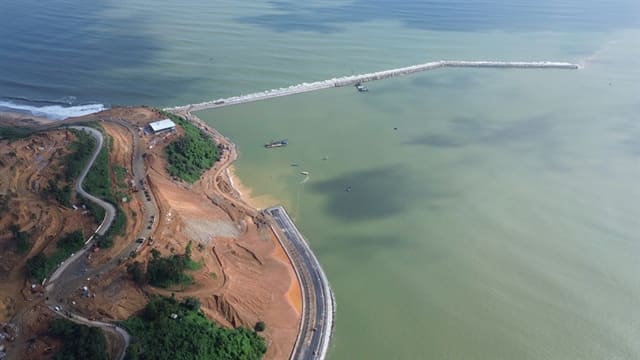
Da Nang's municipal council has given the go-ahead to a VNĐ6.2 trillion ($248 million) investment package for shared infrastructure at Liên Chiểu Port, setting the stage for what officials describe as a breakthrough in the central city's economic trajectory. The approval covers the port's second development phase, scheduled to run from 2026 through 2030.
The decision positions Da Nang to compete more aggressively for cargo flows along Vietnam's 3,260-kilometer coastline, where port capacity has struggled to keep pace with export-driven manufacturing growth. Liên Chiểu Port sits in a strategic corridor between the industrial hubs of northern Vietnam and the manufacturing clusters around Ho Chi Minh City, yet has historically lagged behind both Hai Phong in the north and the southern container terminals in throughput.
What the Investment Covers
The approved funding targets essential infrastructure that multiple terminal operators and cargo handlers will share. While the council's announcement did not itemize specific components, shared infrastructure at Vietnamese ports typically includes access roads, drainage systems, power substations, communications networks, and land preparation for terminal zones. These foundational elements allow private operators to layer in their own cranes, warehouses, and specialized handling equipment without duplicating basic utilities.
The investment scale underscores the port's intended role. At $248 million, the package ranks among the largest single-phase port infrastructure commitments in central Vietnam over the past two decades. For comparison, the initial phase of Chu Lai Port in neighboring Quang Nam province, completed in 2018, drew roughly $180 million in public and private capital combined.
Regional Trade Pressures
Vietnam's port sector has faced mounting pressure since the country joined a wave of trade agreements over the past decade. Exports climbed 8.3 percent year-on-year in the first half of 2026, according to the General Statistics Office, with electronics, textiles, and furniture driving container demand. Yet port congestion episodes in 2023 and 2024, particularly around Ho Chi Minh City's Cat Lai terminal, exposed bottlenecks that sent some shippers hunting for alternative gateways.
Da Nang has marketed itself as that alternative. The city lies roughly midway along the coast and connects to landlocked Laos via the East-West Economic Corridor, a road-and-rail artery that crosses the Truong Son mountain range. Expanding Liên Chiểu Port's capacity could pull cargo from provinces like Quang Nam, Quang Ngai, and even parts of the Central Highlands, reducing truck hauls to southern terminals by several hundred kilometers.
The Broader Infrastructure Context
The port expansion arrives as Da Nang simultaneously pushes forward on airport and highway projects. The city's international airport handled 13.2 million passengers in 2025, and a second terminal is in design. Meanwhile, the Da Nang-Quang Ngai expressway, opened in segments since 2022, has cut travel time to southern industrial zones and should improve port hinterland access.
Liên Chiểu Port itself has operated in limited form for years, handling bulk commodities and some break-bulk cargo. The second phase aims to add container-handling capacity and deepen berths to accommodate larger vessels. Vietnam's Ministry of Transport has projected that central region ports will need to handle 25 to 30 million twenty-foot equivalent units annually by 2035, up from roughly 8 million in 2025, to avoid diverting cargo to neighboring countries.
Private Sector and Execution Risk
Public funding for shared infrastructure often precedes private terminal concessions. The Da Nang council's approval does not specify which operators might lease terminal space once the groundwork is complete, though several domestic logistics groups and at least one foreign port operator have publicly expressed interest in central Vietnam berths over the past two years.
Execution timelines in Vietnamese infrastructure can stretch. Environmental assessments, land clearance, and procurement procedures have delayed other port projects by twelve to eighteen months beyond original schedules. The 2026-30 window suggests a four-year build-out, which aligns with typical timelines for mid-sized port phases but leaves little margin for regulatory or contractor setbacks.
What Comes Next
With council approval secured, the project now moves to detailed design and contractor selection. The city will also need to coordinate with the Ministry of Transport on navigational channel dredging and with the Ministry of Natural Resources and Environment on coastal protection measures, both of which fall under national rather than municipal jurisdiction.
For investors and logistics planners, the approval signals that Da Nang intends to claim a larger share of Vietnam's container trade. Whether Liên Chiểu Port can convert that ambition into actual throughput will depend on tariff competitiveness, hinterland connectivity, and the speed with which terminal operators bring cranes and IT systems online once the shared infrastructure is in place. The next twelve months will reveal how quickly those pieces move from blueprint to berth.
RELATED STORIES
Vietnam Pours Capital Into Laos as Vientiane Seeks Relief From Beijing Debt
Priyanka V. Rao · 4 min

Thailand Faces Two Decades in Middle-Income Trap Without Workforce Upgrade
Priyanka V. Rao · 3 min

Indonesia Car Sales Jump 34% as Electric Vehicles Reshape Southeast Asia's Auto Market
Siti Nuraini · 3 min
AEON Vietnam Breaks Ground on New Shopping Centre in Phủ Lý
Tran Quoc Bao · 3 min
Spot something wrong? Email editor@briefasia.com. We log every correction publicly.