Technology · Dev
Chip Supply Pressures Drive Intel Back to DDR4 as Samsung Advances 2nm Challenge
AI demand strains semiconductor supply chains, forcing platform shifts and price increases across memory and mobile chips

KEY TAKEAWAYS
- ·Intel reintroduced DDR4 memory support as AI server demand absorbs DDR5 capacity and drives memory prices 30 percent higher per gigabyte
- ·Qualcomm raised Snapdragon processor prices in early August, citing rising wafer costs and tighter foundry allocation at advanced nodes
- ·Samsung accelerated 2nm production to challenge TSMC, targeting initial wafers before year-end with gate-all-around transistor architecture
Platform Retreat Signals Supply Chain Stress
Intel has quietly reintroduced DDR4 memory support across select processor lines, marking an unusual step backward for a company that spent years pushing the industry toward DDR5 adoption. The move reflects mounting pressure from AI server demand, which has absorbed much of the available DDR5 capacity and driven memory prices sharply higher over the past six months.
Industry observers note that DDR4 production lines, largely written off as legacy assets by major memory manufacturers, are now running at elevated utilization rates. The older standard offers lower performance but remains adequate for mainstream computing workloads and costs roughly 30 percent less per gigabyte than DDR5 modules at current spot prices.
Intel's decision carries implications beyond its own product roadmap. PC manufacturers across Taiwan, China, and Southeast Asia have begun adjusting bill-of-materials specifications to accommodate dual-standard memory configurations, a practice that adds complexity but provides supply flexibility during periods of tight allocation.
Qualcomm Passes Costs to Handset Makers
Qualcomm has notified smartphone manufacturers of price increases across its Snapdragon mobile processor portfolio, according to supply chain sources. The adjustments, which took effect in early August, range from mid-single-digit percentages on mature nodes to higher figures for advanced process chips built on TSMC's 3nm and 4nm technologies.
The price hikes stem from a combination of factors: rising wafer costs at leading-edge nodes, tighter capacity allocation from foundry partners, and Qualcomm's own investments in AI accelerator IP that now ship standard in flagship and mid-tier SoCs. Handset brands in Shenzhen and New Delhi have begun evaluating alternative chip suppliers, though options remain limited for devices targeting premium segments where Qualcomm maintains performance leadership.
Industry analysts expect the increases to filter through to retail pricing during the fourth quarter, particularly for Android flagships launching in key Asian markets. Brands with thinner margins may opt to absorb some costs or shift volume toward lower-tier models that use older chip generations still priced at pre-increase levels.
Samsung Pushes 2nm Production Timeline
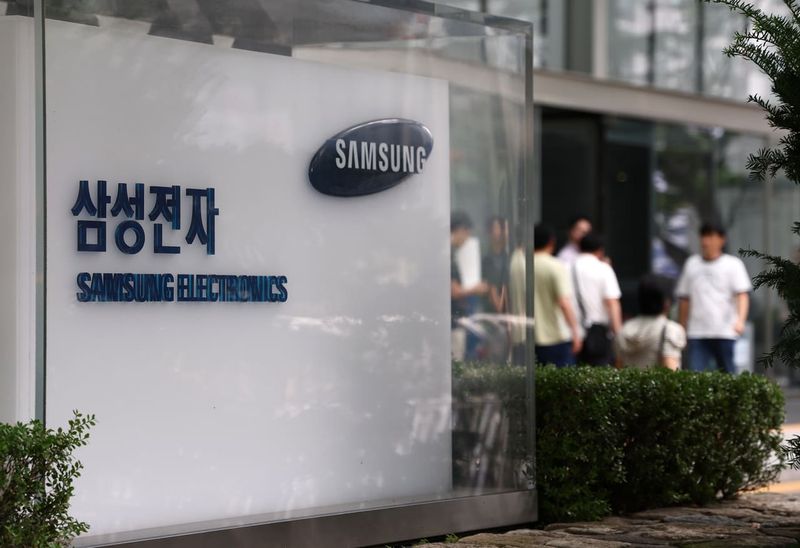
Samsung Foundry has accelerated its 2nm process node development schedule, with initial production wafers now expected before year-end. The South Korean chipmaker aims to challenge TSMC's dominance in advanced logic manufacturing, leveraging its gate-all-around transistor architecture to offer power and performance metrics competitive with TSMC's N2 process.
Samsung's aggressive timeline comes as fabless chip designers seek alternatives to TSMC, whose leading-edge capacity remains heavily allocated to Apple, Nvidia, and AMD. Several China-based chip firms have initiated test tape-outs at Samsung's Hwaseong facilities, viewing the foundry as a strategic hedge against geopolitical supply risks and capacity constraints.
However, Samsung faces hurdles in yield ramp and ecosystem readiness. TSMC's N2 process benefits from years of electronic design automation tool optimization and IP library maturity that Samsung must replicate to attract high-volume production commitments. Foundry customers typically require six to nine months of yield validation before committing to mass production, pushing meaningful revenue contribution from 2nm into 2027.
Beijing Prioritizes Domestic Chip Deployment
China's central government has issued directives accelerating the adoption of domestically designed and manufactured semiconductors across state-owned enterprises and infrastructure projects. The policy push targets sectors including telecommunications equipment, data center servers, and industrial automation systems, where imported chips have historically dominated.
Semiconductor firms in Shanghai, Beijing, and Shenzhen have reported order backlogs extending into 2027, driven by mandates that specify minimum domestic content ratios for new government procurements. The requirements apply to both chip design and fabrication, favoring companies with end-to-end capabilities or partnerships with domestic foundries operating at 14nm and mature nodes.
While the policy provides a demand floor for China's chip industry, technical gaps remain significant in advanced logic, high-performance computing, and certain analog categories. Industry participants expect a bifurcated market to persist, with domestic chips gaining share in cost-sensitive and government-linked applications while imported solutions retain positions in performance-critical consumer and enterprise segments.
Capacity Allocation Defines 2026 Landscape
The convergence of AI infrastructure buildouts, smartphone refresh cycles, and automotive electrification has created a structural mismatch between semiconductor demand and available capacity. Foundries, memory makers, and substrate suppliers across Taiwan, South Korea, and Japan are operating at utilization rates above 90 percent, leaving little buffer for demand spikes or supply disruptions.
This environment favors established players with long-term capacity agreements and penalizes smaller fabless firms competing for foundry allocation. It also explains tactical decisions like Intel's DDR4 revival and Qualcomm's pricing power, both reflective of a market where supply constraints override traditional competitive dynamics.
As chipmakers invest billions in new fab capacity from Arizona to Kumamoto, the industry faces a multi-year period where allocation strategy matters as much as product roadmap. For companies operating in Asia's electronics supply chain, navigating this landscape requires flexibility in platform choices, supplier diversification, and willingness to absorb cost volatility that previous semiconductor cycles kept largely hidden.
RELATED STORIES

Samsung's Device Division Reports First Quarterly Loss as Chip Costs Surge
Cheng Wei-Lun · 3 min

LG Pivots to AI-Defined Vehicle Platform as Korea Chases China's Self-Driving Lead
Jun-ho Seo · 3 min

SK Hynix Eyes Deeper Collaboration With Japan's Chip Sector
Cheng Wei-Lun · 4 min
Samsung and SK Hynix Turn Down KEPCO's Multibillion-Dollar Prepayment Demand
Cheng Wei-Lun · 4 min
Spot something wrong? Email editor@briefasia.com. We log every correction publicly.