Asia · Business
Chinese Automakers Face Risk as Feature-Heavy Strategy Meets Market Headwinds
Lavish content and tech-packed interiors help unknown brands stand out, but cost pressures may force hard choices
KEY TAKEAWAYS
- ·Chinese automakers loaded vehicles with premium features to compete in a crowded home market and win attention abroad, with EV exports surpassing 1.2 million units in 2025.
- ·Rising costs and EU tariffs up to 38 percent are pressuring margins, forcing brands to consider removing features that form their entire value proposition against established rivals.
- ·The next 18 months will determine whether Chinese brands can build genuine equity before cost pressure forces decontenting, with key Asian markets like Singapore serving as testing grounds.
The Content Arms Race
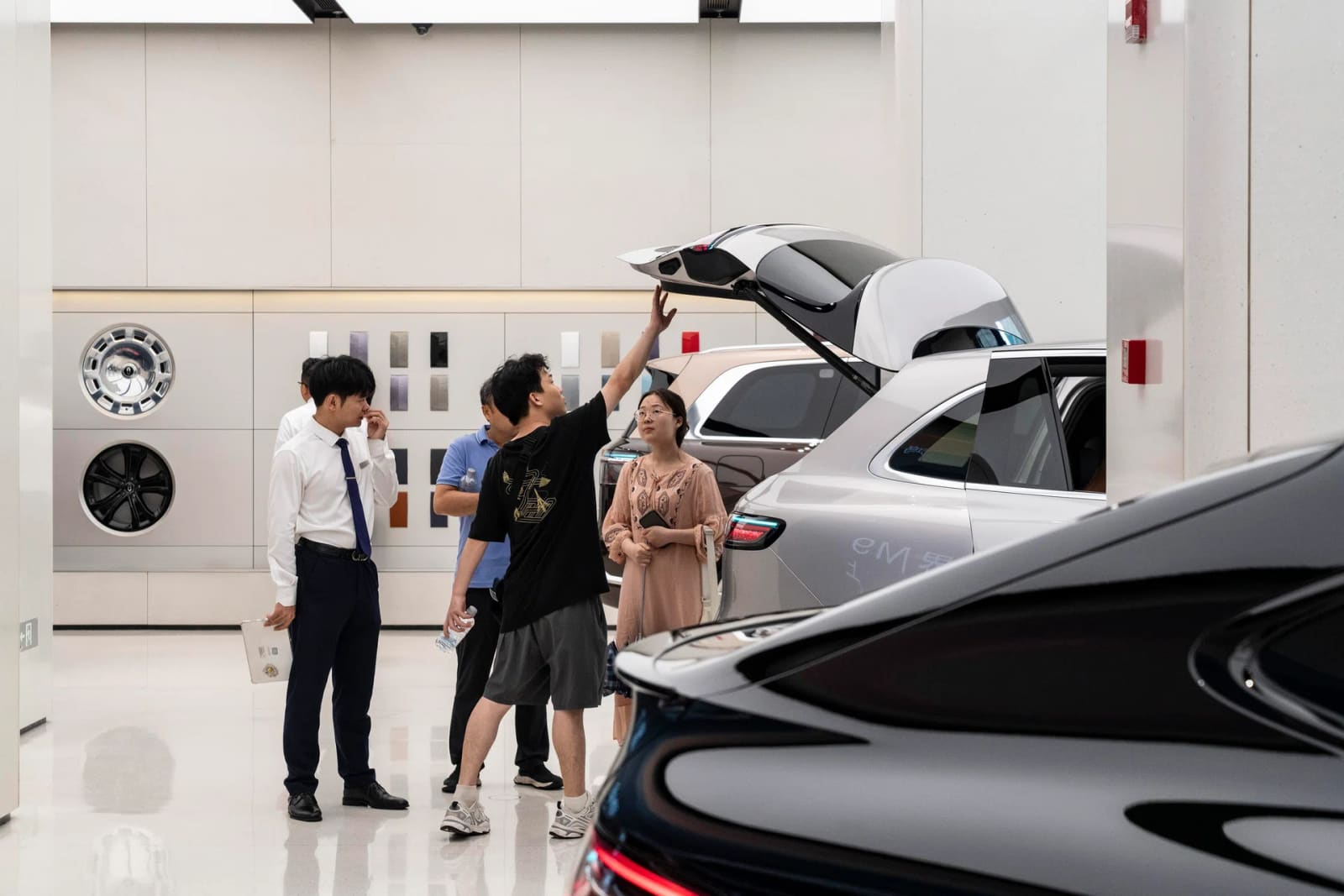
Chinese automakers have spent the past three years packing their vehicles with features that would make legacy brands blush. Massage seats, ambient lighting systems with 256 color options, refrigerated compartments, karaoke systems, rotating touchscreens. The list grows longer with each new model launch.
The strategy emerged from necessity. With dozens of domestic brands fighting for survival in the world's largest auto market and zero brand recognition in Europe or Southeast Asia, Chinese manufacturers needed a way to make buyers stop and look twice. Premium content at mid-market prices became the answer.
Inchcape Singapore managing director Ng Khee Siong noted recently that Chinese brands have used lavish equipment as the fastest path to earn consideration from buyers who might otherwise dismiss unfamiliar nameplates. The approach has worked. Chinese EV exports surged past 1.2 million units in 2025, with models from BYD, NIO, and Xpeng gaining traction across Asia-Pacific markets.
The Decontenting Dilemma
But the automotive industry has a term for what happens when margins tighten and costs must be cut: decontenting. The practice involves quietly removing features or downgrading components, hoping customers won't notice the difference between model years.
For Chinese brands, decontenting presents a particularly acute challenge. Their value proposition rests almost entirely on being feature-rich alternatives to established names. Strip away the panoramic glass roof or the premium sound system, and what remains? An unknown brand with no heritage, limited service networks, and uncertain resale values.
Legacy automakers have navigated this terrain for decades. They can remove a convenience feature here, switch to a cheaper supplier there, and buyers largely accept it because they're purchasing the brand as much as the product. Toyota doesn't need to include ventilated seats to move Camrys. BMW can charge extra for CarPlay and still command loyalty.
Chinese brands lack that cushion. Their customers are buying the features, not the badge.
Market Pressure Points
Several forces are converging to test this model. Raw material costs for batteries remain elevated despite predictions of rapid declines. The European Union's anti-subsidy investigation into Chinese EVs has resulted in tariffs reaching 38 percent on some models, eliminating the price advantage that made generous equipment lists feasible.
In Southeast Asia, where Chinese brands have made their strongest international gains, competition has intensified. BYD, Geely, Great Wall, Chery, and GAC are now fighting each other for the same buyers, creating downward price pressure even as input costs stay high.
The home market offers no relief. China's passenger vehicle sales grew just 1.8 percent in the first half of 2026, according to industry data, while more than 80 brands compete for share. Discounting has become endemic. Several second-tier EV makers have already collapsed or been acquired.
Strategic Crossroads
Chinese automakers now face a choice between three difficult paths. They can maintain current feature levels and accept razor-thin margins, hoping volume will eventually deliver economies of scale. They can quietly begin decontenting and risk losing their primary competitive advantage. Or they can push upmarket, attempting to build genuine brand equity that might someday allow them to charge more for less.
Some brands are already experimenting with the third option. NIO positions itself as a premium alternative with battery-swap infrastructure and concierge services. Zeekr, Geely's upmarket EV brand, emphasizes design and driving dynamics alongside equipment levels. Avatr, backed by Changan, Huawei, and CATL, targets technology enthusiasts willing to pay for cutting-edge software.
Whether these efforts can succeed before margin pressure forces decontenting remains an open question. Building brand equity takes time. Chinese automakers may not have enough of it.
The Asia Angle
For Asian markets outside China, the outcome matters considerably. Chinese brands have disrupted cozy oligopolies in Thailand, Indonesia, and the Philippines, forcing Japanese and Korean incumbents to accelerate electrification and improve value propositions. If Chinese brands stumble, that competitive pressure eases.
Singapore, with its sky-high vehicle costs and tech-savvy buyers, has become a key test market. Dealers report that Chinese EV buyers are younger and more feature-focused than traditional luxury buyers, exactly the profile Chinese brands have cultivated. But they're also more price-sensitive and less forgiving of quality issues.
The next 18 months will reveal whether lavish content can evolve into genuine brand strength, or whether it was merely an expensive customer acquisition strategy with no sustainable endgame. For now, Chinese showrooms remain packed with cars offering more features than buyers knew they wanted. How long that lasts depends on whether the industry can make the economics work without resorting to the one thing it can't afford: taking those features away.
RELATED STORIES
Beijing Warns Domestic EV Makers Against Overseas Price Wars
Cheng Wei-Lun · 3 min
China's Manufacturing Index Holds Below Expansion Threshold for Second Month
Cheng Wei-Lun · 5 min
Malaysia's Rare Earth Deposits Draw Foreign Interest Ahead of China Export Controls
Priyanka V. Rao · 3 min
Honda Demands 30% Price Cuts From Suppliers in $9.4 Billion Cost Plan
Cheng Wei-Lun · 3 min
Spot something wrong? Email editor@briefasia.com. We log every correction publicly.