Sustainability · Energy
China Targets 100 Zero-Carbon Industrial Parks by 2030
Beijing's ambitious plan could reshape domestic emissions and influence industrial development across Belt and Road nations
KEY TAKEAWAYS
- ·China's 15th Five Year Plan mandates approximately 100 national zero-carbon industrial parks by 2030, targeting a sector that accounts for nearly one-third of the country's total emissions.
- ·Chinese companies operate 159 overseas industrial parks as of 2022, with technical analysis showing potential for 420GW of solar and 116GW of wind capacity that could avoid 340 million metric tons of CO2 annually.
- ·Europe's carbon border adjustment mechanism and other trade rules are creating new incentives for Chinese investors to adopt cleaner energy in overseas parks, particularly for higher-value manufacturing sectors like batteries and electric vehicles.
A National Priority Takes Shape
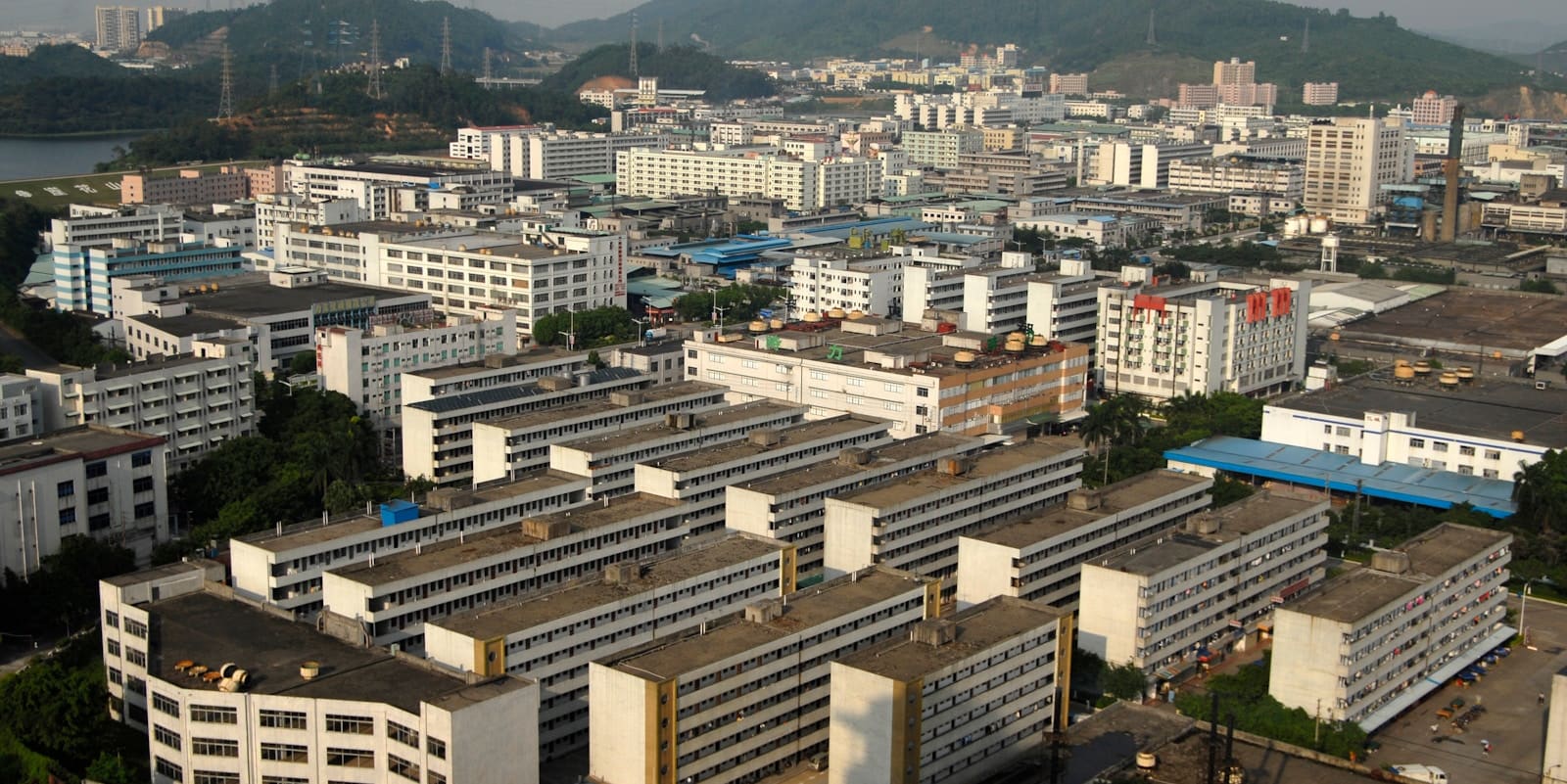
China elevated zero-carbon industrial parks to a top-tier policy goal in March 2026 when the 15th Five Year Plan set a target of approximately 100 such facilities at the national level. The designation marks a shift from scattered pilot programs to coordinated national infrastructure, targeting zones that energy non-profit RMI estimates contribute nearly one-third of China's total emissions.
Industrial parks house clusters of hard-to-abate sectors including steel, cement, and chemicals. The zero-carbon designation requires net zero or near-zero operational emissions, though Beijing has yet to publish a unified definition or standardized carbon accounting framework. By late 2025, the National Development and Reform Commission identified 52 priority parks for completion before 2030.
The concept traces back to 2001 when Guangxi province established China's first eco-industrial park, a sugar processing complex with circular economy features. Formal policy support arrived during the 11th Five Year Plan (2006-2010) with pilot ecological industrial parks, then accelerated under the 14th Five Year Plan's "1+N" climate framework, which promoted green industrial zones and near-zero demonstration projects.
Provincial implementations vary widely. Researchers from Beijing think-tank iGDP note that local governments have pursued different pathways based on economic strengths and regional priorities, creating inconsistency in standards and certification across the country.
Overseas Footprint and Carbon Intensity
Chinese companies operate 159 overseas industrial parks as of 2022, according to the World Resources Institute. Southeast Asia hosts 45 per cent, Africa 28 per cent, and Europe 25 per cent. New parks are under development in Zimbabwe, Kenya, and Indonesia, extending a model central to China's own economic transformation since the Shenzhen special economic zone experiments of the 1980s.
Some overseas parks carry substantial carbon footprints. Indonesia Morowali Industrial Park and Indonesia Weda Bay Industrial Park, both linked to nickel smelting operations with significant investment from China's Tsingshan, rely heavily on coal power. Weda Bay alone contains 4.5GW of coal-fired capacity, the majority invested in and operated by Chinese firms, according to data from the Centre for Research on Energy and Clean Air and Global Energy Monitor.
Nearly half of the world's 5,383 industrial parks and special economic zones are located in China, making the country both the largest domestic operator and an expanding offshore investor in industrial infrastructure.
Trade Pressures and Renewable Potential
New incentives are emerging for cleaner operations. Europe's carbon border adjustment mechanism requires emissions declarations, creating competitive pressure for export-oriented manufacturers. Yang Muyi, senior energy analyst at Ember, notes that Chinese investors eyeing higher-value sectors like battery production and electric vehicle assembly face risk if overseas operations remain tied to fossil infrastructure.
WRI mapping shows that most Chinese overseas industrial parks sit in areas with strong solar resources. Technical analysis indicates potential for nearly 420GW of solar photovoltaic capacity and over 116GW of wind across these sites, which could avoid 340 million metric tons of carbon dioxide annually, exceeding the United Kingdom's 2024 emissions total.
Existing parks already possess rooftop space sufficient for over 2.5GW of solar installation, with Indonesia, Cambodia, and Vietnam offering the largest capacity.
Sam Kimmins, director of energy for the Climate Group, observes that credible net-zero claims and renewable electricity use are becoming essential for market access and long-term competitiveness. Locating operations in a development zone that enables compliance with carbon disclosure rules offers competitive advantage to companies, host zones, and countries alike.
China's 2021 Guidelines for Green Development of Outbound Investment and International Cooperation, issued by the Ministry of Commerce and Ministry of Ecology and Environment, and Beijing's commitment to halt overseas coal plant construction add policy support. At the provincial level, Shandong, Guangdong, Hubei, and Zhejiang integrate low-carbon performance into annual assessments of overseas parks tied to local investors.
Implementation Barriers
Obstacles remain substantial. Clean energy availability varies by country and region, depending on natural resources and grid infrastructure. Land access poses another challenge, particularly for solar installations requiring large areas. Yang notes that domestic provincial governments compete to facilitate investments, including infrastructure and permitting support, but Chinese companies operating abroad often lack equivalent backing and must secure roads, ports, and community relations independently.
Light manufacturing and assembly parks are easier to electrify than heavy industry zones like Zimbabwe's steel complex currently under construction, provided electricity sources are clean. Switching generation to renewables delivers immediate, scalable emissions cuts.
Host governments could adopt lessons from China's approach by evaluating zero-carbon parks on economy-wide returns rather than project-level financials, Yang suggests. Viewing decarbonization as a national priority for competitiveness and industrial upgrading can align local governments, financial institutions, and companies.
Kimmins argues that while China's model is context-specific, design principles including coordination, risk-sharing, and streamlined permitting apply in market economies as well.
Jing Song of WRI cautions that direct replication is not feasible due to differing legal status and governance structures of Chinese parks overseas. However, domestic experience offers reference points. Shenzhen's 2018 Evaluation Guide for Low Carbon Parks awards higher scores to facilities where renewable energy exceeds 15 per cent of total consumption, providing a template for performance benchmarks.
The question now is whether China's industrial decarbonization will remain a domestic priority or extend across Belt and Road partner countries pursuing their own industrialization pathways.
RELATED STORIES

CATL Mandates Carbon Disclosure From Suppliers Starting 2027
Lim Hui Ying · 3 min
China Imposes Anti-Dumping Measures on Japanese Semiconductor Chemical Imports
Jun-ho Seo · 3 min

China's August Inflation Accelerates on Energy and Typhoon Disruption
Tran Quoc Bao · 2 min

Lithuania's Laser Industry Powers Taiwan's Chip Manufacturing Edge
Cheng Wei-Lun · 2 min
Spot something wrong? Email editor@briefasia.com. We log every correction publicly.