Technology · Dev
China Power Chip Makers Report Strong First-Half Earnings on Rising Demand
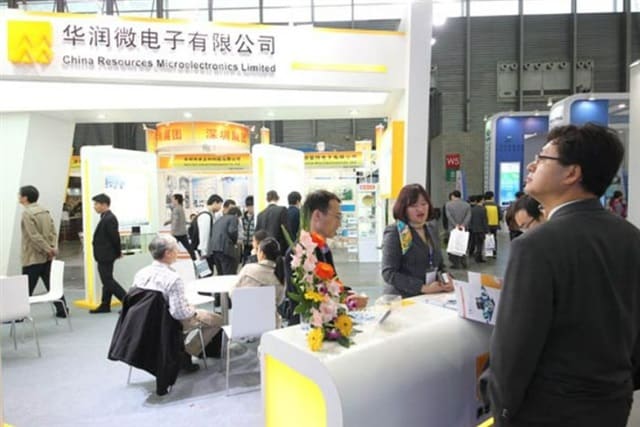
China Resources Microelectronics and Silan Microelectronics posted sharp profit gains as semiconductor utilisation rates and product mix improved through mid-2026.
KEY TAKEAWAYS
- ·China Resources Microelectronics and Hangzhou Silan Microelectronics posted strong first-half 2026 profit growth driven by higher factory utilisation and improved product mix.
- ·Rising demand from electric vehicle production, industrial automation, and renewable energy projects boosted order books for power management and discrete semiconductors.
- ·Both manufacturers are shifting toward higher-margin products including IGBTs and silicon carbide components to compete in strategic sectors and improve profitability.
Mainland Chipmakers See Profit Surge
China Resources Microelectronics and Hangzhou Silan Microelectronics delivered robust earnings growth in the first half of 2026, signalling a rebound in domestic semiconductor production as demand strengthened and manufacturing efficiency climbed.
Both companies are among China's top integrated device manufacturers, producing power management chips and discrete semiconductors used in electric vehicles, industrial equipment, consumer electronics, and renewable energy systems. Their results offer a window into the health of China's chip sector at a time when Beijing is pushing for self-sufficiency in critical semiconductor technologies.
CRM and Silan announced improved first-half performance, citing firmer order books, higher factory utilisation rates, and a shift toward higher-margin products. The gains follow a difficult 2025 for many Chinese chipmakers, which faced inventory corrections and softening demand in key export markets.
Utilisation Rates Climb as Orders Return
Factory utilisation has been a key driver of profitability. Both manufacturers reported that production lines ran at higher capacity in the first half of 2026 compared to the same period a year earlier, allowing them to spread fixed costs more efficiently and improve gross margins.
The uptick in utilisation reflects renewed demand from downstream industries. Electric vehicle production in China accelerated in the first quarter, while industrial automation projects and renewable energy installations continued to expand, all of which require power management and control chips.
Silan, which specialises in power discrete devices and integrated circuits, has benefited from China's push to localise components for EVs and charging infrastructure. CRM, with a broader portfolio spanning power semiconductors and display drivers, has seen demand from both automotive and consumer electronics segments.
Product Mix Shifts Toward Higher Value
Both companies have also worked to improve their product mix, moving away from commodity chips toward more complex, higher-margin devices. This includes insulated-gate bipolar transistors (IGBTs) for EV powertrains, advanced power modules for industrial applications, and silicon carbide (SiC) components for high-efficiency energy conversion.
The shift is part of a broader strategy across China's semiconductor industry to move up the value chain and reduce reliance on low-margin, high-volume production. Government subsidies and procurement policies have supported this transition, particularly for chips used in strategic sectors like new energy vehicles and renewable power.
CRM has been investing in advanced packaging and wafer fabrication capacity, while Silan has expanded its IGBT and SiC production lines. Both companies have also increased research and development spending to compete with international rivals in power semiconductor technology.
Regional Context and Supply Chain Dynamics
The strong results come as China's semiconductor industry navigates a complex landscape. Export controls imposed by the United States and its allies have restricted access to cutting-edge manufacturing equipment and certain chip architectures, pushing Chinese firms to focus on mature-node technologies and domestic markets.
Power semiconductors, which typically use older process nodes, have emerged as a relative bright spot. These chips are less affected by export restrictions and enjoy strong domestic demand driven by China's energy transition and industrial upgrade policies.
At the same time, Chinese chipmakers face intensifying competition at home. Capacity additions across the industry have led to price pressure in some segments, particularly for commodity devices. The ability to differentiate through product quality, customer service, and technical support has become more important.
Outlook and Industry Implications
The first-half results suggest that China's power semiconductor sector is stabilising after a turbulent 2025. However, sustainability of the recovery will depend on several factors, including the pace of EV adoption, infrastructure investment, and global economic conditions.
Both CRM and Silan are likely to continue focusing on capacity expansion in higher-margin product lines and deepening relationships with domestic customers. The Chinese government's emphasis on supply chain security and technological self-reliance provides a supportive policy backdrop, though profitability will ultimately hinge on execution and market demand.
For investors and industry watchers, the performance of these two manufacturers serves as a useful barometer for China's broader semiconductor ecosystem. Their ability to sustain profit growth in the second half will offer clues about the durability of the current upturn and the effectiveness of China's industrial strategy in advanced manufacturing.
RELATED STORIES

Xiaomi Unveils 3nm Mobile Processor to Challenge Qualcomm and MediaTek
Cheng Wei-Lun · 3 min

Taiwan Indicts Nvidia Manager in Chip-Smuggling Investigation
Cheng Wei-Lun · 4 min

Tesla Recalls 2.9 Million Vehicles in China Over Emergency Door Access
Cheng Wei-Lun · 3 min
YMTC Files for $4.9 Billion Shanghai IPO as China Pushes Chip Self-Reliance
Cheng Wei-Lun · 3 min
Spot something wrong? Email editor@briefasia.com. We log every correction publicly.