Asia · Business
Cavite's Three Remaining Salt Farms Face Industrial Pressure and Climate Volatility
Traditional salt makers in the Philippines' Cavite province continue ancestral practices despite shrinking production areas, regulatory hurdles, and erratic weather that has cut output by more than half.
KEY TAKEAWAYS
- ·Only three traditional salt farms remain in Cavite province, down from dozens in the 1990s, producing 400 sacks per season compared to over 1,000 historically.
- ·The 1995 salt iodization mandate and lack of capital for processing equipment pushed small-scale producers out of the regulated market, accelerating industry decline.
- ·Erratic rainfall and typhoons have compressed the production season from six months to as little as three, forcing salt makers into milkfish farming to generate off-season income.
Three Farms, 45 Years of Craft
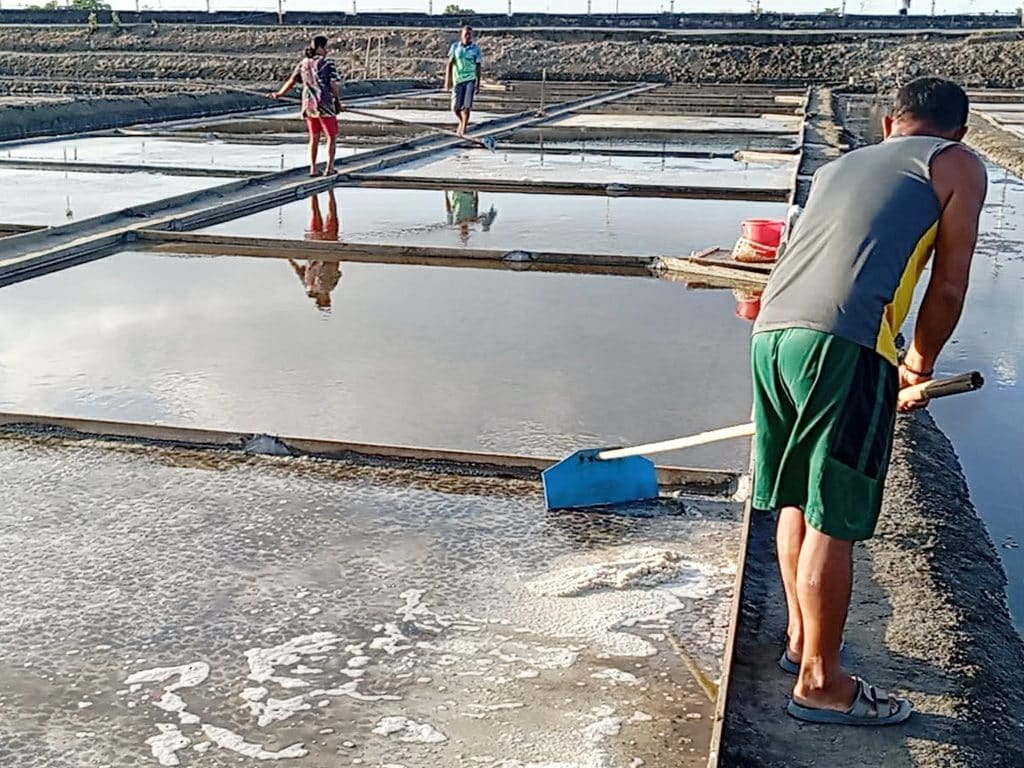
Rolando Palustre has worked salt beds in Noveleta, Cavite for 45 years. The 63-year-old, known locally as Ka Olan, is one of a handful of mang-iiras - traditional salt makers - still practicing a craft that once spanned the province's coastline. Today, only three irasan remain: two in Barangay San Rafael III in Noveleta and one in Barangay Sta. Isabel in Kawit. The rest have been lost to land conversion as developers turned coastal plots into residential and commercial estates.
Palustre and his peers operate on a five-month production window, typically January through June, when solar intensity is high enough to evaporate seawater and crystallize salt. An average production cycle yields around 20,000 Philippine pesos per household, a modest income that forces families to diversify into fishing and milkfish farming during the off-season.
Typhoons and Truncated Seasons
Albert Samartino, 58, another salt maker in San Rafael, described the constant anxiety that accompanies the rainy season. Typhoons can wipe out months of preparation in a single night, flooding the shallow crystallization ponds and dissolving accumulated salt. In recent years, more frequent and unpredictable rainfall has compressed the traditional six-month season to as little as three months, according to Samartino.
The contraction has direct economic consequences. In the 1980s and early 1990s, Noveleta's salt makers harvested more than 1,000 sacks of rock salt per season. Current output stands at roughly 400 sacks across the remaining three farms. Over the same period, the price of a sack of traditional rock salt has climbed from 70 pesos in 1990 to 250 pesos today, reflecting both scarcity and rising input costs.
The 1995 Iodization Mandate
The decline accelerated in 1995 when Republic Act 8172 mandated nationwide salt iodization to address micronutrient malnutrition and iodine deficiency disorders. The law effectively sidelined small-scale producers who lacked the capital and equipment to fortify their product. Industrial salt manufacturers, equipped with iodization machinery and distribution networks, captured the regulated market.
Samartino voiced frustration over the regulatory shift, noting that rock salt had been a household staple for generations. Without government subsidies for processing equipment, traditional producers found themselves unable to compete or comply, and many ceased operations altogether.
Import Dependence
The Philippines imports approximately 92 percent of its salt despite a coastline exceeding 36,000 kilometers, according to data from the Philippine Association of Salt Industry. Domestic production stands at around 60,000 metric tons annually, a fraction of Vietnam's 1.1 million metric tons from a coastline less than one-tenth the length.
In 2023, President Ferdinand Marcos Jr. signed Republic Act 11985, the Philippine Salt Industry Development Act, with the stated goal of reviving salt farming and achieving self-sufficiency. The law envisions the country as a net exporter. However, implementation has been uneven. The Bureau of Fisheries and Aquatic Resources has distributed materials for salt bed construction, but financial support to scale production or acquire iodization equipment has not materialized, according to salt makers in Cavite.
Milkfish and Makeshift Capital
To bridge the gap between production seasons, Palustre and his neighbors shift to bangus - milkfish - aquaculture when rains begin. The ponds used for salt crystallization double as fish pens during the wet months, providing a secondary income stream that helps families accumulate capital for the next salt cycle, which typically resumes in November.
This dual livelihood model is less a strategic choice than a survival adaptation. The income from milkfish farming often determines whether a household can afford the seawater pumping, pond maintenance, and labor costs required to restart salt production.
Cultural Stake
Palustre emphasized that the work demands patience and physical endurance. He expressed hope that younger generations in Noveleta will continue the practice, viewing it not only as livelihood but as cultural inheritance. The salt farms, he argued, are embedded in the identity of coastal barangays that have relied on marine resources for centuries.
Yet succession remains uncertain. The combination of low margins, climate risk, and regulatory barriers has made salt making unattractive to younger workers, many of whom migrate to Metro Manila for wage employment in construction, retail, or services.
The survival of Cavite's three remaining salt farms depends on a confluence of policy support, climate adaptation, and market access. For now, Palustre and Samartino continue to work their beds, timing their labor to the sun and the tides, aware that each season could be their last.
RELATED STORIES

Philippines Energy Budget Climbs 26% as Electric Vehicle Funding Surges
Priyanka V. Rao · 3 min
Philippine Nickel Miners Push for Unified Policy Framework as Critical Minerals Race Intensifies
Priyanka V. Rao · 3 min

Philippine Water Operator Earmarks $400 Million for Southeast Asia Expansion
Mariel D. Santos · 2 min
Philippine Manufacturing Expands at Fastest Pace Since 2016
Priyanka V. Rao · 3 min
Spot something wrong? Email editor@briefasia.com. We log every correction publicly.