Finance · Deals
CapitaLand China Trust Reports Lower First-Half DPU Following Mall Divestment
Singapore-listed REIT sees distribution per unit slip 1.6% to S$0.0245 as revenue declines 4.4%, driven largely by last year's asset sale and softer leasing conditions across China portfolio
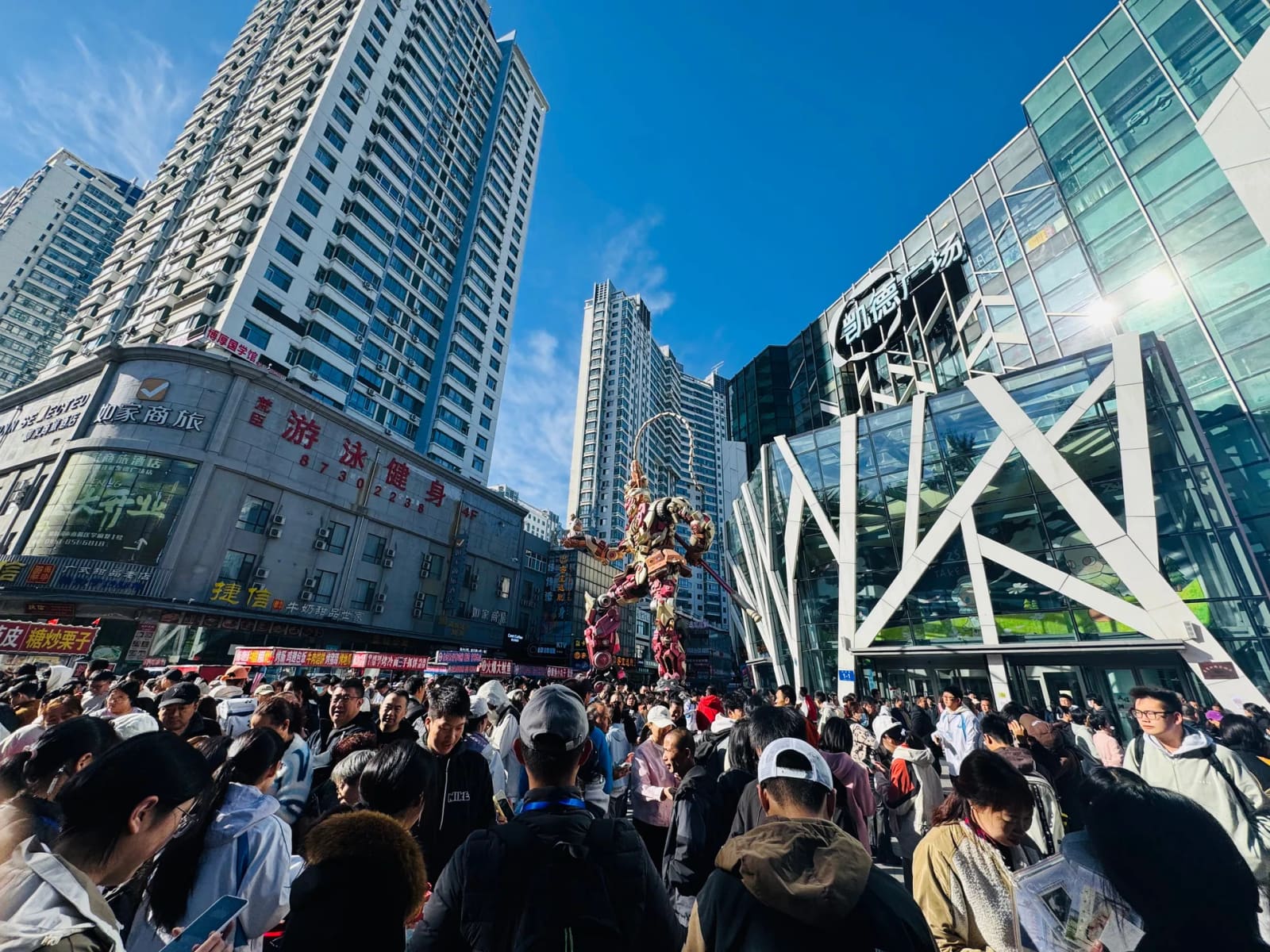
KEY TAKEAWAYS
- ·CapitaLand China Trust's first-half DPU fell 1.6% to S$0.0245, with revenue down 4.4% to S$152.3 million, largely due to the October 2025 sale of CapitaMall Yuhuating.
- ·Excluding the divested asset, DPU would have risen 2.9% and revenue declined only 0.2%, supported by 3.2% shopper traffic growth and 2.6% tenant sales growth.
- ·Average cost of debt fell nearly 40 basis points to 3.06% as the REIT increased renminbi-denominated borrowings to 73%, capitalizing on favorable China interest rates and currency appreciation.
Distribution Softens on Asset Sale
CapitaLand China Trust posted a distribution per unit of S$0.0245 for the first half ended June 30, 2026, down 1.6% from S$0.0249 a year earlier. Revenue fell 4.4% to S$152.3 million from S$159.2 million, while net property income declined 2.5% to S$103.9 million. Distributable income came in at S$43.2 million, a 0.6% decrease from S$43.4 million, and will be paid out on September 9.
The Singapore-listed REIT attributed the lower figures primarily to the absence of CapitaMall Yuhuating, which was sold to CapitaLand Consumption C-Reit in October 2025 for 813.8 million yuan, representing an 8.8% premium to its floor price and roughly 3.7% above its end-2024 valuation. Excluding that asset's contribution in the prior-year period, DPU would have increased 2.9% from S$0.0238, gross revenue would have dipped only 0.2%, and NPI would have risen 1.3%.
CEO Gerry Chan described the result as largely a base-effect of being "one asset short" and pointed to underlying operational resilience. Shopper traffic across the trust's retail portfolio grew 3.2% and tenant sales rose 2.6% in the first half, both outpacing full-year 2025 growth rates. Three supermarkets that completed asset enhancements contributed 153 million yuan in sales during the period.
Retail Occupancy Holds, Reversions Remain Negative
The retail segment, which accounts for the bulk of CLCT's portfolio, saw revenue fall 5.3% to S$109.4 million and NPI decline 4.4% to S$73.4 million. Retail occupancy stood at 97.3% as of June 30, with occupancy cost at 17.5%. Rental reversion for the first half was negative 2.7%, similar to 2025 levels.
Chan attributed the negative reversion to strategic lease actions involving two major anchor tenants, aimed at improving mall attractiveness and building a stronger surrounding tenant ecosystem. While beneficial in the long term, such moves require accepting lower rents in the near term. He noted that retailers remain cautious about expansion despite healthy sales, feeling little pressure to agree to higher rents. "That doesn't mean that we don't get positive reversions in some of our leases," he added.
Performance varied across the portfolio. Three malls in Chengdu, Beijing, and Harbin experienced lower occupancy and rental rates, weighing on overall results.
Business Parks Outperform, Logistics Stabilizes
The business parks segment posted a 3.3% increase in NPI to S$27.9 million, even as revenue slipped 1.6% to S$38.7 million. Overall business park occupancy reached 85.1%, with the Hangzhou asset recording 70.8% occupancy compared to 50% to 70% at nearby competing properties. Rental reversion for business parks was negative 12% in the first half.
Chan emphasized that the manager prioritized occupancy through active tenant retention and new lease conversion amid a soft leasing environment. You Hong, head of investment and portfolio management, said rental reversions are expected to remain negative through 2027 due to supply glut, with improvement anticipated once demand recovers.
The logistics segment, representing 3% of the portfolio, saw revenue fall 4.7% to S$4.2 million and NPI decline 6% to S$2.5 million. Occupancy was 99%. Rental reversion improved to negative 1.2% from negative 24.5% in FY2025, which Chan characterized as evidence the market has bottomed and stabilized.
Currency Gains and Lower Debt Costs Cushion Headwinds
Disciplined capital management helped offset operational headwinds. The renminbi appreciated roughly 4% over the past year, benefiting gearing, cost of debt, and DPU. Aggregate leverage stood at 40.4% as of June 30.
Average cost of debt fell to 3.06%, down nearly 40 basis points year on year, translating to approximately 16% interest savings. Chief financial officer Yan Lintong said the manager aims to maintain a low-3% cost of debt and potentially reach the high-2% range in the near future.
The manager increased its proportion of renminbi-denominated borrowings to 73% from 59% at the end of the first quarter, taking advantage of China's accommodative monetary policy and favorable interest-rate environment. Yan said the pivot from Singapore-dollar to renminbi debt over the past year has generated significant savings. The target range for renminbi-denominated debt is 70% to 80% of total debt.
Acquisition Pipeline in Focus
Chan said the manager is actively scouting acquisition opportunities in China's Tier 1 and Tier 2 cities, with continued focus on retail assets. "We've seen a few interesting ones and are working on them," he said, expressing hope to close a deal by year-end.
He noted that CapitaLand Commercial C-Reit, CapitaLand Investment's second China REIT that has yet to list, could serve as a future capital recycling avenue given their shared ecosystem. However, the manager's priority remains boosting CLCT's income before considering asset value extraction.
Units of CapitaLand China Trust closed up 2.3%, or S$0.015, at S$0.67 following the earnings announcement.
RELATED STORIES

Franklin Templeton Restructures Leadership With Two Senior Appointments
Priyanka V. Rao · 4 min
Singapore's Big Three Banks Post Solid First-Half Gains as Wealth Offsets Margin Pressure
Priyanka V. Rao · 3 min
Singapore Banks Hit Record Highs on Wealth Management Surge
Priyanka V. Rao · 2 min
Allianz Acquires HSBC Singapore Insurance Operations in $2.3 Billion Deal
Priyanka V. Rao · 3 min
Spot something wrong? Email editor@briefasia.com. We log every correction publicly.