Asia · Trade
Canada Courts ASEAN With Trade Pact as Strategic Footprint Remains Small
Ottawa pushes food, energy, and critical minerals cooperation as regional surveys rank it near the bottom among dialogue partners
KEY TAKEAWAYS
- ·ASEAN and Canada adopted a 2026-2030 action plan in Manila and expect to conclude a free trade agreement later this year, five years after negotiations began.
- ·Regional surveys rank Canada tenth out of eleven dialogue partners in strategic relevance for three consecutive years, ahead only of New Zealand.
- ·Canada's agricultural exports to ASEAN reached CAD 2,250 million in 2023, about 61 percent of estimated potential, with room to grow in fertilizers and food products.
Partnership Plan Adopted in Manila
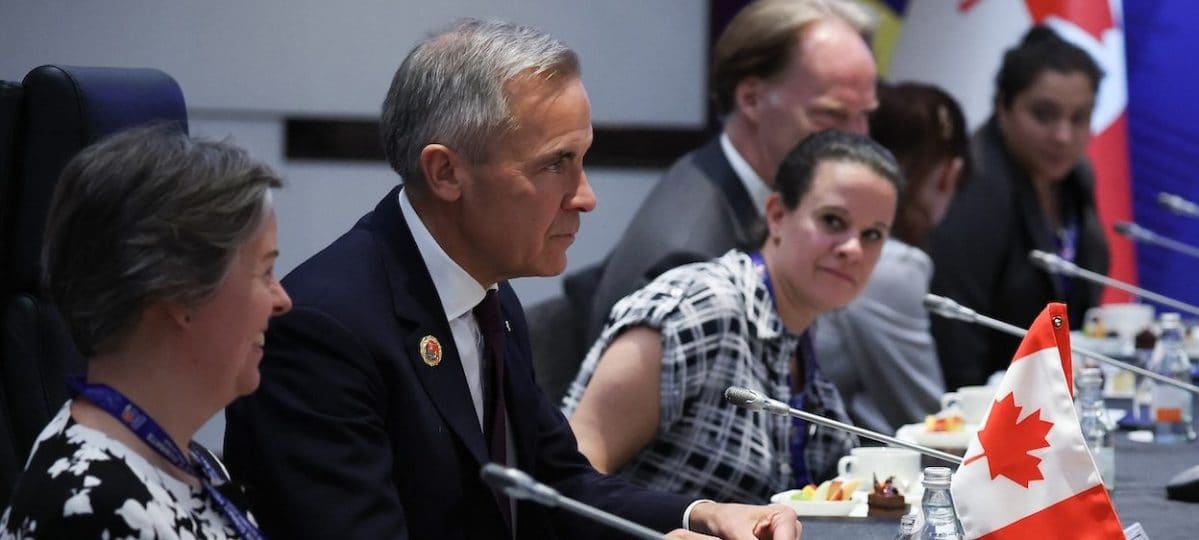
ASEAN member states and Canada adopted a Plan of Action for 2026-2030 at a post-ministerial conference in Manila last month, outlining deeper cooperation in trade, investment, and broader economic engagement. The agreement replaces the previous Enhanced Partnership framework that ran through 2025.
The action plan arrives as negotiators prepare to finalize the ASEAN-Canada Free Trade Agreement later in 2026, five years after talks began. The pact aims to formalize ties across the ten-country bloc, building on a web of bilateral and plurilateral deals Ottawa has pursued over the past decade.
Yet survey data underscores Canada's challenge. The State of Southeast Asia Survey has ranked Canada tenth out of eleven dialogue partners in strategic relevance for three consecutive years from 2024 to 2026, ahead only of New Zealand. Regional executives and policymakers consistently view the United States, Japan, Australia, and India as more central to Southeast Asia's economic and security architecture.
Bilateral Momentum Accelerates
Canada's economic footprint in the region has expanded gradually but steadily. Four ASEAN states - Brunei, Malaysia, Singapore, and Vietnam - already participate alongside Canada in the Comprehensive and Progressive Agreement for Trans-Pacific Partnership, which took effect in 2018.
On the bilateral front, the Canada-Indonesia Comprehensive Economic Partnership Agreement entered into force in September 2025. Canada launched free trade negotiations with the Philippines and Thailand in November 2025. Indonesia and the Philippines both opened discussions to join the CPTPP in June 2026, further thickening the network of formal trade links.
The acceleration came during a period of tariff uncertainty emanating from Washington in 2025, when ASEAN capitals looked to diversify their North American trade exposure. For the four ASEAN countries without existing or prospective bilateral deals with Ottawa - Cambodia, Laos, Myanmar, and Timor-Leste - the upcoming regional free trade agreement represents the primary channel for formal market access.
Competitive Edge in Essentials
Canada holds a revealed comparative advantage in several product categories critical to ASEAN's economic security. Trade data shows Ottawa excels in supplying radioactive materials, simply worked wood, wheat, unmilled cereals, pulp, nickel concentrates, and crude petroleum. Fertilizers, food preparations, and fish products also rank high.
Geopolitical turbulence in the Middle East has elevated the importance of supply diversification for fuel and fertilizers. Prolonged conflict and the strategic significance of the Strait of Hormuz have pushed ASEAN governments to seek alternative sources for essential commodities.
Canada's agricultural exports to Southeast Asia totaled CAD 2,250 million in 2023, roughly 61 percent of estimated export potential according to gravity model projections. The gap points to untapped opportunity in pulses, fertilizers, and processed food products as the region's population and incomes grow.
Energy Transition and Critical Minerals
Fossil fuel trade presents a more complex picture. Several ASEAN states have moved to reduce import dependence following recent supply shocks, investing in domestic energy capacity and renewable infrastructure. Canada's traditional strength in crude oil and natural gas exports must now compete with the region's pivot toward decarbonization.
Ottawa has responded by positioning itself as a partner in energy transition infrastructure, critical minerals, and associated technologies. Knowledge-sharing initiatives with ASEAN member states focus on mining, refining, and processing the inputs required for battery production, grid modernization, and electric vehicle supply chains.
Each ASEAN economy brings distinct resource endowments, industrial capabilities, and policy priorities. Canada's strategic challenge lies in identifying complementarity gaps country by country and tailoring value-added cooperation in areas where its expertise aligns with regional needs.
ACAFTA Must Differentiate
The forthcoming ASEAN-Canada Free Trade Agreement faces pressure to offer provisions at least as attractive as the CPTPP to justify utilization by businesses already operating under that framework. Deeper bilateral agreements under negotiation with Indonesia, the Philippines, and Thailand could fragment trade flows if the regional pact fails to provide meaningful additional market access or regulatory simplification.
For less-developed ASEAN members, the regional agreement offers a structured platform to address regulatory and institutional capacity gaps that constrain trade with Canadian firms. Technical assistance and capacity-building provisions embedded in the ACAFTA could reduce non-tariff barriers and streamline customs procedures in Cambodia, Laos, Myanmar, and Timor-Leste.
The action plan and trade agreement represent Canada's effort to carve a niche aligned with its economic strengths rather than compete in the security and diplomatic arenas dominated by larger powers. Food security and energy transition present credible areas where Ottawa can deliver tangible value to Southeast Asia while expanding its own market access in a region of 680 million people.
RELATED STORIES
Philippines Reopens Doors to Canned Pork Imports After Seven-Year Ban
Priyanka V. Rao · 3 min
Five ASEAN Members Back Regional Oil Stockpile as Study Nears Completion
Tran Quoc Bao · 3 min

Thailand Targets Four Strategic Priorities Amid Global Trade Volatility
Priyanka V. Rao · 3 min

Southeast Asian Firms Overlook Digital Pact Worth USD 2 Trillion
Lim Hui Ying · 4 min
Spot something wrong? Email editor@briefasia.com. We log every correction publicly.