Sustainability · Energy
Brent Crude Hits Six-Week High as Strait of Hormuz Closure Looms
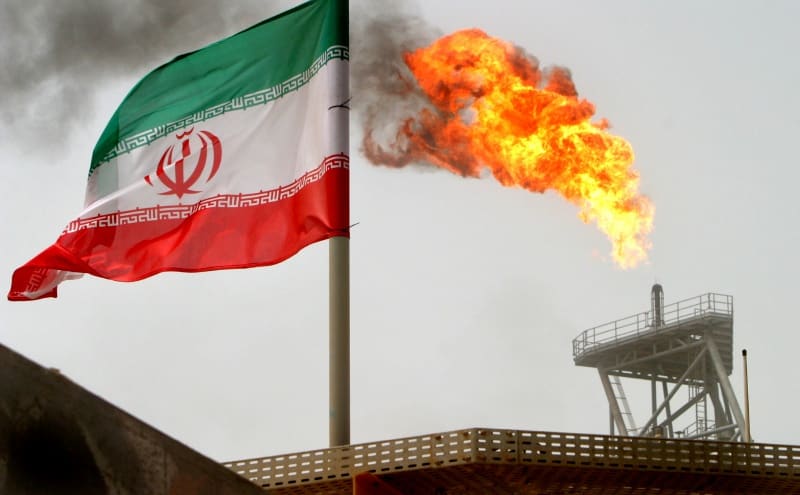
US-Iran strikes and Houthi naval blockades threaten global energy flows through two critical Middle Eastern waterways
KEY TAKEAWAYS
- ·Brent crude rose to $96 per barrel, the highest in six weeks, after Iran declared the Strait of Hormuz closed and mined the southern passage.
- ·Houthi forces announced a naval blockade of Saudi Arabia in the Red Sea, targeting tankers and threatening a second critical chokepoint for global oil flows.
- ·Asian refiners face acute supply risk as over 12 million barrels per day of Gulf crude imports transit the Strait of Hormuz under normal conditions.
Dual Chokepoint Crisis
Brent crude climbed to $96 per barrel early Thursday morning, the highest level since early June, as military confrontations shut down the world's most critical oil transit route. Iran's Revolutionary Guards declared the Strait of Hormuz "completely closed" while US military operations continued their twelfth consecutive night of strikes on Iranian targets.
West Texas Intermediate rose to $88.27, extending Wednesday's nearly 3% gain. The price surge reflects immediate supply risk: roughly 21 million barrels per day of crude and petroleum products flow through the Strait of Hormuz under normal conditions, representing about one-fifth of global oil consumption.
Iran's Tanker Warning
The Revolutionary Guards reported that an oil tanker caught fire following an explosion while attempting to navigate what they described as a mined route south of the strait. Two additional tankers reversed course. Iran's military spokesperson warned on social media that the southern passage through the waterway has been mined, and that no vessel would be permitted entry or exit without Iranian coordination.
The escalation followed a public threat from US President Donald Trump, who stated he would authorize destruction of an Iranian bridge or power plant each time Iran targets a ship in the strait. The US military confirmed it conducted strikes on Iran for the twelfth straight night.
Red Sea Blockade Expands
Iran-aligned Houthi forces opened a second front by announcing a naval blockade of Saudi Arabia through the Bab el-Mandeb Strait. The group claimed it targeted two Saudi oil tankers, with maritime security sources confirming that the Saudi-flagged vessel Encelia sustained damage in the Red Sea.
The Houthis stated they forced approximately ten ships to turn back after warning them against proceeding to Saudi ports. The move threatens to choke off Saudi crude exports that typically flow north through the Red Sea and Suez Canal to European markets, adding a second supply disruption point beyond the Persian Gulf.
The Bab el-Mandeb passage, linking the Red Sea to the Gulf of Aden, handles roughly 6.2 million barrels per day in normal conditions. A sustained blockade would force tankers to reroute around Africa's Cape of Good Hope, adding two weeks and significant cost to voyages bound for Europe and the eastern Mediterranean.
Asian Refinery Exposure
The closure of both waterways poses acute risk to Asian refining centers. Japan, South Korea, China, and India collectively import over 12 million barrels daily from the Persian Gulf, with nearly all of that volume transiting the Strait of Hormuz. Alternative supply routes from West Africa or the Americas carry higher freight costs and longer lead times, tightening regional diesel and gasoline markets within weeks if the closure persists.
Singapore, Asia's trading and refining hub, has already seen prompt-month crude differentials widen as traders price in supply uncertainty. Refinery margins in Northeast Asia typically compress when crude costs spike faster than product prices can adjust, pressuring earnings at integrated oil companies across the region.
US Inventory Build
US crude stockpiles rose by two million barrels last week, according to the Energy Information Administration. Refinery utilization eased while imports climbed and exports declined. The build exceeded analyst expectations of a 1.1 million barrel draw, suggesting domestic demand softness even as international prices rally on geopolitical premium.
The inventory increase indicates that the current price surge is driven almost entirely by supply-route risk rather than tight physical balances. If Middle Eastern exports resume, the geopolitical premium embedded in current prices could unwind quickly, though few analysts expect a diplomatic resolution in the near term given the public nature of US and Iranian threats.
What Comes Next
Market participants are watching whether Iran's mine-laying claims can be verified and how quickly the US Navy can clear contested shipping lanes. Asian buyers are evaluating term contract force majeure clauses and spot cargo alternatives. Saudi Arabia has not yet publicly responded to the Houthi blockade announcement, though the kingdom maintains spare production capacity that could partially offset lost export routes if domestic refining is prioritized.
Front-month Brent futures are now trading at a $4 premium to contracts six months out, a market structure known as backwardation that signals immediate supply tightness. If both chokepoints remain contested through the end of the month, analysts expect Brent could test $100 per barrel, a threshold last breached in mid-2023.
RELATED STORIES
Crude Jumps Above $90 as Hormuz Standoff Deepens
Priyanka V. Rao · 3 min

Trump Announces Plan to Declare Strait of Hormuz US Territory
Priyanka V. Rao · 3 min
Crude Surges Past $90 as Hormuz Talks Stall
Cheng Wei-Lun · 3 min

Oil Slides 4.7% as US-Iran Talks Set to Resume Monday
Cheng Wei-Lun · 3 min
Spot something wrong? Email editor@briefasia.com. We log every correction publicly.