Technology · AI
Beijing Consolidates Position as China's AI Powerhouse
Moonshot AI's Kimi K3 climbs global rankings as capital, talent, and policy converge in the capital
KEY TAKEAWAYS
- ·Moonshot AI's open-source Kimi K3 model has entered top global rankings as Beijing-based AI startups collectively raised approximately USD 14 billion over eighteen months.
- ·Beijing's proximity to central government provides AI firms early visibility into regulatory changes and access to state-backed funding unavailable in Shenzhen or Shanghai.
- ·Talent pipelines from Tsinghua, Peking University, and the Chinese Academy of Sciences sustain expansion, though export controls on advanced chips pose risks to scale.
Capital Draws AI Leaders
Beijing has pulled ahead in China's race to build artificial intelligence clusters, drawing startups and funding at a pace that reflects the city's proximity to policy makers and deep pools of technical talent. Moonshot AI, one of the capital's rising stars, recently launched its Kimi K3 open-source large language model, which has secured a position among the top-ranked open-source systems globally.
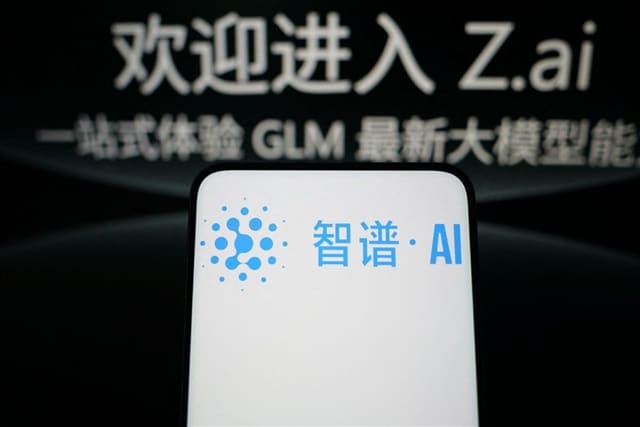
The company's ascent mirrors a broader pattern: firms developing foundation models and generative AI tools are choosing Beijing over rival hubs in Shenzhen, Hangzhou, and Shanghai. Z.ai and DeepSeek, both active in the large language model arena, have expanded their operations in the city, reinforcing the capital's gravitational pull.
Funding Concentrates Around Decision-Making Center
Investment flows tell part of the story. Over the past eighteen months, Beijing-based AI ventures have collectively raised approximately USD 14 billion, according to industry data. That figure places the city ahead of other Chinese technology centers in absolute terms and underscores investor confidence in the regulatory and infrastructure advantages that come with a Beijing address.
Policy support has been explicit. Municipal authorities have designated AI development zones, streamlined permit processes for compute-intensive projects, and facilitated access to state-backed venture funds. The city's position as the seat of central government gives local firms earlier visibility into regulatory shifts and pilot programs, a dynamic that matters in an industry where compliance can determine survival.
Talent Pipeline Feeds Expansion
Beijing's universities and research institutes supply a steady stream of machine learning engineers and algorithm specialists. Tsinghua University, Peking University, and the Chinese Academy of Sciences all maintain campuses in the capital, and their graduates tend to remain in the city, attracted by salaries and equity packages that rival those offered in Silicon Valley.
Corporate labs have followed the talent. Several multinational technology companies operate AI research centers in Beijing, and domestic giants including Baidu and ByteDance anchor their AI teams there. This concentration creates a feedback loop: the presence of experienced engineers attracts more funding, which in turn draws more startups and recruits.
Open-Source Models Gain Traction
Moonshot AI's Kimi K3 model represents a strategic bet on open-source development. By releasing the model's weights and architecture, the company positions itself to benefit from community contributions and to build a developer ecosystem around its platform. The model's performance on benchmark tasks has caught the attention of researchers outside China, suggesting that Beijing-based teams are competitive on technical merit, not just domestic market access.
Z.ai and DeepSeek have taken different paths, focusing on proprietary systems and enterprise clients, but both companies leverage Beijing's compute infrastructure and regulatory environment. The diversity of approaches within the same geographic cluster indicates a maturing ecosystem rather than a monoculture.
Competitive Dynamics Shift
The concentration of AI activity in Beijing has implications for other Chinese cities. Shenzhen, long regarded as the country's hardware and electronics capital, has struggled to attract foundation model startups despite its manufacturing base and venture ecosystem. Hangzhou, home to Alibaba, retains strength in e-commerce AI applications but lacks the density of pure-play AI firms that Beijing now hosts.
Shanghai remains a financial hub, and its AI investments tilt toward fintech and supply chain automation. But the city's regulatory environment is perceived as less flexible than Beijing's, and its universities, while prestigious, do not produce the same volume of AI-specialized graduates.
What Comes Next
Beijing's lead is not guaranteed. The city's advantages in policy access and talent could erode if central authorities decide to distribute AI resources more evenly across regions, a move that would align with broader economic rebalancing goals. Compute costs remain high, and power grid constraints could limit the scale of training runs if infrastructure investment does not keep pace.
International factors also loom. Export controls on advanced semiconductors affect all Chinese AI firms, but Beijing-based companies, given their visibility and scale, may face heightened scrutiny. How the capital's AI cluster navigates these pressures will shape the next phase of China's ambitions in artificial intelligence.
RELATED STORIES
Arm Unveils Mobile Compute Platform Targeting China's AI Handset Sector
Tran Quoc Bao · 3 min
LG Pivots to AI-Defined Vehicle Platform as Korea Chases China's Self-Driving Lead
Jun-ho Seo · 3 min
Ant Group's Health Platform Logs 150 Million Users as Digital Wellness Gains Traction
Siti Nuraini · 3 min
Lithuania's Laser Industry Powers Taiwan's Chip Manufacturing Edge
Cheng Wei-Lun · 2 min
Spot something wrong? Email editor@briefasia.com. We log every correction publicly.