Finance · Fintech
Apple Pay Arrives in the Philippines After Years of Anticipation
Four banks now support the contactless payment service, with regulators signaling more institutions will follow as the country's digital payments landscape intensifies.
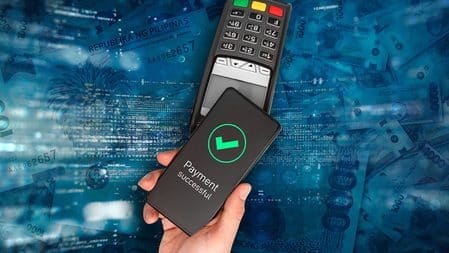
KEY TAKEAWAYS
- ·Apple Pay launched in the Philippines on August 4 with support from Metrobank, UnionBank, GoTyme, and ChinaBank, enabling contactless payments for eligible cardholders.
- ·The service enters a market where Google Pay launched nine months earlier with nine partners, and where local e-wallets and QR payments already dominate retail transactions.
- ·Bangko Sentral ng Pilipinas approved the rollout as part of its broader push to expand payment options and increase competition among banks and digital platforms.
The Wait Is Over
Filipino iPhone users can now tap to pay. Apple Pay officially launched in the Philippines on August 4, bringing the Cupertino company's contactless payment platform to one of Asia's most mobile-first economies nearly a decade after its global debut.
Customers holding eligible cards from four participating banks can add their accounts to the Apple Wallet app and use their devices at any merchant terminal that accepts contactless transactions. The initial lineup includes Metrobank, UnionBank, GoTyme, and ChinaBank, with additional institutions expected to join in the coming months.
The service works by creating a tokenized version of a physical card inside Apple Wallet. When a user holds their iPhone near a point-of-sale terminal, the transaction authenticates via Face ID, Touch ID, or a passcode. The actual card number never reaches the merchant, a security layer Apple has emphasized since launching the platform in 2014.
Regulatory Green Light
The rollout follows months of preparation by local banks to meet Apple's technical and compliance standards. Mamerto Tangonan, deputy governor at Bangko Sentral ng Pilipinas, had hinted at the launch during a recent roundtable with reporters, noting that the central bank raised no objections to the service entering the market.
"It's up to the banks," Tangonan said at the time, declining to specify which lenders were involved or when the service would go live.
The Philippines had been conspicuously absent from Apple's official list of supported markets until this week. Industry observers had projected a third-quarter 2026 entry as banks worked through integration requirements, a timeline that proved accurate.
Catching Up in a Crowded Field
Apple Pay's arrival places it in direct competition with an already dense ecosystem of digital payment options. Google Pay launched in the Philippines in November 2025 with a broader coalition of nine partners, including China Bank, EastWest, GCash, GoTyme, Maya, RCBC, UnionBank, Wise, and Zed.
That head start gave Google an edge in a market where Android devices outnumber iPhones by a wide margin. Still, Apple's user base skews affluent and urban, demographics that align with early adoption of premium financial services.
The central bank has been vocal about its intent to broaden payment choices and inject competition into a sector long dominated by cash and a handful of local e-wallets. Recent moves include nudging banks to drop interbank transfer fees and encouraging QR code interoperability across platforms.
What Comes Next
For now, Apple Pay in the Philippines supports in-store purchases, in-app transactions, and payments on websites that integrate the service. Expansion to transit systems, a feature live in markets like Tokyo and London, remains uncertain. The country's largest metro line operator has not announced compatibility, though regulators have signaled interest in tap-to-pay rail access.
Bank coverage will be the critical variable. The four launch partners represent a fraction of the country's banking universe, and adoption will hinge on how quickly larger retail banks and credit card issuers bring their portfolios online.
Apple has not disclosed transaction volume targets or marketing spend for the Philippine market. The company typically lets bank partners drive consumer education, a strategy that has produced uneven results in smaller Southeast Asian economies where brand loyalty to local payment apps runs deep.
The launch cements the Philippines as the latest Southeast Asian market to gain access to Apple's payment infrastructure, joining Singapore, Malaysia, and Thailand. It also underscores the region's growing appeal to global fintech platforms seeking scale beyond saturated Western markets.
RELATED STORIES
GCash Parent Mynt Clears Final Regulatory Hurdle for Manila IPO
Mariel D. Santos · 3 min
Manila Bourse Slides as Investors Reserve Cash for GCash IPO
Rajesh K. Iyer · 3 min

Manila Halts Approvals for Digital Payment Operators Pending Fraud Review
Jun-ho Seo · 4 min
Alternergy Debuts in Philippine Debt Market with ₱2 Billion Notes Offering
Mariel D. Santos · 2 min
Spot something wrong? Email editor@briefasia.com. We log every correction publicly.