Finance · Deals
Alternergy Debuts in Philippine Debt Market with ₱2 Billion Notes Offering
The renewable energy developer will use proceeds to fund green auction projects and expand its 119-megawatt operating portfolio across the Philippines and Palau.
KEY TAKEAWAYS
- ·Alternergy Holdings is raising ₱2 billion through 1.5-year fixed-rate notes at 7.75 per cent annual interest, receiving an investment-grade PRS Aa- rating from Philippine Ratings Services.
- ·Proceeds will fund pre-development of projects awarded in the government's fourth green energy auction and support expansion from 119 megawatts to an expected 311 megawatts by year-end.
- ·The offering reflects growing Southeast Asian renewable developer use of local debt markets to finance expansion amid currency volatility and investor appetite for contracted green energy projects.
First Debt Issuance for Renewable Energy Expansion
Alternergy Holdings Corp. has received board approval to raise ₱2 billion (approximately USD 35 million) through its first fixed-rate notes offering in the Philippine debt capital markets. The renewable energy developer plans to offer the securities to qualified institutional buyers to finance its growing project pipeline.
The notes carry a tenor of 1.5 years and an annual interest rate of 7.75 per cent, with quarterly interest payments. Principal repayment will occur in full at maturity. BDO Capital and Investment Corp. will serve as sole issue manager and arranger, with the notes set to list on the Philippine Dealing and Exchange Corp.
Philippine Ratings Services Corp. has assigned the issuance an investment-grade credit rating of PRS Aa- with a stable outlook, indicating high quality and low credit risk. The stable outlook suggests the rating is likely to remain unchanged over the next 12 months.
Funding Green Energy Auction Projects
Proceeds will primarily support pre-development work on Alternergy's projects awarded under the Philippine government's fourth green energy auction. Additional funds may finance other projects in the development pipeline and general corporate purposes, including full repayment of existing loans.
"This maiden issuance in the Philippine debt capital markets marks an important milestone for Alternergy as we position the company for its next phase of growth," Gerry Magbanua, president of Alternergy, said.
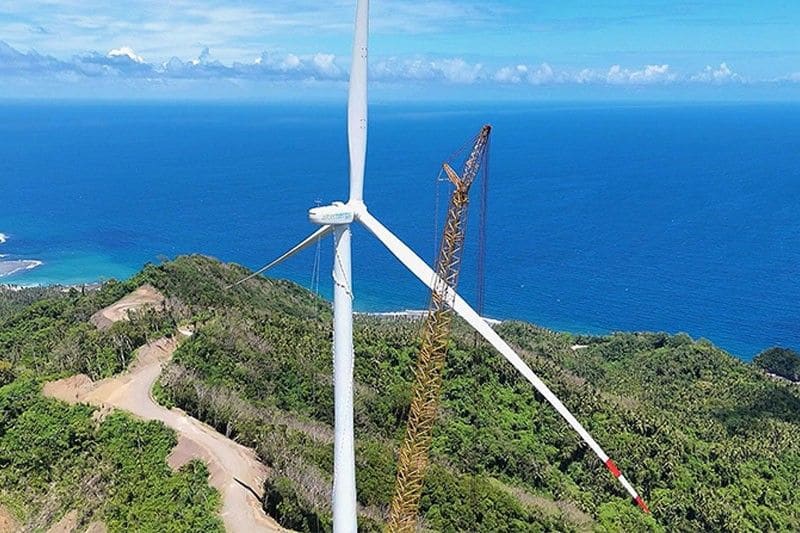
The company currently operates 119 megawatts of renewable energy capacity across sites in the Philippines and Palau. By year-end, operating capacity is expected to reach 311 megawatts, representing more than a doubling of its existing portfolio.
Regional Context for Renewable Debt
The offering arrives as Southeast Asian renewable energy developers increasingly turn to local debt markets to fund expansion, reducing reliance on dollar-denominated financing amid currency volatility. Philippine corporates have tapped domestic bond markets for over ₱400 billion in the first eight months of 2026, with energy and infrastructure issuers representing a growing share.
Alternergy's investment-grade rating and relatively short tenor reflect both the company's established operating track record and lender appetite for renewable energy credits in the region. The 7.75 per cent coupon sits above current Philippine sovereign yields but below rates typically commanded by earlier-stage developers without operating cash flows.
The green energy auction mechanism, introduced by Manila to accelerate renewable capacity additions, has created a pipeline of contracted projects with government offtake agreements. These structures provide revenue visibility that debt investors prize, enabling developers to access capital markets earlier in project lifecycles than traditional merchant power projects.
With the notes listing expected in the coming weeks, Alternergy will join a handful of Philippine renewable energy companies that have successfully accessed public debt markets to scale operations. The transaction's reception will signal investor appetite for similar issuances as the country pursues its target of 35 per cent renewable energy in the power mix by 2030 and 50 per cent by 2040.
RELATED STORIES

Manila Bourse Slides as Investors Reserve Cash for GCash IPO
Rajesh K. Iyer · 3 min

Philippines Central Bank Uses AI and Job Boards to Track Unemployment in Real Time
Priyanka V. Rao · 4 min

GCash Parent Mynt Clears Final Regulatory Hurdle for Manila IPO
Mariel D. Santos · 3 min

Philippine Capital Inflows Slide as Foreign Firms Curtail Local Lending
Tran Quoc Bao · 3 min
Spot something wrong? Email editor@briefasia.com. We log every correction publicly.