Sustainability · ESG
Malaysian Conglomerate Ancom Nylex Joins FTSE4Good After Landing Four-Star ESG Score
Dual index inclusion positions the Petaling Jaya-based group for greater institutional capital access as Southeast Asia's ESG disclosure standards tighten
KEY TAKEAWAYS
- ·Ancom Nylex Berhad received a four-star ESG rating from FTSE Russell following a June 22 assessment and was added to both conventional and Shariah FTSE4Good Bursa Malaysia indices.
- ·Dual index inclusion qualifies the Petaling Jaya-based conglomerate for institutional capital from Shariah-compliant funds, which represent roughly 30 percent of Malaysia's banking assets.
- ·The rating positions Ancom Nylex to benefit from Malaysia's net-zero 2050 commitment and evolving green finance incentives as regulators tighten climate disclosure rules.
Index Admission Follows June Assessment
Ancom Nylex Berhad, a Petaling Jaya-based conglomerate, secured a four-star environmental, social and governance rating following a sustainability assessment completed on June 22. FTSE Russell subsequently added the group to both the FTSE4Good Bursa Malaysia Index and the FTSE4Good Bursa Malaysia Shariah Index during its June 2026 semi-annual review.
The dual listing reflects compliance with global sustainability benchmarks and opens the door to a broader pool of institutional investors, particularly Shariah-compliant funds that screen portfolios for ESG alignment. Southeast Asian equities have faced growing pressure to meet disclosure standards comparable to those in Singapore and Hong Kong, where regulators have mandated climate-related financial reporting for listed entities above certain market-capitalization thresholds.
Ancom Nylex operates across logistics, packaging and industrial services. The company's portfolio includes flexible packaging production, freight forwarding and warehousing operations that serve consumer goods manufacturers and pharmaceutical clients across Malaysia and neighboring markets. Its supply-chain footprint makes governance and environmental oversight material to both margin stability and regulatory risk.
Regional Context for ESG Benchmarking
Malaysia's capital markets regulator, the Securities Commission, introduced a sustainability reporting framework in 2015 and has progressively tightened disclosure requirements for Bursa Malaysia-listed companies. Since 2022, all Main Market issuers have been required to report against a common sustainability framework, with climate-related metrics becoming mandatory for large-cap constituents in 2024.
The FTSE4Good indices, managed by FTSE Russell, assess companies on 14 themes spanning environmental stewardship, social responsibility and governance practices. Constituent selection is based on publicly available data, regulatory filings and direct company engagement. A four-star rating places Ancom Nylex in the upper tier of assessed entities, indicating robust performance across multiple pillars including supply-chain labor standards, board independence and emissions disclosure.
Inclusion in the Shariah variant of the index is significant for Malaysian issuers. Islamic finance represents roughly 30 percent of the country's banking assets, and Shariah-compliant equity funds have grown rapidly as pension schemes and sovereign wealth vehicles seek to balance fiduciary duty with ethical mandates. The dual admission means Ancom Nylex now qualifies for both conventional ESG-screened portfolios and funds that exclude interest-bearing debt and certain revenue categories.
Strategic Implications for Capital Access
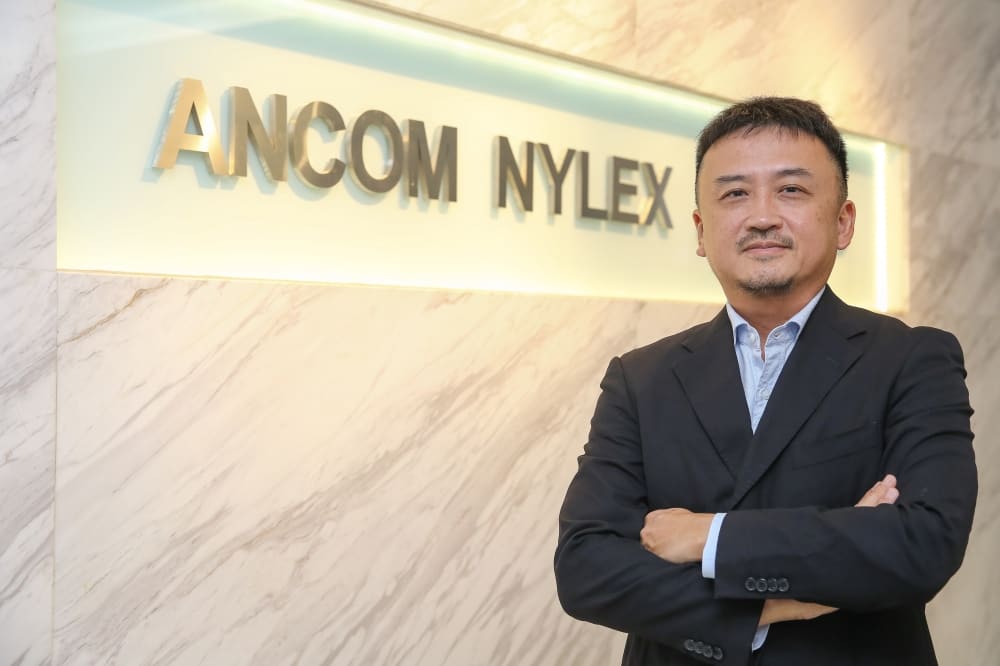
Datuk Lee Cheun Wei, managing director and group chief executive of Ancom Nylex, said the rating underscores the company's commitment to transparency and ethical conduct. He noted that the evaluation data will inform refinements to environmental risk strategies and support long-term value creation as Malaysia's economy shifts toward lower-carbon pathways.
The language signals a focus on operational integration rather than disclosure alone. Companies that treat ESG ratings as compliance exercises often struggle to translate scores into tangible business benefits. Those that embed sustainability metrics into capital allocation, procurement and performance incentives tend to see margin improvement and lower cost of capital over multi-year horizons.
For Ancom Nylex, the packaging and logistics segments present both transition risks and opportunities. Flexible packaging producers face regulatory headwinds in markets phasing out single-use plastics, while logistics operators are under pressure to electrify fleets and optimize route efficiency to cut Scope 1 and Scope 3 emissions. At the same time, demand for sustainable packaging solutions and cold-chain infrastructure for temperature-sensitive pharmaceuticals is rising, creating revenue streams for groups that can demonstrate verifiable environmental performance.
Index Rebalancing and Investor Flows
FTSE Russell conducts semi-annual reviews of its thematic indices, adding constituents that meet eligibility thresholds and removing those that fall below minimum scores or face material controversies. The June 2026 rebalancing saw several Malaysian industrials and property developers added to the FTSE4Good Bursa Malaysia Index, reflecting broader improvements in disclosure quality and governance practices across the exchange.
Passive funds tracking the index will automatically allocate capital to new constituents during the next rebalancing window, typically within 30 days of the announcement. Active managers that benchmark against FTSE4Good often increase weightings in newly added names, particularly when the addition coincides with improving earnings visibility or sector rotation.
Ancom Nylex's dual inclusion also positions it for consideration by regional ESG-focused exchange-traded funds and institutional mandates that require constituents to appear in recognized sustainability indices. Several Southeast Asian pension funds and insurance portfolios have adopted negative screening policies that exclude issuers lacking ESG index membership, making inclusion a gating factor for capital access rather than a differentiator alone.
Malaysia's Decarbonization Timeline
Malaysia has committed to reaching net-zero emissions by 2050 and aims to reduce economy-wide emissions intensity per unit of GDP by 45 percent by 2030, relative to 2005 levels. The targets rely heavily on energy transition, reforestation and industrial efficiency gains. Listed companies in carbon-intensive sectors face growing scrutiny from regulators and investors over transition plans and interim reduction targets.
The packaging and logistics industries are directly exposed to carbon pricing mechanisms under discussion in several ASEAN economies. While Malaysia has not yet implemented a domestic carbon tax, policy consultations are underway, and cross-border supply chains increasingly face carbon border adjustment mechanisms in export markets including the European Union.
Companies that establish credible emissions baselines and reduction pathways early are likely to benefit from lower compliance costs and preferential access to green financing instruments. Malaysia's central bank, Bank Negara, has introduced preferential capital treatment for green loans and issued guidance on climate risk management for financial institutions, creating incentives for lenders to favor borrowers with strong ESG credentials.
Outlook
Ancom Nylex's four-star ESG rating and FTSE4Good inclusion reflect a multi-year effort to strengthen governance structures, improve supply-chain transparency and enhance environmental disclosure. The dual index admission broadens the company's investor base and may reduce its cost of equity capital as ESG-mandated funds allocate to the stock.
The test ahead lies in translating index inclusion into operational gains. Investors will watch whether the company leverages its improved ESG profile to secure sustainability-linked financing, win contracts with multinational clients that require supplier ESG certification, and navigate Malaysia's evolving regulatory landscape without margin compression. For now, the rating provides a credible signal that Ancom Nylex is moving in step with regional sustainability standards as Southeast Asia's capital markets mature.
RELATED STORIES

Laos Hydropower Faces Solar and Wind Competition as Regional Grid Expands
Tran Quoc Bao · 4 min

Five ASEAN Members Back Regional Oil Stockpile as Study Nears Completion
Tran Quoc Bao · 3 min
Malaysia's Rare Earth Deposits Draw Foreign Interest Ahead of China Export Controls
Priyanka V. Rao · 3 min

Mondelez Brings Cocoa Crumb Production In-House at Malaysian Plant
Jun-ho Seo · 3 min
Spot something wrong? Email editor@briefasia.com. We log every correction publicly.