Technology · AI
Alibaba Launches Qwen3.8-Max as DeepSeek Intensifies China's AI Cost Competition
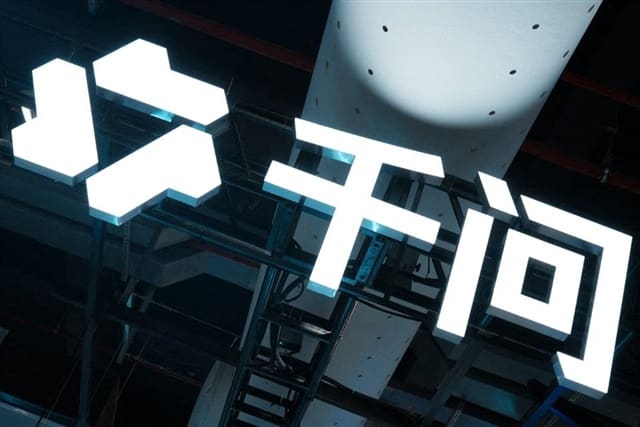
The new model arrives as DeepSeek's V4-Flash pushes pricing pressure across China's artificial intelligence landscape, reshaping the economics of advanced AI deployment.
KEY TAKEAWAYS
- ·Alibaba introduced Qwen3.8-Max on August 3, positioning it as the company's most powerful AI model to date.
- ·DeepSeek's low-cost V4-Flash model has accelerated pricing pressure across China's AI sector, forcing competitors to rethink inference economics.
- ·The cost competition benefits Southeast Asian enterprises seeking capable models at lower deployment costs than Western alternatives.
Alibaba Enters New Phase
Alibaba Group introduced Qwen3.8-Max on August 3, describing it as the largest and most capable artificial intelligence model the company has built. The release comes as Chinese AI developers face mounting pressure to deliver performance at lower operating costs, a dynamic reshaping how companies position their models in the market.
The timing reflects broader shifts in China's AI ecosystem. While US firms have largely competed on capability benchmarks and enterprise features, Chinese developers increasingly differentiate on price and efficiency, particularly as compute resources remain under export restrictions.
DeepSeek's Pricing Push
DeepSeek's V4-Flash model has accelerated the competitive pressure. The low-cost offering has forced rivals to reconsider their pricing strategies for inference, the process of running queries through trained models. DeepSeek's approach prioritizes accessible deployment over premium positioning, a strategy that resonates with cost-conscious enterprises across Asia.
The result is a pricing environment where model capability alone no longer guarantees market traction. Companies now weigh inference cost per token, latency, and deployment flexibility alongside raw performance. This shift favors teams that can optimize models for efficiency without sacrificing accuracy on core tasks.
Regional Implications
China's AI price competition carries consequences beyond its borders. Southeast Asian markets, where budget constraints often limit adoption of premium Western models, stand to benefit from lower-cost alternatives that meet local needs. Startups in Jakarta, Hanoi, and Manila increasingly evaluate Chinese models for customer service, content generation, and data analysis workloads.
The dynamic also influences how global providers price their services in Asia. Anthropic's Claude and OpenAI's GPT models face pressure to adjust pricing tiers or offer region-specific discounts to remain competitive. For enterprises managing multi-region deployments, the availability of capable, low-cost Chinese models changes procurement calculations.
Architectural Trade-Offs
Qwen3.8-Max's scale suggests Alibaba prioritized parameter count and training data volume, betting that larger models will deliver better generalization across tasks. Yet the economics of running such models at scale remain complex. Inference costs rise with model size, and enterprises must balance capability against operational expenses.
DeepSeek's V4-Flash takes the opposite approach, optimizing for lean inference. The model likely employs distillation techniques, pruning, or other efficiency methods to reduce computational overhead. This makes it attractive for high-volume applications where marginal cost per query matters more than peak performance.
Market Dynamics
The competitive landscape in China now includes Alibaba, Baidu, Tencent, ByteDance, and a growing cohort of specialized AI labs. Each has staked out different positioning: Baidu emphasizes enterprise integration, Tencent focuses on consumer applications, and ByteDance leverages its content ecosystem. Alibaba's cloud infrastructure gives it distribution advantages, but execution on pricing and developer experience will determine market share.
For investors tracking Asia's AI sector, the price war signals maturation. Early-stage hype around model releases is giving way to practical questions about unit economics, customer acquisition costs, and sustainable margins. Companies that can deliver both performance and profitability will attract capital; those relying solely on technical benchmarks may struggle.
What Comes Next
The next phase will test whether Chinese AI developers can maintain low prices while scaling infrastructure and expanding model capabilities. Export controls on advanced chips constrain compute availability, forcing teams to innovate on software optimization and distributed training techniques.
Enterprises evaluating these models should scrutinize not just headline pricing but total cost of ownership, including fine-tuning expenses, API reliability, data residency requirements, and vendor lock-in risks. As the market matures, differentiation will increasingly depend on deployment flexibility and ecosystem support rather than raw model size or benchmark scores.
Alibaba's Qwen3.8-Max and DeepSeek's V4-Flash represent two paths forward: scale and capability versus efficiency and accessibility. The market will determine which strategy captures more value, but the immediate effect is clear: AI deployment in Asia just became more affordable.
RELATED STORIES
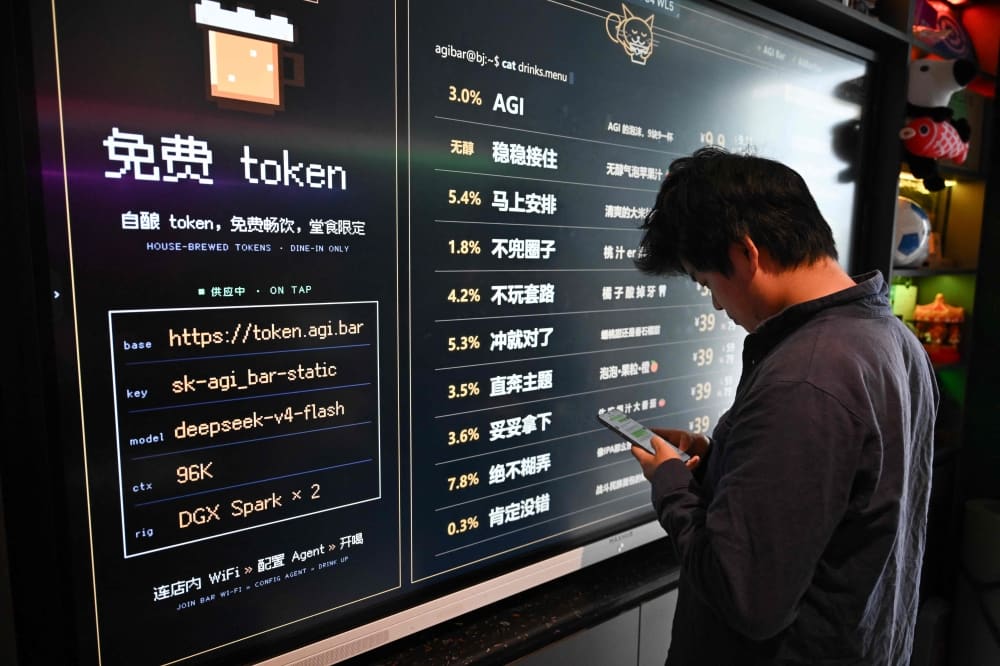
Beijing's AI Bar Offers Free DeepSeek Access as Price Wars Reshape Global Market
Cheng Wei-Lun · 3 min
Asia's Memory Makers Shift Focus as DRAM Margins Challenge HBM Dominance
Cheng Wei-Lun · 4 min

DeepSeek Backs Unitree With $20.8 Million Stake in Shanghai IPO
Cheng Wei-Lun · 3 min
SK Hynix Eyes Stake Sale in $3 Billion China Packaging Facility
Cheng Wei-Lun · 2 min
Spot something wrong? Email editor@briefasia.com. We log every correction publicly.