Sustainability · Energy
AI Data Centers Test Power Grids With Volatile Electricity Demand
Generative AI workloads drive unpredictable consumption patterns that challenge grid stability and on-site infrastructure
KEY TAKEAWAYS
- ·AI data centers now represent one of the fastest-growing electricity loads globally, driven by GPU-intensive workloads that create sharp, unpredictable power swings.
- ·Grid operators must reserve larger spinning reserves and faster-response assets to manage dynamic AI demand, raising system stability costs in regions like Northern Virginia, Singapore, and Guangdong.
- ·Utilities and regulators are exploring time-of-use tariffs, interruptible contracts, and revised grid codes to accommodate the volatile consumption patterns of AI compute facilities.
A New Kind of Load
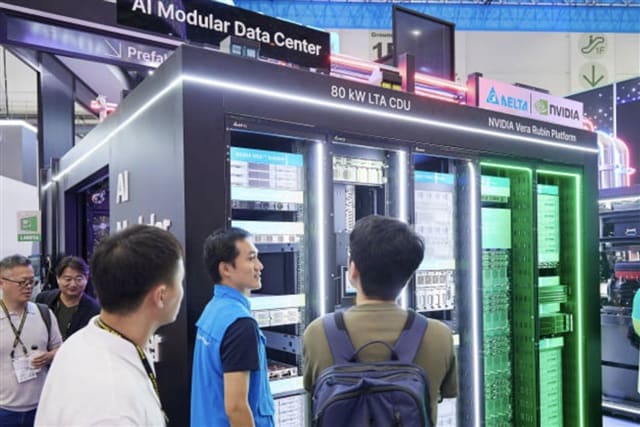
The surge in generative AI adoption has introduced a distinct strain on electricity infrastructure. AI data centers now rank among the most rapidly expanding sources of power demand across global markets, outpacing the steady consumption curves of traditional server farms.
The difference lies in workload behavior. Where conventional data centers maintain relatively predictable power draws, AI facilities swing through sharp peaks and valleys as GPU clusters fire up for model training runs, then idle during inference or maintenance windows. This volatility transforms them into what grid engineers call dynamic loads - consumers whose demand can shift dramatically within minutes rather than hours.
Grid Operators Face New Variables
For utilities accustomed to forecasting demand based on industrial cycles and weather patterns, the erratic appetite of AI compute represents uncharted territory. A single large-scale training session can pull tens of megawatts within seconds, stressing local distribution networks that were sized for smoother load profiles.
Balancing supply and demand in real time becomes more complex when a significant portion of consumption behaves unpredictably. Grid operators must now reserve larger spinning reserves and faster-response generation assets to absorb these swings, raising the cost of system stability.
In regions where AI clusters concentrate - such as Northern Virginia, Singapore's data center corridor, and parts of Guangdong province - transmission planners are revisiting capacity headroom assumptions. The traditional margin that sufficed for incremental enterprise IT growth no longer covers the step-function increases driven by frontier model development.
On-Site Power Systems Under Pressure
The same variability that challenges the grid also tests the resilience of facility-level infrastructure. Uninterruptible power supplies, backup generators, and power distribution units must handle load transients that can exceed the tolerances of equipment originally designed for steady-state data center profiles.
Operators are responding by deploying modular UPS arrays with higher overload ratings and investing in energy storage systems that can buffer short-duration spikes. Battery installations capable of absorbing and releasing power on sub-second timescales are becoming standard in new AI builds, adding both capital cost and operational complexity.
Cooling systems face parallel stress. GPU racks dissipate heat in bursts rather than continuously, forcing HVAC controls to react faster and more frequently. Mechanical wear accelerates, and thermal cycling can degrade component reliability over time.
Implications for Capacity Planning
The rise of AI compute as a grid-scale load category forces a rethink of how capacity is allocated and priced. Utilities in competitive markets are exploring time-of-use tariffs and interruptible service contracts tailored to workloads that can tolerate brief curtailments. Some hyperscalers are experimenting with workload scheduling algorithms that shift training runs to off-peak hours, smoothing their demand signature in exchange for lower rates.
At the same time, regulators are scrutinizing whether existing grid codes adequately account for the operational characteristics of AI facilities. Standards for power quality, harmonic distortion, and fault ride-through - originally written with industrial motors and HVAC in mind - may need revision to reflect the behavior of switching power supplies feeding GPU farms.
The question of who pays for grid upgrades remains contentious. In jurisdictions where interconnection costs are socialized, residential and commercial ratepayers effectively subsidize the infrastructure needed to serve volatile AI loads. In others, developers face multi-year queues and seven-figure connection fees, slowing the pace at which new capacity comes online.
Asia's Front Line
Across Asia, where data center construction has surged to meet regional AI ambitions, the tension between demand growth and grid constraints is acute. Singapore has capped new data center approvals pending energy efficiency improvements. Tokyo and Seoul are prioritizing renewables integration, but intermittent wind and solar add another layer of variability atop the unpredictable AI load.
Chinese provinces with abundant hydropower are courting AI operators, betting that flexible generation can accommodate dynamic demand. Yet even there, transmission bottlenecks and seasonal hydrology introduce risks that operators must hedge with on-site storage or diesel gensets.
India's push to build sovereign AI infrastructure confronts a grid still grappling with coal phase-downs and renewable ramp rates. The result is a patchwork of private power purchase agreements and captive generation, insulating AI projects from grid instability but fragmenting the load base that utilities rely on for revenue.
What Comes Next
As model sizes grow and inference scales to millions of daily queries, the power signature of AI compute will only grow more pronounced. Grid planners, equipment vendors, and facility operators are all racing to adapt - balancing the need for reliability with the economics of serving a load that refuses to sit still.
RELATED STORIES
Taiwan Power Plans Direct Lines to AI Data Centers, Bypassing National Grid
Cheng Wei-Lun · 3 min
Indian AI Firm Commits $8 Billion to Nvidia Infrastructure Buildout
Priyanka V. Rao · 3 min

MediaTek Executive Projects Million-GPU Clusters as Mid-Tier by 2030
Cheng Wei-Lun · 3 min
Taiwan Industry Leader Calls for Nuclear Revival to Meet AI Power Demand
Cheng Wei-Lun · 3 min
Spot something wrong? Email editor@briefasia.com. We log every correction publicly.