Sustainability · Energy
Taiwan Power Plans Direct Lines to AI Data Centers, Bypassing National Grid
Taipower is building dedicated transmission infrastructure from power plants to high-consumption facilities as semiconductor and AI demand tests grid capacity
KEY TAKEAWAYS
- ·Taipower is constructing dedicated transmission lines from generation plants directly to AI data centers and semiconductor fabs, allowing operators to manage infrastructure and bypass the national grid.
- ·The initiative follows a 2022 outage review and includes pilot corridors linking Datan Power Plant to Taoyuan Aerotropolis and Tunghsiao plant to Hsinchu Science Park.
- ·The utility is upgrading voltage levels and cable capacity while tracking factory-level demand to match AI and chip manufacturing load growth with available generation.
Direct Transmission Strategy
Taiwan Power Company is developing a network of dedicated transmission lines that connect power plants directly to AI data centers and semiconductor facilities, circumventing the island's main grid infrastructure. The utility announced the initiative as artificial intelligence workloads push electricity demand beyond what conventional distribution can reliably handle.
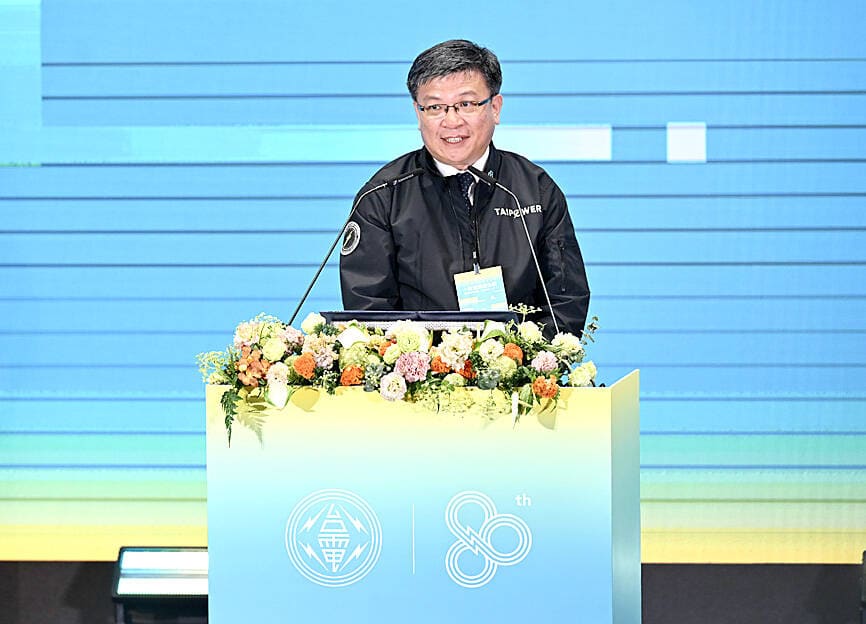
Chairman Tseng Wen-sheng outlined the approach in a weekend interview, explaining that data center operators would manage their own point-to-point lines under the model. Line length, construction costs, and commissioning schedules would be determined through market-based negotiations rather than regulatory fiat. Taipower positions the strategy as a resilience measure in an industry it describes as inherently sovereign, particularly given Taiwan's geopolitical exposure.
The utility has coordinated with the Taiwan Semiconductor Industry Association to map future consumption patterns at the factory level, ensuring generation capacity aligns with actual load growth in the chip sector. That granular planning marks a shift from Taipower's traditional focus on aggregate supply sufficiency to site-specific matching of demand and available capacity.
Post-Outage Infrastructure Review
The direct-line initiative grew out of a grid resilience audit Taipower conducted after a major island-wide outage on March 3, 2022. That review identified congestion risks in the north-south transmission backbone and prompted the utility to design redundant pathways that bypass the main arteries during peak load or contingency events.
Two pilot corridors are already under development. One links the Datan Power Plant in Taoyuan's Guanyin District to the Taoyuan Aerotropolis development zone. A second connects the Tunghsiao Power Plant in Miaoli County to Hsinchu Science Park, where TSMC and other foundries cluster. Both routes feed high-density industrial users without threading power through the central grid.
Tseng said the approach diversifies transmission risk by creating parallel channels. If a fault disables part of the main grid, critical semiconductor fabs and data centers retain access to generation through their dedicated feeds. The model also eases congestion on shared infrastructure, freeing capacity for residential and commercial users.
Voltage and Underground Upgrades
Meeting AI-driven load growth requires more than new routes. Taipower is upgrading voltage levels across its network, increasing cable cross-sections to handle higher amperage, and accelerating the burial of overhead lines in urban and industrial corridors. Those investments address both capacity and reliability as data centers demand uptime guarantees that aging surface infrastructure struggles to deliver.
The utility's shift to factory-level demand tracking reflects the uneven geography of AI expansion. Power consumption is concentrated in a handful of science parks and export processing zones rather than distributed evenly across the island. Taipower now monitors individual facilities to forecast load spikes and stage generation and transmission capacity accordingly.
Globally, hyperscale data center operators face a common set of constraints: zoning restrictions that limit site selection, pricing mechanisms that do not always reflect real-time scarcity, capacity ceilings imposed by distribution infrastructure, and regulatory pressure to co-locate renewable generation or storage. Taiwan's direct-line model addresses the capacity and reliability dimensions but leaves pricing and renewables policy as separate questions.
Regional Context
Taiwan's grid challenges mirror those elsewhere in Asia's chip corridor. South Korea's industrial southeast, where Samsung and SK hynix anchor the memory sector, has seen similar debates over dedicated industrial feeders. Singapore's data center moratorium, lifted selectively in 2022, tied new capacity approvals to energy efficiency benchmarks and renewable procurement commitments. Japan is piloting direct renewable PPAs for data centers in Hokkaido and Kyushu, bypassing legacy utility structures.
The common thread is recognition that AI inference and training workloads, combined with advanced node semiconductor manufacturing, create load profiles that legacy grids were not designed to serve. Taiwan's response leans on state utility coordination and site-specific infrastructure, while other jurisdictions experiment with liberalized procurement or efficiency mandates.
Taipower has not disclosed capital expenditure figures for the direct-line program or timelines for additional corridors beyond the Datan and Tunghsiao pilots. The utility also has not specified whether operators managing their own lines would be required to meet renewable energy or storage co-location requirements, though such conditions are becoming standard in other Asian markets.
RELATED STORIES
Taiwan Industry Leader Calls for Nuclear Revival to Meet AI Power Demand
Cheng Wei-Lun · 3 min

MediaTek Executive Projects Million-GPU Clusters as Mid-Tier by 2030
Cheng Wei-Lun · 3 min

Taiwan Indicts Nvidia Manager in Chip-Smuggling Investigation
Cheng Wei-Lun · 4 min

Itochu and Taiwan IT Leader Back Taiwanese Chip Firms' Kyushu Push
Cheng Wei-Lun · 3 min
Spot something wrong? Email editor@briefasia.com. We log every correction publicly.