Technology · Policy
AeroVironment Expands Taiwan Manufacturing Partnership for Defense Drones
The California-based maker of Switchblade loitering munitions has spent three years building co-development ties with Taiwanese suppliers as it positions the island as a key production hub.
KEY TAKEAWAYS
- ·AeroVironment has spent three years building co-development and manufacturing partnerships with Taiwan-based suppliers for drone components.
- ·The company established a direct communication channel in Taiwan to support the island's national defense resilience program.
- ·The move positions Taiwan as a key production hub for unmanned systems amid rising demand for asymmetric defense capabilities in Northeast Asia.
Taiwan Becomes Core Production Node
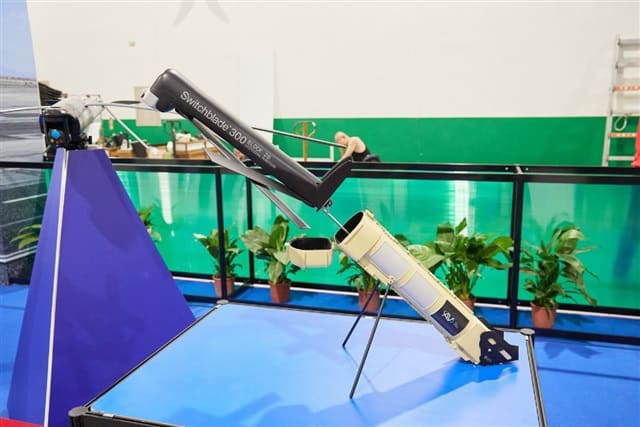
AeroVironment, the California defense contractor known for its Switchblade loitering munitions, has significantly expanded its manufacturing footprint in Taiwan through a three-year partnership with local suppliers. The company now co-develops and produces many of its drone components with Taiwanese partners, according to the firm.
The arrangement reflects a broader shift in defense supply chains across Asia, where technology transfer and joint engineering have replaced simple contract manufacturing. Taiwan's precision electronics capabilities, honed in the semiconductor and consumer electronics industries, have made the island an attractive partner for unmanned systems makers seeking both cost efficiency and technical sophistication.
AeroVironment has also opened a direct communication channel in Taiwan to support the island's national defense resilience program. The move suggests the company is positioning itself not just as a supplier but as a long-term partner in Taiwan's domestic defense industrial base.
Strategic Timing
The timing matters. Taiwan has accelerated its indigenous defense programs amid rising cross-strait tensions and uncertainty over long-term US security commitments. Taipei has allocated billions of dollars to modernize its military, with unmanned systems a priority area. Small, mobile drones that can be deployed rapidly fit the island's asymmetric defense doctrine.
AeroVironment's Switchblade drones, which loiter over battlefields and strike targets on command, have gained prominence in Ukraine. The weapon's effectiveness against armor and personnel in contested environments has drawn attention from militaries worldwide. Taiwan's defense planners have watched closely.
By embedding itself in Taiwan's supply chain, AeroVironment gains manufacturing resilience and proximity to a growing customer. For Taiwan, the partnership offers technology transfer and the ability to sustain drone production domestically, reducing dependence on imports during a potential conflict.
Asia's Defense Tech Corridor
The collaboration fits a pattern emerging across Northeast Asia. Japan, South Korea, and Taiwan are all investing in domestic drone production, often through partnerships with US and European firms. Governments in the region view unmanned systems as force multipliers that can offset China's numerical advantages in conventional forces.
Taiwan's electronics manufacturers, many of which already supply components for commercial drones, have begun pivoting toward defense applications. The island's semiconductor fabs, advanced packaging facilities, and precision machining shops provide a deep bench of capabilities. AeroVironment's co-development model allows it to tap into that ecosystem while helping Taiwan build sovereign defense capacity.
The arrangement also hedges against supply chain disruptions. With Washington pushing allies to reduce reliance on Chinese manufacturing for defense goods, Taiwan offers a politically aligned alternative with world-class production standards.
What Comes Next
AeroVironment has not disclosed the scale of its Taiwan operations or the names of its local partners. The company's public statements have been vague on specifics, likely due to the sensitivity of defense contracts and intellectual property concerns.
Still, the three-year timeline suggests the partnership has moved beyond pilot projects. Co-development of components typically requires sustained engineering collaboration, shared tooling, and integrated quality control. That level of integration takes time and signals long-term commitment.
Other US defense contractors are watching. If AeroVironment's Taiwan model proves successful, it could become a template for how Western firms engage with Asian partners in the unmanned systems market. The island's combination of technical skill, political alignment, and strategic urgency makes it a unique node in the global defense supply chain.
Taiwan's defense ministry has not commented on the AeroVironment partnership. The government has historically been cautious about publicizing foreign defense collaborations, wary of provoking Beijing. But as the island's military modernization accelerates, such partnerships are likely to become more visible.
RELATED STORIES

Itochu and Taiwan IT Leader Back Taiwanese Chip Firms' Kyushu Push
Cheng Wei-Lun · 3 min
Tokyo Summit Pushes Trilateral Tech Alliance Among Taiwan, Japan, and US
Cheng Wei-Lun · 3 min

German Suppliers Shift Aerospace Focus to Precision Manufacturing Tooling
Cheng Wei-Lun · 3 min

Hon Hai Posts Record August Revenue on AI Server Demand
Jun-ho Seo · 3 min
Spot something wrong? Email editor@briefasia.com. We log every correction publicly.