Asia · Business
ADB and Japan Launch $10 Million Water Security Fund for Asia-Pacific
The WISER Fund aims to strengthen resilience against floods and droughts across developing countries in the region, where 220 million people still lack basic water access.
KEY TAKEAWAYS
- ·The Asian Development Bank and Japan have launched the WISER Fund with an initial $10 million contribution to strengthen water security across developing Asia-Pacific countries.
- ·Around 220 million people in the region still lack basic water services and 520 million lack basic sanitation, despite 2.7 billion moving out of extreme water insecurity since 2023.
- ·The fund will prioritize water-use efficiency, digital monitoring solutions, and climate adaptation as floods and droughts intensify across the region.
A Regional Response to Growing Water Stress
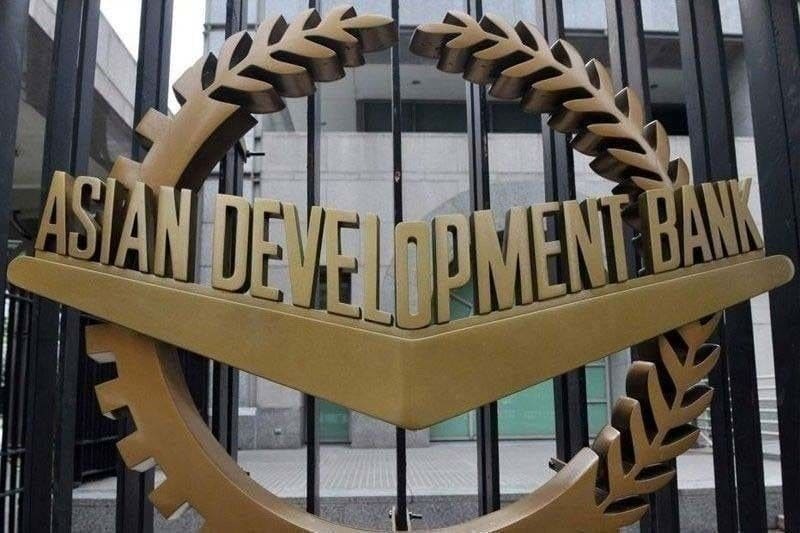
The Asian Development Bank and the Japanese government have established a dedicated fund to tackle water security challenges across developing Asia-Pacific economies. The Water Initiative for Security, Efficiency and Resilience Fund will channel resources toward infrastructure improvements, digital solutions, and climate adaptation measures in countries facing intensifying water-related shocks.
Japan has committed an initial $10 million to the fund, according to ADB. The multilateral lender plans to deploy the capital across its developing member countries to upgrade water systems, reduce leakage, and expand access to sanitation services.
"There is nothing more basic to life or more decisive for development than water," ADB president Masato Kanda said. "When water systems fail, crops dry out, businesses slow, children miss school and families become more vulnerable."
The fund arrives as the region confronts mounting pressure on water resources. Around 220 million people across Asia-Pacific still lack access to basic water services, while approximately 520 million remain without basic sanitation, according to ADB figures. Floods, storms, and droughts have become more frequent and severe, threatening communities from the Mekong Delta to the Pacific islands.
Japan's Technical Expertise as a Model
Japan's contribution extends beyond capital. The country has decades of experience managing water challenges in dense urban environments, from minimizing pipeline leakage to advancing wastewater treatment and disaster preparedness systems.
"Investment in the water sector is indispensable to the sustainable development of the region and to improving people's lives," said Satsuki Katayama, Japan's finance minister. She emphasized that Japan would share technical knowledge and operational expertise with regional partners through ADB's network.
Tokyo's approach to water management has long been studied by other Asian governments. Its integrated systems for flood control, water recycling, and real-time monitoring have become reference points for cities grappling with rapid urbanization and climate variability.
Progress Under Threat
The fund launches against a backdrop of both gains and setbacks. ADB's latest Asian water development outlook reported that 2.7 billion people across the region have moved out of extreme water insecurity since 2023. That progress reflects expanded infrastructure, better governance, and increased investment in water systems over the past three years.
Yet environmental degradation and rising climate risks now threaten to reverse those advances. Droughts in Southeast Asia have disrupted agriculture and hydropower generation, while flooding in South Asia has displaced millions and damaged critical infrastructure. Persistent gaps in investment, particularly in rural and peri-urban areas, leave many communities vulnerable.
The WISER Fund will prioritize projects that improve water-use efficiency and deploy digital tools for monitoring and management. ADB has indicated that the fund will support innovations such as smart metering, predictive analytics for drought and flood risk, and decentralized wastewater treatment systems.
Hydropower and Energy Security
Water security also intersects with energy markets. Kanda highlighted hydropower as a clean, reliable energy source that gains importance as countries seek to diversify away from fossil fuels. Several ADB member countries, including Laos, Bhutan, and Nepal, rely heavily on hydropower for electricity generation and export revenue.
Drought conditions in recent years have exposed the vulnerability of hydropower-dependent grids. Low reservoir levels have forced utilities to increase imports or restart coal plants, raising costs and emissions. Improved water management and storage infrastructure can stabilize energy supply and support the region's transition to lower-carbon systems.
Financing the Gap
Despite progress, the region faces a substantial financing shortfall for water infrastructure. ADB has previously estimated that developing Asia needs to invest around $1.7 trillion in water and sanitation infrastructure through 2030 to meet development goals. The $10 million WISER Fund represents a modest but targeted intervention, designed to catalyze larger investments and demonstrate scalable solutions.
The fund will operate as a technical assistance facility, providing grants for project preparation, feasibility studies, and capacity building. ADB expects that seed funding from WISER will help governments design bankable projects that can attract commercial finance or larger concessional loans.
Regional water utilities often lack the technical capacity or credit ratings to access capital markets. By supporting project design and risk mitigation, the fund aims to bridge that gap and unlock additional resources from development banks, private investors, and bilateral donors.
A Test of Coordination
The success of the WISER Fund will depend on coordination among governments, utilities, and communities. Water management cuts across multiple sectors, agriculture, energy, urban planning, and disaster response, requiring integrated approaches that many countries still struggle to implement.
ADB has signaled that the fund will emphasize cross-border cooperation in river basins shared by multiple countries. Transboundary water governance remains a persistent challenge in Asia, where upstream infrastructure decisions can have downstream consequences for agriculture, fisheries, and ecosystems.
The fund's focus on efficiency and resilience reflects a broader shift in development thinking. Rather than simply expanding supply through dams and pipelines, the emphasis is now on managing demand, reducing waste, and building systems that can withstand climate shocks. That approach requires not only capital but also policy reforms, data systems, and institutional capacity that take years to develop.
As Asia-Pacific economies grow and urbanize, the pressure on water resources will only intensify. The WISER Fund offers a framework for addressing those challenges, but the scale of investment needed far exceeds what any single fund can provide. The real test will be whether this initial commitment can mobilize the sustained, region-wide effort that water security demands.
RELATED STORIES

Philippines Energy Budget Climbs 26% as Electric Vehicle Funding Surges
Priyanka V. Rao · 3 min
Philippine Nickel Miners Push for Unified Policy Framework as Critical Minerals Race Intensifies
Priyanka V. Rao · 3 min

Philippine Water Operator Earmarks $400 Million for Southeast Asia Expansion
Mariel D. Santos · 2 min
Philippine Manufacturing Expands at Fastest Pace Since 2016
Priyanka V. Rao · 3 min
Spot something wrong? Email editor@briefasia.com. We log every correction publicly.