Finance · Deals
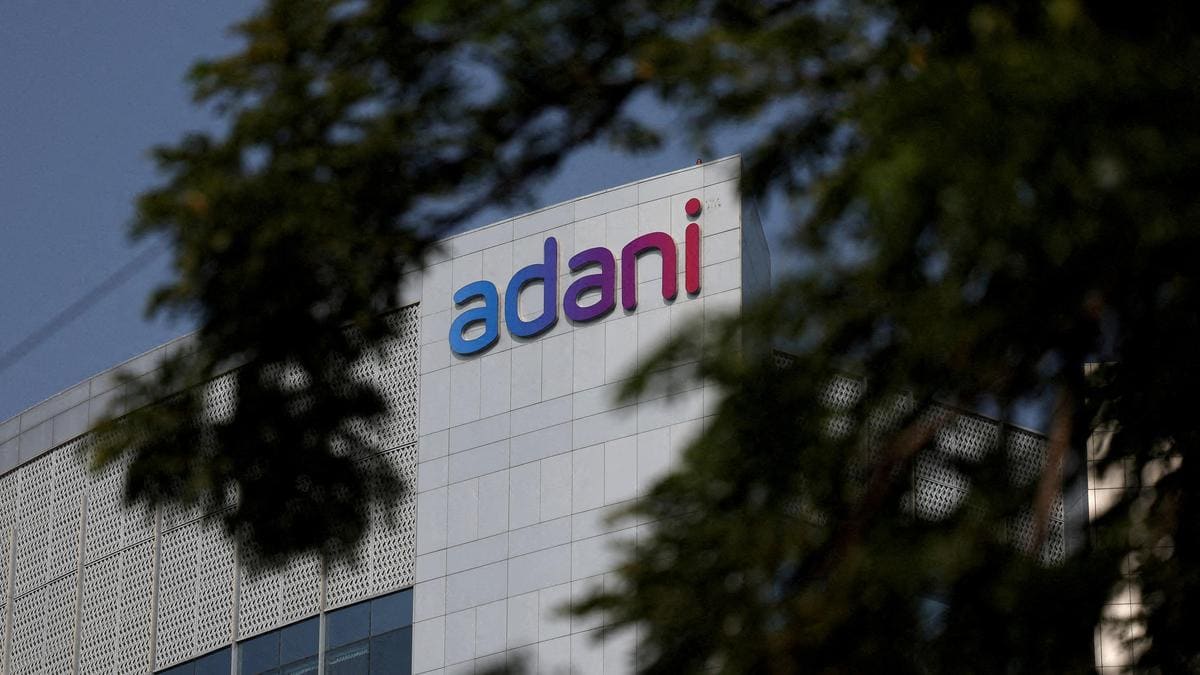
Adani Enterprises Raises $1.8 Billion as Institutional Demand Tops Original Target
The flagship Adani Group incubator upsized its institutional placement 50% after drawing bids from global asset managers including BlackRock and Capital Group, despite ongoing US legal proceedings involving Chairman Gautam Adani.
KEY TAKEAWAYS
- ·Adani Enterprises upsized its qualified institutional placement to ₹15,000 crore from ₹10,000 crore after attracting bids totaling ₹38,000 crore, closing within 48 hours.
- ·Global investors including BlackRock, Capital Group, Goldman Sachs, and major Indian mutual funds participated, with shares priced at ₹2,883, a 9.27% discount to market.
- ·Proceeds will fund capital expenditure across airports, data centers, renewable manufacturing, and metals, and support a $11.5 billion aluminium joint venture with Abu Dhabi's IHC.
Strong Institutional Appetite
Adani Enterprises expanded its qualified institutional placement to ₹15,000 crore ($1.8 billion) after the share sale drew bids totaling approximately ₹38,000 crore, reflecting subscription levels of 3.8 times the initial ₹10,000 crore target. The offering closed within 48 hours of the roadshow, with several institutional investors seeking larger allocations than ultimately available.
The investor roster included Capital Group, Goldman Sachs, BlackRock, Blackstone, and Nomura on the international side. Domestic participation came from HDFC Mutual Fund, ICICI Prudential Mutual Fund, Kotak Mutual Fund, Aditya Birla Sun Life Mutual Fund, SBI Mutual Fund, and Tata Mutual Fund. Long-only institutional investors led the demand.
The pricing landed at ₹2,883 per share, a 5% discount to the SEBI floor price of ₹3,034.68 and 9.27% below the July 2 closing price of ₹3,177.50. Jefferies, SBI Capital Markets, ICICI Securities, and IIFL Securities managed the transaction.
Second Major Raise in Twelve Months
This marks Adani Enterprises' second significant equity raise within a year. The company completed a ₹25,000 crore rights issue in 2025, bringing total equity mobilization across the two transactions to ₹40,000 crore.
The timing aligns with the company's announcement earlier this week of an aluminium manufacturing joint venture with Abu Dhabi's International Holding Company. That partnership involves planned investments of approximately $11.5 billion (₹1.1 lakh crore), underscoring the capital intensity of the group's expansion strategy.
Adani Enterprises stated that proceeds will fund capital expenditure across its incubation businesses, repay debt, and support strategic investments and acquisitions. The company operates businesses spanning airports, roads, data centers, renewable energy manufacturing, PVC, metals, and mining.
Investor Confidence Amid Legal Uncertainty
The robust institutional response comes as legal proceedings in the United States involving Adani Group Chairman Gautam Adani remain active. The ability to secure oversubscription from blue-chip global and domestic asset managers suggests institutional investors are separating operational fundamentals from legal headline risk, at least in their allocation decisions.
Asia's capital markets have seen selective appetite for infrastructure and transition-linked stories this year, particularly from conglomerates with exposure to airports, data centers, and green manufacturing. Adani Enterprises sits at the intersection of all three, positioning itself as the incubation vehicle for new verticals before they are spun into standalone listed entities.
The QIP structure, which limits participation to qualified institutional buyers, allowed the company to tap sophisticated capital without the retail scrutiny that can accompany broader public offerings. That institutional focus proved effective in aggregating demand quickly and at scale.
Deployment Priorities
The capital raise supports a portfolio that spans both mature cash-generating assets and early-stage ventures requiring significant upfront investment. Airports and roads provide stable returns, while data centers and renewable manufacturing require heavier capital before reaching steady-state operations.
Debt repayment forms part of the use of proceeds, reflecting ongoing balance-sheet management across the group. The aluminium joint venture with IHC represents one of the largest greenfield commitments, with production timelines extending several years.
Adani Enterprises has historically used its balance sheet to seed new businesses, then demerged or listed them once they reached scale. Previous examples include Adani Green Energy, Adani Transmission, and Adani Total Gas. The current portfolio includes newer bets on data infrastructure and advanced manufacturing, sectors where Asia's demand trajectory remains steep.
The fundraising environment for Indian conglomerates has been mixed this year, with some offerings struggling to gain traction amid valuation concerns and macro headwinds. Adani Enterprises' ability to upsize and close quickly indicates that investors remain willing to back platforms with diversified infrastructure exposure, provided pricing reflects appropriate risk premiums.
With ₹15,000 crore now committed, the company enters the next phase of its expansion cycle with a strengthened equity base and participation from some of the world's largest institutional asset managers.
RELATED STORIES
Temasek Defends SIA's Air India Stake as Loss-Making Carrier Seeks $1.5 Billion
Priyanka V. Rao · 3 min
Singapore Airlines Confronts $375 Million Capital Call From Air India
Priyanka V. Rao · 3 min

Navi Secures $100 Million From Prosus Ahead of India IPO Push
Priyanka V. Rao · 2 min
Sembcorp Pours Cold Water on Indian Green Energy IPO Reports
Priyanka V. Rao · 3 min
Spot something wrong? Email editor@briefasia.com. We log every correction publicly.