Sustainability · Energy
ACEN Adds P1 Billion in Financing for 345-MW Philippine Wind Project
The new loan brings total short-term financing to P4.9 billion for Quezon North Wind, part of a 553-MW wind development slated for 2027 completion

KEY TAKEAWAYS
- ·ACEN Corp. extended an additional P1 billion short-term loan to Giga Ace 6 Inc., bringing total short-term financing for the 344.5-MW Quezon North Wind project to P4.9 billion.
- ·The facility is expected to generate 1,730 gigawatt-hours annually and forms part of a two-phase, 553-MW wind development targeting 2027 commercial operation in Quezon province.
- ·ACEN's Philippine renewable generation rose 17 percent year-on-year to 1,091 GWh in the first half, driving attributable net income up 411 percent to P3.9 billion.
Fresh Capital for Quezon Build-Out
ACEN Corp., the Zobel family's listed energy platform, has extended an additional P1 billion short-term loan to Giga Ace 6 Inc., the special-purpose vehicle behind the 344.5-MW Quezon North Wind Power Project. The facility disclosed the agreement in an August 12 filing to the Philippine Stock Exchange.
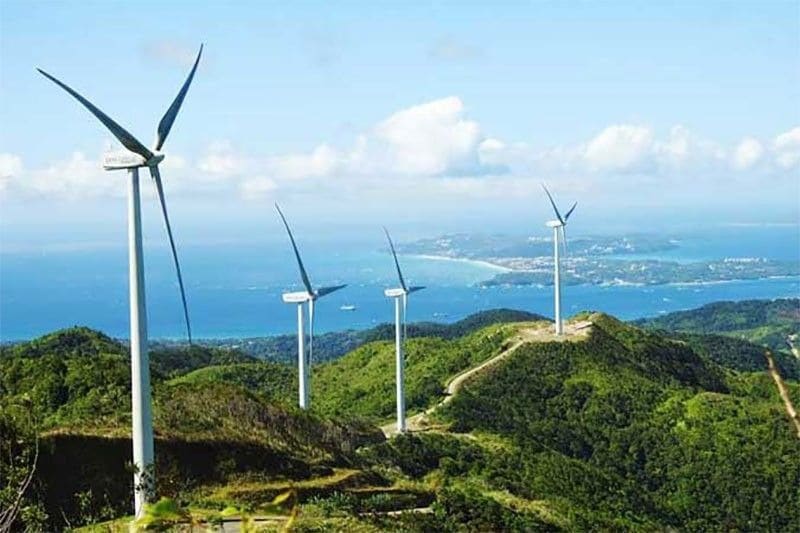
The wind farm spans two municipalities in Quezon province, Real and Mauban, and represents the first phase of ACEN's broader push into onshore wind in the region. A planned 208-MW second phase would lift combined capacity to roughly 553 MW once both stages are commissioned. The company is targeting 2027 for phase-one commercial operation.
The latest injection follows a P3 billion short-term loan advanced in May and a P900 million tranche in October 2025, bringing cumulative short-term financing from ACEN to P4.9 billion. Giga Ace 6 had earlier secured a P34.41 billion senior green term loan facility from three Philippine banks: Bank of the Philippine Islands, BDO Unibank, and Rizal Commercial Banking Corp. That senior debt package, one of the largest green project financings in the country, underwrites turbine procurement, grid interconnection, and construction for the initial phase.
Output and Grid Economics
At full build, Quezon North Wind is expected to generate approximately 1,730 gigawatt-hours of electricity each year, according to ACEN. That volume would supply roughly 423,000 average Philippine households under Department of Energy consumption benchmarks, assuming a 4,090-kWh annual household load.
The project sits within ACEN's portfolio of nearly 1,000 MW of wind assets either operating or under construction across the Philippines. The company has pivoted aggressively toward renewables as part of a broader decarbonization strategy, with wind and solar now accounting for the majority of its domestic generation mix.
Quezon province offers consistent northeasterly trade winds during the October-to-March season and strong southwest monsoon flows mid-year, making it one of the more attractive wind corridors in Luzon outside the established Ilocos zone. The dual-phase approach allows ACEN to stage capital deployment and lock in power-purchase agreements with distribution utilities and corporate off-takers as each tranche comes online.
Ilocos Upgrade Adds Decade of Output
ACEN recently completed the second and final phase of maintenance and repowering work at the 52-MW NorthWind facility in Bangui Bay, Ilocos Norte. Originally commissioned in the mid-2000s, NorthWind was among the first utility-scale wind farms in Southeast Asia and has become a visible landmark along the northern Luzon coastline.
The refurbishment program is projected to deliver an additional 769 GWh over the next ten years, enough to power 188,000 households and displace an estimated 592,000 tons of carbon dioxide, according to ACEN. Miguel de Jesus, the company's chief operating officer for Philippine operations, framed the work as a model for extending the economic life of grid-connected renewable assets.
The Ilocos upgrades contributed to a 17 percent year-on-year increase in Philippine renewable generation during the first half of 2026, which reached 1,091 GWh. That uptick helped ACEN post attributable net income of P3.9 billion for the six-month period, up 411 percent from P763 million a year earlier. The sharp earnings gain reflected both higher wind output and improved dispatch economics as coal and gas plants faced elevated fuel costs.
Regional Wind Pipeline
Beyond Quezon and Ilocos, ACEN is advancing wind projects in Mindanao and exploring offshore sites in deeper waters off Luzon. The company has signaled interest in floating wind technology, which could unlock gigawatt-scale capacity in areas where seabed conditions preclude fixed-bottom turbines.
The Philippine government has set a 35 percent renewable share target for the power mix by 2030 and 50 percent by 2040, creating sustained demand for green capacity additions. Wind remains capital-intensive relative to solar, but higher capacity factors and longer asset lives make it attractive for baseload displacement, particularly as battery storage costs decline and enable better integration of variable generation.
ACEN's parent, Ayala Corp., has committed to net-zero emissions across its conglomerate businesses by 2050, with interim milestones tied to renewable capacity additions and coal-plant retirements. The Quezon North Wind financing underscores the near-term capital requirements of that transition, even as lower equipment costs and maturing supply chains improve project returns across the sector.
Giga Ace 6 is expected to begin turbine installation in the fourth quarter of this year, with grid synchronization tests slated for late 2026 ahead of the planned 2027 commercial-operation date. The project has secured all necessary environmental and grid-connection permits from the Department of Energy and the National Grid Corporation of the Philippines.
RELATED STORIES
Yuchengco Group Completes $38 Million Buyout of Philippine Wind Developer
Mariel D. Santos · 3 min

ACEN Posts P3.9 Billion Profit as Renewable Output Climbs Across Four Markets
Priyanka V. Rao · 3 min
Philippines Regulator Seeks to Drop VAT on Power System Losses
Mariel D. Santos · 2 min

MacroAsia Profit Falls 34 Percent as NAIA Lease Costs Surge
Priyanka V. Rao · 2 min
Spot something wrong? Email editor@briefasia.com. We log every correction publicly.