Asia · Trade
Washington Rolls Out Labor-Enforcement Tariffs Across 60 Nations
New 10-12.5% duties target countries deemed weak on forced-labor import bans, replacing expired global levy
KEY TAKEAWAYS
- ·Washington activated 10 to 12.5 percent tariffs on goods from 60 economies Friday, citing insufficient enforcement of forced-labor import prohibitions and covering 99.4 percent of US imports.
- ·The duties use Section 301 of the Trade Act, a statute with stronger legal precedent after the Supreme Court struck down reciprocal tariffs in February under emergency authority.
- ·Manila said it will continue engaging with Washington and pointed to a new inter-agency order signed Thursday to address forced-labor concerns in line with ILO conventions.
A Tariff Floor Redrawn
Washington switched on a new layer of import duties early Friday, levying 10 to 12.5 percent on goods arriving from 60 trading partners. The administration says the charges address lax policing of forced-labor bans. The list spans the European Union, China, the Philippines, Vietnam, and Canada, among others.
The duties took effect at one minute past midnight Eastern time, the moment a temporary 10 percent global levy expired after running 150 days. Cargo already in transit gets a grace window until July 28.
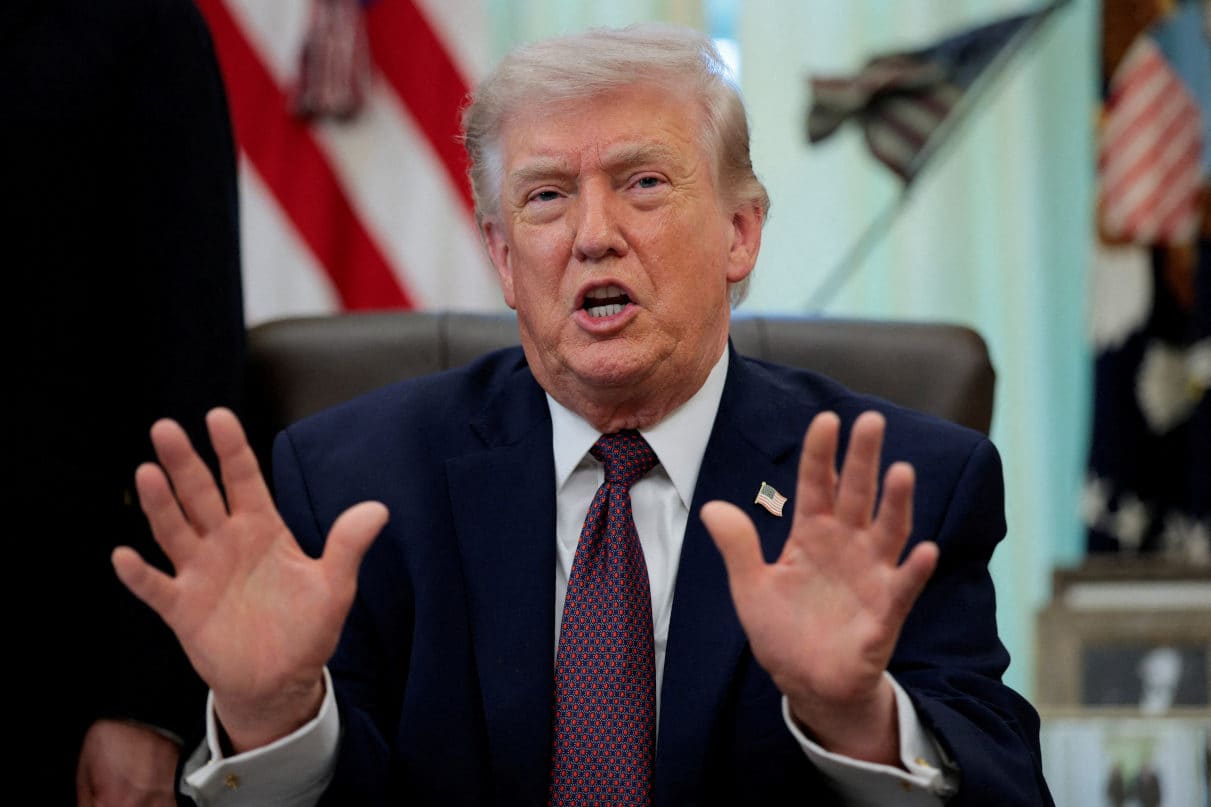
Trade officials framed the step as a human-rights intervention. US Trade Representative Jamieson Greer said America has enforced a forced-labor import prohibition for nearly a century and expects partners to match that standard. He called the move a correction of both a rights abuse and a trade distortion.
Section 301's Legal Footing
The administration invoked Section 301 of the Trade Act of 1974, a mechanism that has withstood prior court tests. That choice sidesteps the legal trouble that felled President Donald Trump's earlier "reciprocal" tariff plan. In February the Supreme Court struck down duties of 10 to 50 percent that had been imposed under national-emergency authority.
By using Section 301, the White House rebuilds a tariff baseline on 99.4 percent of imports without relying on the emergency statute. Numerous product categories escape the charge: oil, gas, fertilizer, select food items, aircraft parts, critical minerals, and goods already carrying Section 232 national-security tariffs such as steel, aluminum, autos, and copper.
The Federal Register notice lists 471 products newly added to the exclusion roster. Antwerp's diamond sector welcomed a restored exemption; Belgium shipped 2.1 billion dollars of polished stones to the United States in 2024.
Manila's Response
Philippine Trade and Industry Secretary Cristina Roque said her government takes note of the unilateral measure and will keep talking to Washington. She pointed to a joint administrative order signed only the day before, establishing an inter-agency mechanism to tackle forced-labor issues in cooperation with the International Labor Organization.
Philippine Ambassador to the US Jose Manuel Romualdez told reporters negotiation remains possible. Asked whether room exists to adjust the policy, he replied simply that talks can continue.
The archipelago joins a 10 percent tier alongside Argentina, Bangladesh, Britain, Cambodia, Canada, Ecuador, El Salvador, Guatemala, Honduras, India, Indonesia, Jordan, Malaysia, Mexico, Pakistan, Sri Lanka, and Trinidad and Tobago. A 12.5 percent rate applies to 38 other economies, including Vietnam and China.
European and Asian Reactions
Brussels issued a measured statement noting that the combined effect of the new duty and existing most-favored-nation rates stays within caps agreed in an earlier EU-US joint declaration. A European Commission spokesperson called the outcome "positive momentum" for exploring further exemptions.
Switzerland likewise observed that Washington honored a 12.5 percent ceiling set in bilateral commitments. Britain said the announcement leaves UK exporters no worse off; whisky and medical-technology shipments retain zero tariffs under a standing agreement.
Vietnam this week published a decree detailing rules against importing forced-labor goods. China, accused by Washington of detaining Uyghur minorities in labor camps, denies the allegation. US officials have privately told Beijing they intend to rebuild tariffs on Chinese imports to the 20 percent level agreed in a November 2025 truce with President Xi Jinping. Before Friday China's rate had sat at 10 percent, excluding the 25 percent first-term duties on industrial categories.
Pushback From Canberra and Brasilia
Australia and Brazil described the tariffs as unjustified and pledged to seek removal. Norway said no basis exists for the measure. Canada, which absorbed 20 billion dollars of fresh tariffs earlier in the week, issued a brief note saying it will engage constructively on the matter and other outstanding disputes.
Kelly Ann Shaw, a former White House trade adviser now with Akin Gump Strauss Hauer & Feld, said the economic impact tracks what markets had anticipated. She noted the product-exclusion list grew but called the overall outcome status quo.
Financial markets showed muted reaction Friday morning, with traders focused instead on developments in the Middle East. The tariff architecture gives the administration a durable floor on import costs while it navigates the legal landscape left by the Supreme Court ruling. Whether trade partners escalate disputes or negotiate carve-outs will shape the next phase of this labor-enforcement campaign.
RELATED STORIES

Philippine Water Operator Earmarks $400 Million for Southeast Asia Expansion
Mariel D. Santos · 2 min
Philippine Manufacturing Expands at Fastest Pace Since 2016
Priyanka V. Rao · 3 min
Philippine Economic Zones Pull Record ₱216 Billion in Eight Months
Priyanka V. Rao · 3 min
Philippines Energy Budget Climbs 26% as Electric Vehicle Funding Surges
Priyanka V. Rao · 3 min
Spot something wrong? Email editor@briefasia.com. We log every correction publicly.