Asia · Trade
Washington Raises Tariff on Philippine Goods to 12.5% Over Forced-Labor Ban
Manila joins 40 countries hit with higher duty after US trade review finds no effective prohibition on imports made with coerced labor
KEY TAKEAWAYS
- ·The United States raised its tariff on Philippine exports to 12.5% after a Section 301 review found Manila lacks an effective ban on forced-labor goods, replacing a 10% rate that expired July 24.
- ·Electronics and semiconductors, the Philippines' largest export category to the US, remain exempt along with raw materials and goods critical to American supply chains.
- ·Seventeen Southeast Asian and other economies received a lower 10% rate by demonstrating forced-labor bans or commitments under trade agreements, creating a competitive gap for Philippine exporters.
Higher Duty Takes Effect
The United States has raised its tariff on Philippine exports to 12.5%, up from a flat 10% rate that expired after 150 days. US Trade Representative Jamieson Greer announced the increase on July 24, concluding a Section 301 investigation into whether Manila enforces a ban on goods made with forced labor.
The Philippines falls into the higher-penalty tier alongside 40 other economies. Seventeen countries, including Cambodia, Indonesia, and Malaysia, received a 10% rate after demonstrating they already prohibit forced-labor imports or committed to do so under trade agreements with Washington.
Greer stated the measure addresses "both a human rights abuse and distortive trade practice." The investigation examined 60 economies, finding 54 of them, including the Philippines, failed to impose and effectively enforce forced-labor import restrictions.
Electronics and Semiconductors Exempted
The tariff does not apply to most of the Philippines' major export categories to the United States. Electronics and semiconductors, which account for the largest share of Philippine exports to the US market, remain exempt under the new duty structure.
The Office of the US Trade Representative carved out a broad range of products from the tariff: raw materials critical to US supply chains, goods whose taxation could cause economy-wide disruptions, and items the United States cannot produce in sufficient volume or at competitive prices.
A 2024 report from the US Department of Labor's Bureau of International Labor Affairs identified several Philippine products as having inputs produced with child labor. The list includes bananas, coconut oil, coconuts, fish, rice, and sugarcane. The report also flagged pornography in the Philippines as being produced with child labor.
Trade Policy Timeline
The new 12.5% rate replaces the 10% levy imposed in February after the US Supreme Court struck down an earlier version of the Trump administration's reciprocal tariffs. That February tariff carried a 150-day expiration, which elapsed on July 24.
The Section 301 investigation process gave Manila and other economies time to present evidence of forced-labor enforcement. The US Trade Representative reviewed public comments, testimony, and advice from the Section 301 Committee and advisory panels before reaching its determination.
Washington has used Section 301 of the Trade Act of 1974 as a tool to address what it considers unfair trade practices. The statute grants the Trade Representative authority to investigate foreign policies and impose countermeasures, including tariffs, when those policies are deemed to violate trade agreements or burden US commerce.
Regional Context
The differentiated tariff structure creates a competitive gap within Southeast Asia. Indonesia, Malaysia, and Cambodia now face a 10% rate, giving their exporters a 2.5-percentage-point advantage over Philippine goods in the US market.
The split reflects varying degrees of cooperation on labor standards enforcement. Countries that signed trade agreements with forced-labor provisions or demonstrated existing bans secured the lower rate. Manila's inability to show comparable enforcement left it in the higher bracket.
Philippine exporters will need to absorb the higher tariff or pass costs to US buyers, potentially eroding price competitiveness. The exemption for electronics and semiconductors shields the country's largest export sector, but producers of agricultural goods and other covered items face margin pressure.
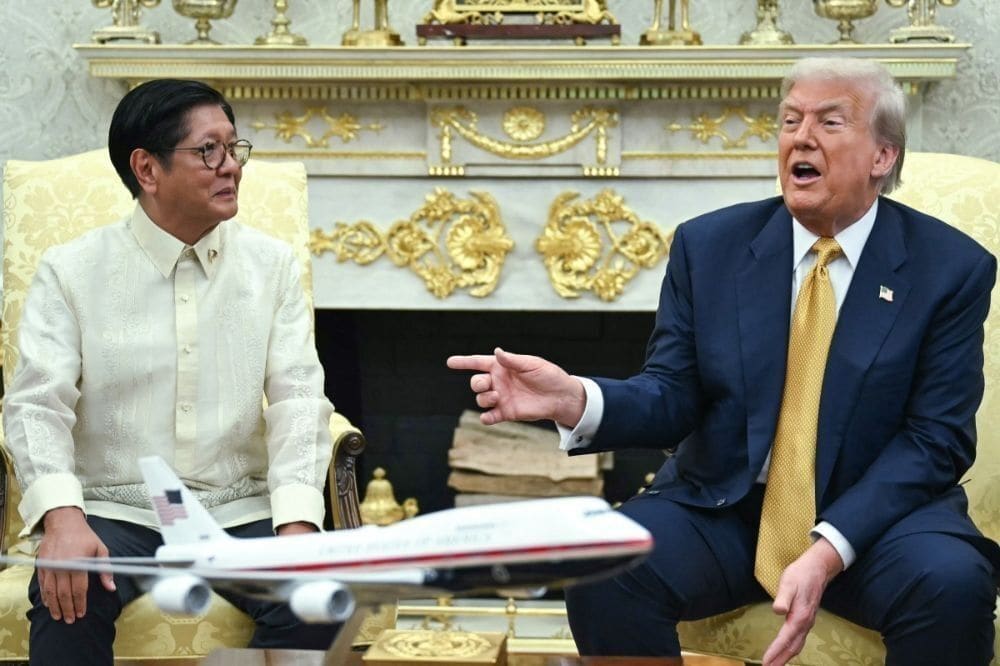
The tariff increase adds a new friction point in US-Philippine economic relations. President Ferdinand Marcos Jr. met with President Donald Trump at the White House in July 2025, with Trump expressing confidence in reaching a trade deal. The forced-labor finding complicates that trajectory, linking market access to labor-enforcement reforms Manila has yet to implement.
RELATED STORIES
Philippine Economic Zones Pull Record ₱216 Billion in Eight Months
Priyanka V. Rao · 3 min

Philippine Water Operator Earmarks $400 Million for Southeast Asia Expansion
Mariel D. Santos · 2 min

Philippines Energy Budget Climbs 26% as Electric Vehicle Funding Surges
Priyanka V. Rao · 3 min
Philippine Nickel Miners Push for Unified Policy Framework as Critical Minerals Race Intensifies
Priyanka V. Rao · 3 min
Spot something wrong? Email editor@briefasia.com. We log every correction publicly.