Finance · Deals
VinFast Pumps $194 Million into Design and Sales Unit After Manufacturing Split
The Vietnamese automaker's newly formed subsidiary now holds $388 million in capital as foreign ownership drops below 6 percent
KEY TAKEAWAYS
- ·VinFast Vietnam issued 500 million preference shares, raising capital from $194 million to $388 million and reducing foreign ownership to 5.3 percent.
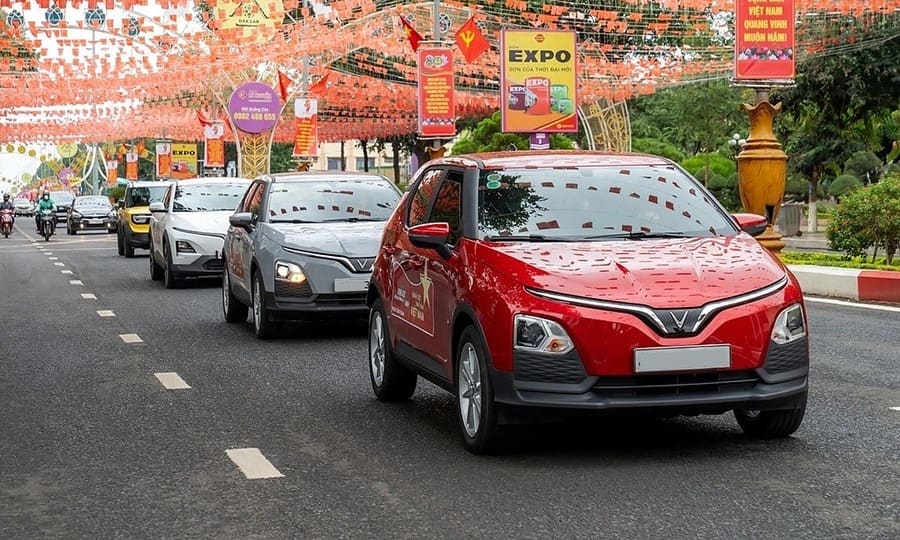
- ·The subsidiary controls global R&D, after-sales services, and sales operations following the June sale of manufacturing assets to Tuong Lai Company.
- ·Domestic investors dominated the capital raise as VinFast navigates mounting losses and intensifying competition from Chinese and legacy automakers in Southeast Asia.
Fresh Capital for a Leaner Structure
VinFast Vietnam, the electric vehicle maker's recently established design and sales subsidiary, has secured $194 million in fresh capital through the issuance of 500 million preference shares. The move brings the subsidiary's total registered capital to $388 million, according to filings on Vietnam's National Business Registration Portal on July 13.
The capital injection doubles the unit's initial registered capital from 5.18 trillion Vietnamese dong. At the same time, foreign ownership in the subsidiary has contracted sharply, falling from 10.4 percent to 5.3 percent, a shift that reflects the changing investor composition following the automaker's recent structural overhaul.
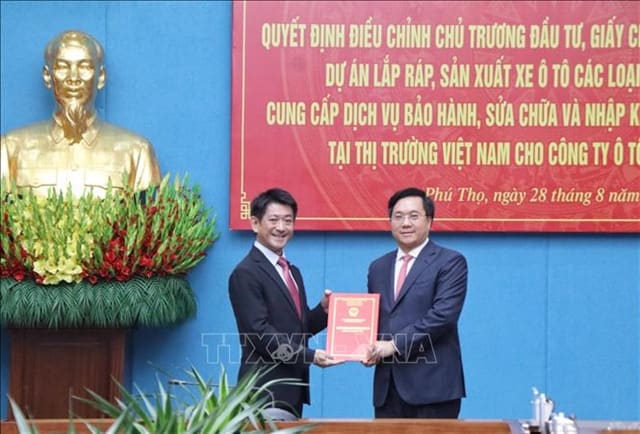
VinFast Vietnam was incorporated on June 19, less than a month ago, as part of a broader reorganization that saw the automaker divest its manufacturing operations. The production assets, previously held under VFTP, were sold to Tuong Lai Company, an entity backed by billionaire Pham Nhat Vuong and a consortium of investors. That transaction effectively split VinFast's operations into two distinct entities: one focused on making cars, the other on designing and selling them.
What the Subsidiary Controls
The newly capitalized unit retains control over several high-value functions. VinFast Vietnam now oversees global research and development, a critical capability as the company seeks to compete in international markets with evolving battery technology and software-defined vehicle platforms. The subsidiary also manages after-sales services, including warranty fulfillment, maintenance networks, and customer support infrastructure across VinFast's growing footprint in North America, Europe, and Southeast Asia.
Sales operations, both domestic and international, fall under the subsidiary's remit. This includes dealership partnerships, direct-to-consumer channels, and fleet sales programs. By consolidating these functions under one roof, VinFast aims to streamline decision-making and reduce overhead, a priority as the company navigates mounting losses and cash-burn concerns.
Pham Nhat Vuong, the founder of Vingroup and VinFast's principal backer, serves as chief executive of VinFast Vietnam. Thai Thi Thanh Hai, a veteran executive with decades of experience at Vingroup, chairs the subsidiary's board. Her appointment signals continuity in governance, even as the organizational chart shifts.
The Manufacturing Divorce
The sale of VFTP to Tuong Lai Company marks a significant pivot in VinFast's capital structure. By offloading manufacturing, VinFast Vietnam can focus on higher-margin activities such as design, software, and brand management, while Tuong Lai absorbs the capital-intensive burden of running factories, managing supply chains, and scaling production volumes.
This model is not without precedent. Several global automakers have experimented with asset-light strategies, outsourcing production to contract manufacturers while retaining control over intellectual property and customer relationships. For VinFast, the arrangement may offer breathing room as it seeks to raise additional capital without diluting equity further or taking on more debt.
However, the structure also introduces complexity. Coordination between the design and manufacturing entities will be critical to maintaining product quality and meeting delivery timelines. Any friction in the handoff between VinFast Vietnam and Tuong Lai could result in production delays or quality lapses, risks that investors will watch closely.
Foreign Ownership Retreat
The drop in foreign ownership from 10.4 percent to 5.3 percent suggests that the preference share issuance was largely or entirely subscribed by domestic investors. This trend aligns with broader patterns in Vietnamese corporate finance, where state-linked or family-controlled entities often step in to provide capital when foreign appetite wanes.
For VinFast, the shift may reflect caution among international investors. The company has burned through billions of dollars as it ramps up production and expands into new markets, posting steep losses quarter after quarter. Its share price has been volatile since listing on Nasdaq via a SPAC merger in 2023, and several analysts have flagged concerns about the company's path to profitability.
At the same time, domestic backers, particularly those within Pham Nhat Vuong's orbit, have shown a willingness to continue funding the venture. Vuong himself has injected billions into VinFast, treating the automaker as a long-term strategic play rather than a near-term profit center. The preference share structure allows these backers to claim priority in distributions, a sweetener that may have facilitated the capital raise.
Regional Context and Competitive Pressure
VinFast's restructuring comes as Southeast Asia's automotive sector undergoes a fundamental transformation. Thailand, Indonesia, and Malaysia are all courting EV investment with generous tax breaks and subsidies, while Chinese automakers such as BYD, Geely, and Great Wall Motor pour resources into the region. Vietnam, despite its manufacturing prowess in electronics and textiles, remains a smaller player in automotive, and VinFast's ambitions represent a national bet on climbing the value chain.
The company has opened showrooms in California, Paris, and Jakarta, and it has announced plans to build a factory in North Carolina, though that project has faced delays. In Vietnam, VinFast benefits from a captive market and government support, but its vehicles remain relatively expensive compared to established brands, and consumer adoption has been slower than hoped.
Meanwhile, legacy automakers are accelerating their own EV programs. Toyota, Honda, and Hyundai, all of which have deep roots in Southeast Asia, are rolling out electric models at price points that undercut VinFast. The window for VinFast to establish itself as a credible alternative is narrowing, and the company's ability to execute on product development, cost reduction, and brand building will determine whether it can carve out a sustainable niche.
Cash Runway and Next Steps
The $194 million capital injection provides VinFast Vietnam with additional runway, but it is unlikely to be the last capital call. The company's global expansion strategy, combined with the need to invest in new platforms and battery technology, will require continued infusions. Whether those funds come from domestic sources, strategic partners, or capital markets remains to be seen.
Investors will also be watching how VinFast Vietnam and Tuong Lai coordinate on production planning and quality control. The success of the asset-light model depends on seamless collaboration between the two entities, and any missteps could undermine confidence in the broader VinFast story.
For now, the restructuring offers a clearer picture of VinFast's strategic priorities. By separating design and sales from manufacturing, the company is betting that it can compete on innovation and brand rather than sheer scale. Whether that bet pays off will depend on execution, market conditions, and the willingness of backers to keep writing checks.
RELATED STORIES

Malaysia Hospital Group A1Health Prepares US$1.7 Billion IPO for Early 2027
Tran Quoc Bao · 2 min

Mixue Shutters 89 Stores Across Southeast Asia Amid Profit Decline
Siti Nuraini · 3 min
Chinese Brands Capture Vietnam's $92 Million Robot Vacuum Market
Siti Nuraini · 3 min
Vietnam's VN-Index Climbs Toward 1,800 as Market Sentiment Strengthens
Priyanka V. Rao · 3 min
Spot something wrong? Email editor@briefasia.com. We log every correction publicly.