Asia · Business
Villar Family Offers Land Donation to Break LRT-1 Extension Deadlock
Philippines' acting transport chief confirms talks with prominent property family to resolve right-of-way disputes stalling the final leg of Manila's 12-kilometer rail project to Cavite.
KEY TAKEAWAYS
- ·The Villar family is negotiating a land donation in Las Piñas to resolve right-of-way conflicts blocking the LRT-1 Cavite Extension's final segment, with 70 percent of required land already acquired.
- ·A PHP 300 million flyover completed in 2024 now occupies space designated for the rail line, prompting proposals to demolish the structure or conduct traffic studies to determine coexistence options.
- ·The completed 12-kilometer extension is projected to increase LRT-1 daily ridership to 800,000 passengers and cut Pasay-Cavite travel time to under 25 minutes, with a 2028 deadline set by President Marcos.
A Private Solution to Public Infrastructure Gridlock
The Villar family, one of the Philippines' most prominent property dynasties, has proposed donating a parcel of land in Las Piñas City to expedite the stalled final segment of the Light Rail Transit Line 1 extension to Cavite, according to Acting Transportation Secretary Giovanni Lopez.
Lopez confirmed ongoing negotiations with the family to resolve right-of-way issues that have plagued the 12-kilometer expansion project. He pushed back against claims that the Villars bear responsibility for construction delays, emphasizing that the family's willingness to donate land demonstrates their commitment to completing the infrastructure.
The Light Rail Transit Authority has secured approximately 70 percent of the required right-of-way for the extension's second segment as of February. The government now faces a complex engineering challenge: determining how the rail line can traverse an alignment now occupied by another state project.
When Infrastructure Projects Collide
In 2024, the Department of Public Works and Highways completed a PHP 300 million flyover at the C5-Quirino intersection in Las Piñas, designed to ease vehicular congestion. The structure now occupies space originally designated for the LRT-1 tracks, creating a direct conflict between two government priorities.
Las Piñas Representative Mark Anthony Santos has floated the idea of demolishing the two-year-old flyover to clear the path for the rail extension. Lopez acknowledged the proposal but stressed the need for traffic impact studies before any decision, noting that both structures might coexist if properly engineered.
"There are suggestions to remove the flyover. They say it's because of its width. If we do that, if we take it down, I say we do a traffic study first," Lopez said.
President Marcos has directed Lopez to resolve right-of-way conflicts across multiple flagship infrastructure projects. The administration has set a 2028 deadline to finalize the LRT-1 Cavite extension alignment before the current term ends.
The Economics of Metro Manila's Rail Expansion
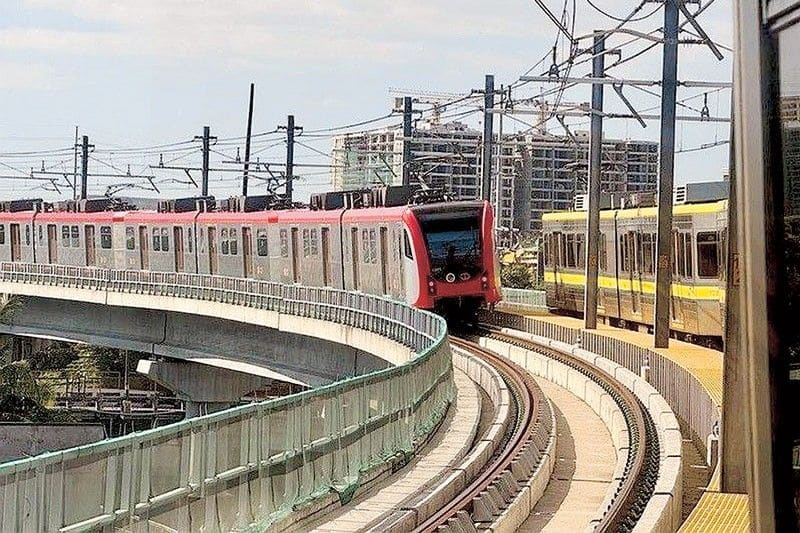
The LRT-1 Cavite Extension represents a significant expansion of Metro Manila's oldest light rail system. In 2024, operator Light Rail Manila Corporation opened the first phase, extending service into Parañaque City. The completed project will add stations in Las Piñas, Zapote, and Bacoor, bringing the total number of stops to 28 between Quezon City and Cavite province.
The extension is projected to boost daily ridership to approximately 800,000 passengers, nearly doubling current capacity. Travel time between Pasay City and Cavite is expected to drop below 25 minutes, offering a competitive alternative to gridlocked highways that currently connect Manila to its southern suburbs.
For property developers like the Villars, whose holdings span retail, residential, and commercial real estate across the metro, improved rail connectivity can significantly enhance land values in formerly peripheral areas. The family's Vista Land portfolio includes multiple developments in Cavite and Las Piñas, positioning them to benefit from increased accessibility even as they facilitate the project's completion.
Regional Context: Southeast Asia's Infrastructure Balancing Act
The Philippines joins several Southeast Asian peers grappling with right-of-way acquisition for urban rail projects. Jakarta's MRT expansion and Bangkok's multiple rail extensions have faced similar land disputes, often requiring years of negotiation or compulsory acquisition proceedings that strain public budgets and delay openings.
Vietnam's Ho Chi Minh City Metro Line 1, originally scheduled for 2018, opened in late 2024 after protracted land clearance issues. Manila's experience mirrors this regional pattern: ambitious rail plans colliding with fragmented land ownership, overlapping government mandates, and the political sensitivity of displacement.
The Villar donation offer, if finalized, would represent an unusual private-sector intervention in a process typically dominated by eminent domain and compensation disputes. Whether this model proves replicable for other stalled Philippine infrastructure projects remains an open question as the Marcos administration pushes to accelerate construction timelines across its priority list.
RELATED STORIES

Philippine Water Operator Earmarks $400 Million for Southeast Asia Expansion
Mariel D. Santos · 2 min

Philippines Energy Budget Climbs 26% as Electric Vehicle Funding Surges
Priyanka V. Rao · 3 min
Philippine Nickel Miners Push for Unified Policy Framework as Critical Minerals Race Intensifies
Priyanka V. Rao · 3 min

Philippine Economic Zones Pull Record ₱216 Billion in Eight Months
Priyanka V. Rao · 3 min
Spot something wrong? Email editor@briefasia.com. We log every correction publicly.