Finance · Markets
Vietnamese Gold Bars Trade $240 Above Global Spot as Dollar Weakens
Domestic bullion climbed for the third consecutive session amid subdued greenback and falling oil prices, with local premiums persisting despite narrowing gap
KEY TAKEAWAYS
- ·Vietnam's gold bars climbed 0.36% to VND141 million per tael, maintaining a premium of roughly $240 over global spot rates of $4,127 per ounce.
- ·The rally extended into a third session, fueled by a subdued U.S. dollar and falling oil prices that reduced inflation concerns.
- ·Investors are awaiting U.S. jobs data to gauge the Federal Reserve's interest-rate path, which will influence gold's next directional move.
Domestic Prices Gain Ground
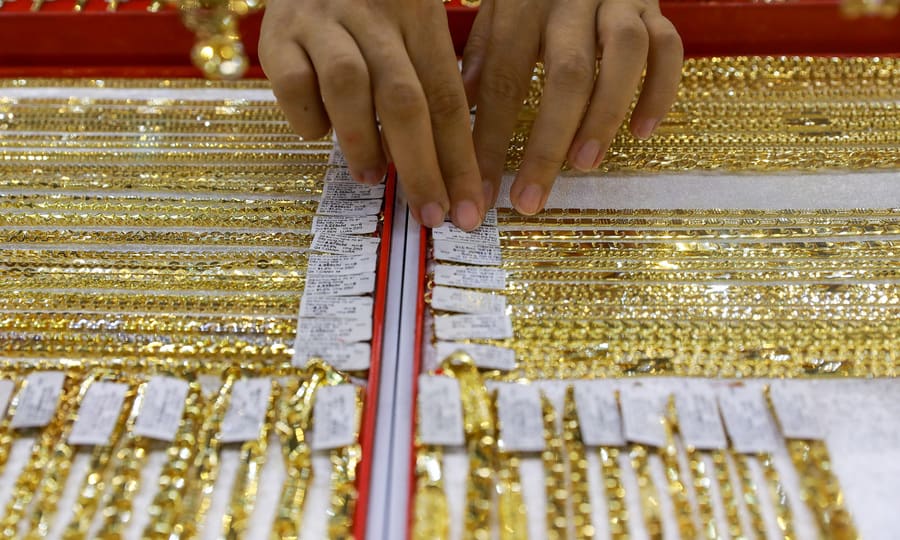
Gold bars in Vietnam advanced on Wednesday morning, with Saigon Jewelry Company quoting VND141 million ($5,367.84) per tael, a 0.36% increase from the previous session. The move mirrored global bullion's third consecutive day of gains, driven by currency and commodity dynamics that have kept precious metals buoyant.
Gold rings followed a similar trajectory, climbing 0.36% to VND140.5 million per tael. One tael equals 37.5 grams.
The local premium over international spot rates remained substantial at approximately VND9 million per tael, equivalent to roughly $240. While this spread has persisted for months, it reflects Vietnam's unique supply-demand balance and regulatory environment for physical gold trading.
Global Catalysts Point Higher
Spot gold rose 1.3% to $4,127.04 per ounce in international markets, while U.S. futures contracts gained 0.8% to $4,184.40, according to data from major exchanges. The rally drew strength from two converging factors: a subdued U.S. dollar and steep declines in crude oil prices over the preceding 48 hours.
A weaker greenback makes dollar-denominated commodities more attractive to holders of other currencies, particularly in Asia where central banks and retail investors maintain significant gold exposure. Oil's retreat, meanwhile, has eased near-term inflation concerns, a development that typically benefits non-yielding assets like bullion.
Kelvin Wong, senior market analyst at OANDA, noted the enduring inverse relationship between gold and crude. "Oil prices have a tremendous impact on the global economy in terms of inflationary pressure," Wong said. "If we get a very clear roadmap to further de-escalation in tensions, gold prices could move higher."
Rate Outlook in Focus
Investors are now awaiting U.S. employment data due later this week, which will shape expectations around the Federal Reserve's interest-rate trajectory. Any signal of labor-market cooling could reinforce the case for rate cuts, a scenario that historically supports gold by reducing the opportunity cost of holding non-interest-bearing assets.
TD Securities analysts expect gold to remain range-bound near current levels in the near term, suggesting that the market is consolidating recent gains rather than positioning for a breakout. The firm's note pointed to technical resistance and the need for fresh catalysts to drive the next directional move.
Asia's Gold Appetite Remains Firm
Vietnam's persistent premium over global spot prices underscores the region's appetite for physical gold, which serves as both a savings vehicle and an inflation hedge in markets where banking penetration and trust in fiat currency vary. Saigon Jewelry Company, one of the country's largest bullion dealers, remains a key barometer for retail sentiment.
Across Southeast Asia, gold demand has remained resilient even as prices hover near historic highs. Central banks in the region have also been net buyers, adding to reserves as part of broader diversification strategies away from dollar-heavy portfolios.
The interplay between local premiums and global spot rates will continue to hinge on import regulations, domestic liquidity conditions, and macroeconomic stability. For now, Vietnamese buyers appear willing to pay the premium, betting that bullion will retain its value amid ongoing currency and geopolitical uncertainties.
RELATED STORIES

Vietnam's Gold Bars Retreat as Traders Lock in Gains After Seven-Week Rally
Priyanka V. Rao · 5 min
Vietnamese Gold Hits Two-Week High as US Jobs Data Lifts Global Prices
Priyanka V. Rao · 2 min
Vietnam Gold Climbs as Diplomatic Hopes Push Precious Metal to Seven-Week High
Priyanka V. Rao · 2 min

Vietnam's Stock Index Expected to Hold Near 1,800 as Markets Consolidate
Tran Quoc Bao · 3 min
Spot something wrong? Email editor@briefasia.com. We log every correction publicly.