Asia · Trade
Vietnamese Durian Prices Climb 8% as New Customs Rules Speed China Shipments
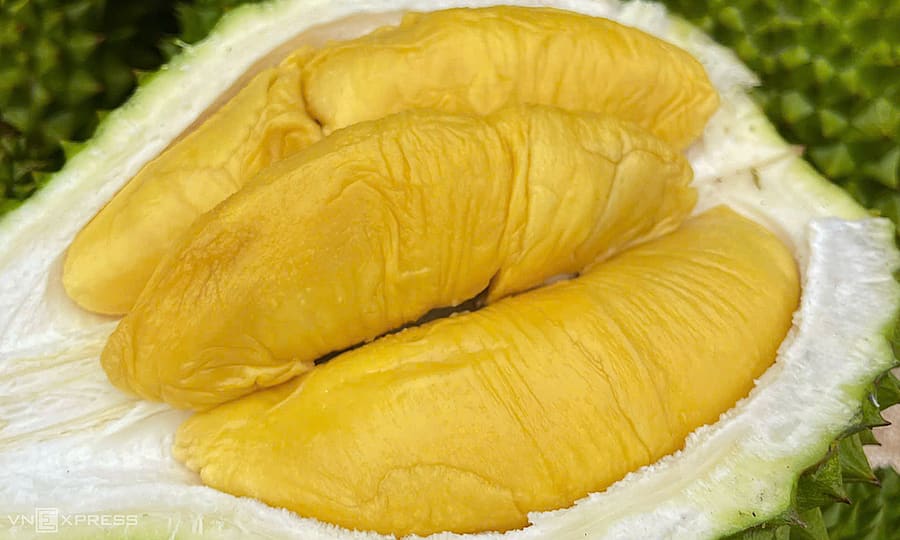
Premium Monthong variety now fetches $3 per kilogram at orchards as border clearance policy and seasonal supply shifts drive export surge
KEY TAKEAWAYS
- ·Top-grade Monthong durians in Vietnam rose 8% in one week to $3 per kilogram at orchards, reversing a 30% year-on-year decline earlier this month.
- ·Vietnam shipped $4.76 billion in fruit and vegetables in the first seven months of 2026, up 23% year-on-year, with durian accounting for more than half of total export value.
- ·New customs policy grants same-day clearance for agricultural exports at border gates, including outside business hours, as Central Highlands durian harvest enters peak season through October.
Orchards See Sudden Demand Spike
Durian traders in Vietnam's Central Highlands are scrambling to secure inventory as prices for premium fruit jump within days. Top-grade Monthong durians now command VND75,000 to VND80,000 per kilogram at the orchard gate, an 8% increase over the past week, according to traders in Dak Lak province.
The reversal follows weeks of depressed pricing. Earlier this month, the same fruit sold for VND46,000 to VND68,000, down as much as 30% compared to the same period last year. Ri6, another popular variety, has followed a similar trajectory, rising to VND55,000-58,000 per kilogram after trading at VND28,000-38,000 earlier in July.
Trung, a trader operating in Dak Lak, described the shift as immediate. High-quality durians are purchased as soon as growers bring them to market, he noted, as buyers rush to meet orders.
Export Volumes Accelerate
Vietnam shipped an estimated $4.76 billion worth of fruit and vegetables in the first seven months of 2026, up 23% year-on-year, according to the Vietnam Fruit and Vegetable Association. July alone saw exports reach $1.06 billion, a 38% increase.
Durian accounted for more than half of total fruit and vegetable export value during the period and served as the primary growth engine. The spike in shipments coincides with the end of Thailand's harvest season, which has left Vietnam as the dominant supplier to regional markets.
Dang Phuc Nguyen, general secretary of the association, pointed to reduced competition as a structural advantage. With Thai orchards no longer producing, Vietnamese growers face fewer alternatives in key buyer markets.
Policy Shift at the Border
A new customs procedure implemented by Vietnam's Department of Customs has shortened clearance times for agricultural exports. Under the policy, which took effect last week, shipments of produce receive same-day processing at border gates, including outside standard business hours and on public holidays.
The measure targets bottlenecks that have historically slowed perishable goods, particularly during peak harvest periods. For durian, which deteriorates rapidly after picking, the time savings translate directly into product quality and marketability.
The Central Highlands region, which produces the bulk of Vietnam's durian crop, is now entering its main harvest window. Output is expected to remain elevated through September or October, the period when export volumes typically peak. Growers and traders anticipate sustained demand from China, the largest buyer of Vietnamese durian, as domestic consumption in that market remains strong.
Regional Context
Vietnam's durian sector has grown rapidly since China granted market access for fresh Vietnamese durian in 2022. The fruit has since become the country's highest-value agricultural export, surpassing traditional crops such as rice and coffee in per-ton revenue.
The sector's expansion has drawn investment into cold chain infrastructure and orchard development across the Central Highlands provinces of Dak Lak, Dak Nong, and Lam Dong. However, the market remains sensitive to supply fluctuations in Thailand, which produces significantly larger volumes and has established brand recognition in Chinese consumer markets.
The current price recovery reflects both seasonal dynamics and policy adjustments designed to improve export competitiveness. Whether prices stabilize at current levels will depend on harvest volumes in the coming weeks and sustained demand across the border.
RELATED STORIES

Vietnam's Offshore Oil Find Tests Hanoi's Will Against Beijing
Priyanka V. Rao · 5 min

Vietnam's National Assembly Closes Extraordinary Session With Nuclear and Renewable Energy Approvals
Tran Quoc Bao · 3 min
Chinese Brands Capture Vietnam's $92 Million Robot Vacuum Market
Siti Nuraini · 3 min
Vietnam's Trade Turnover Hits $770 Billion as Imports Surge Past Exports
Jun-ho Seo · 2 min
Spot something wrong? Email editor@briefasia.com. We log every correction publicly.