Finance · Markets
Vietnamese Dong Slides as Dollar Gains on Middle East Tensions
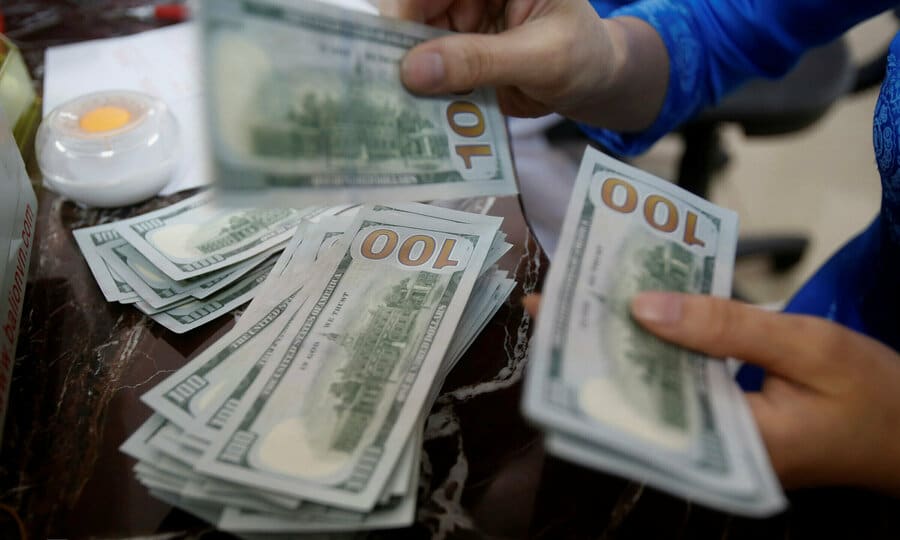
The greenback rose 0.04% at major commercial banks and climbed further on informal markets as geopolitical risk and rising oil prices bolster safe-haven demand
KEY TAKEAWAYS
- ·The U.S. dollar rose 0.04% to VND26,520 at Vietcombank and gained 0.19% to around VND26,380 on informal markets while Vietnam's central bank held its reference rate at VND25,260
- ·Dollar strength stems from safe-haven flows as U.S. military operations in Iran entered their eleventh night, combined with rising oil prices and climbing Treasury yields
- ·The yen hit its weakest level since 1986 at 163.24 per dollar while the dollar index held near a one-week high of 101.20 against major currencies
Dong Weakens at Banks and Street Markets
The U.S. dollar gained ground against the Vietnamese dong on Wednesday morning, with Vietcombank selling the greenback at VND26,520, an increase of 0.04% from the previous session. The currency appreciation was more pronounced in informal trading, where the dollar climbed 0.19% to reach approximately VND26,380.
The State Bank of Vietnam maintained its official reference rate steady at VND25,260, providing a benchmark that continues to reflect policy stability even as market rates adjust to global pressures.
The movement in Vietnam's currency markets mirrors a broader pattern across Asian trading floors, where the dollar has strengthened against most regional currencies amid heightened geopolitical uncertainty and shifting commodity prices.
Safe Haven Flows Drive Dollar Strength
Global currency markets are responding to escalating tensions in the Middle East, where U.S. military operations entered their eleventh consecutive night of strikes on Iran. The conflict has triggered a flight to safety that typically benefits the dollar, particularly when combined with rising energy costs.
"A continuation of the Middle East conflict should support the dollar because of its safe-haven status and typically positive correlation with oil prices," said Samara Hammoud, currency strategist at Commonwealth Bank of Australia.
The dollar index, which tracks the greenback's performance against six major currencies, held near a one-week peak of 101.20 in early Asian trading. U.S. Treasury yields also climbed, making dollar-denominated assets more attractive to international investors seeking both security and returns.
Regional Currencies Under Pressure
The dollar's advance extended across multiple fronts in Asian currency markets. The Japanese yen weakened to 163.24 per dollar, marking its lowest level since late 1986, before settling at 163.21 in early Asian trading. The historic weakness in the yen reflects both divergent monetary policy between the Federal Reserve and Bank of Japan, as well as the current risk-off sentiment favoring the dollar.
Sterling dropped below its 200-day moving average to trade at $1.3385, while the euro held at $1.1401. In the Pacific region, the Australian dollar maintained its position just above the 70 cent level, and the New Zealand dollar hovered near support at its 200-day moving average of $0.5825.
Oil Prices Add Pressure
Rising crude oil prices contributed additional upward momentum to the dollar, according to Reuters. Energy markets have responded to supply concerns stemming from Middle East instability, with higher oil prices typically correlating with dollar strength given that commodities are predominantly priced in the U.S. currency.
For Vietnam, a net energy importer, the combination of a stronger dollar and elevated oil prices presents a dual challenge. Import costs rise both from currency depreciation and from higher underlying commodity prices, putting pressure on the country's trade balance and inflation outlook.
What This Means for Vietnam
The dong's depreciation against the dollar comes at a time when Vietnam's central bank has maintained a relatively stable reference rate policy, suggesting authorities are comfortable allowing some market-driven adjustment rather than defending a specific exchange rate level. This approach provides flexibility as the country navigates external shocks while managing domestic monetary conditions.
Currency market participants will be watching whether the State Bank of Vietnam adjusts its reference rate in coming sessions or continues to allow the gap between official and market rates to widen. The central bank has historically intervened through both rate adjustments and direct market operations when currency movements threaten macroeconomic stability.
The broader question for Vietnam's economy is whether dollar strength persists beyond the current geopolitical episode. Sustained currency pressure could affect import-dependent sectors and foreign debt servicing costs, while potentially providing some relief to exporters competing in dollar-denominated markets. With U.S. Treasury yields rising and Middle East tensions unresolved, near-term currency volatility appears likely to continue.
RELATED STORIES

Malaysia Hospital Group A1Health Prepares US$1.7 Billion IPO for Early 2027
Tran Quoc Bao · 2 min

Vietnam's VN-Index Climbs Toward 1,800 as Market Sentiment Strengthens
Priyanka V. Rao · 3 min
Vietnam's Trade Turnover Hits $770 Billion as Imports Surge Past Exports
Jun-ho Seo · 2 min

Samsung's Vietnam Operations Post 23% Profit Jump to $2.3 Billion
Tran Quoc Bao · 3 min
Spot something wrong? Email editor@briefasia.com. We log every correction publicly.