Finance · Markets
Vietnam Pushes Financial Center Plans as Capital Demand Accelerates
Ho Chi Minh City and Da Nang targeted to anchor regional finance hub as Hanoi pursues stock market upgrade and long-term funding channels

KEY TAKEAWAYS
- ·Vietnam is establishing international financial centers in Ho Chi Minh City and Da Nang to meet growing medium- and long-term capital demand.
- ·Authorities are upgrading stock market quality through improved infrastructure, tighter governance standards, and expanded derivatives products to attract institutional investors.
- ·The initiative places Vietnam in regional competition with Singapore, Hong Kong, and Bangkok, with success dependent on regulatory transparency and macroeconomic stability.
Twin-City Finance Hub Takes Shape
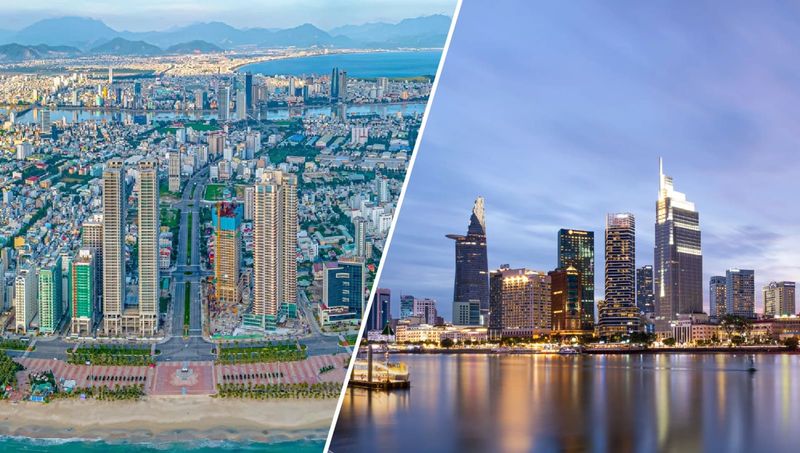
Vietnam is moving forward with plans to establish international financial centers in Ho Chi Minh City and Da Nang, marking a strategic push to deepen its integration into global capital markets. The dual-city approach reflects Hanoi's ambition to create complementary financial hubs that can attract foreign investment and provide domestic enterprises with access to longer-term funding.
The initiative comes as Vietnamese companies face growing capital requirements that domestic banks and short-term financing channels struggle to meet. Medium- and long-term capital has become increasingly critical for infrastructure projects, manufacturing expansion, and technology investments across Southeast Asia's third-largest economy by population.
Ho Chi Minh City, already the nation's commercial heart and home to the main stock exchange, brings established financial infrastructure and a concentration of multinational corporations. Da Nang, positioned along the central coast, offers geographic diversification and proximity to emerging industrial zones stretching from Quang Nam to Binh Dinh provinces.
Stock Market Quality Drive
Alongside the financial center ambitions, Vietnamese authorities are working to improve the quality and depth of the country's equity markets. The push addresses longstanding concerns among institutional investors about market liquidity, corporate governance standards, and regulatory transparency.
Vietnam's stock market has expanded rapidly over the past decade, with market capitalization climbing from roughly 30 percent of GDP in 2015 to above 70 percent by 2024. Yet foreign ownership limits, settlement procedures, and the dominance of retail investors have kept the market classified as a frontier rather than emerging market by major index providers.
Upgrading market infrastructure and tightening listing requirements form part of the broader effort to attract pension funds, sovereign wealth vehicles, and other long-horizon capital that can stabilize trading and support larger equity raises. The State Securities Commission has signaled plans to expand derivatives products, streamline foreign investor registration, and strengthen disclosure rules over the next two years.
Capital Market Development as Policy Priority
The financial center and market upgrade initiatives sit within a wider capital market development agenda that Vietnamese policymakers have prioritized since 2020. The strategy aims to reduce the economy's reliance on bank lending, which accounts for more than 70 percent of total credit and concentrates risk within the banking system.
Developing a robust corporate bond market, expanding venture capital and private equity ecosystems, and creating pathways for infrastructure financing through capital markets are all components of the plan. The government has also explored green bond frameworks and sustainability-linked instruments to tap growing pools of ESG-focused capital in Singapore, Tokyo, and Hong Kong.
Vietnam's infrastructure needs alone are estimated in the hundreds of billions of dollars over the next decade, covering port expansions, expressway networks, power generation, and urban transit systems. Traditional project finance and state budget allocations cannot cover the full requirement, making capital market channels essential.
Regional Competition and External Support
Vietnam's financial center ambitions place it in direct competition with established hubs in Singapore, Hong Kong, and emerging contenders in Bangkok and Jakarta. Each center offers distinct advantages: Singapore's regulatory credibility and talent pool, Hong Kong's access to mainland China, Bangkok's ASEAN connectivity, Jakarta's domestic market scale.
Hanoi's pitch centers on competitive operating costs, a young and increasingly skilled workforce, political stability, and the momentum of recent trade agreements including the EU-Vietnam Free Trade Agreement and the Comprehensive and Progressive Agreement for Trans-Pacific Partnership. The Netherlands and other European partners have expressed readiness to provide technical assistance and share regulatory expertise as Vietnam builds out its financial infrastructure.
Success will hinge on execution: delivering transparent regulation, building talent pipelines in areas like risk management and investment banking, and maintaining macroeconomic stability. Vietnam's inflation and exchange rate volatility in 2022-2023 underscored the challenges of managing rapid growth while attracting foreign capital.
The financial center initiative is expected to unfold over a decade or more, with early milestones focused on establishing special economic zones, licensing frameworks for international financial institutions, and pilot programs for cross-border capital flows. Whether Vietnam can convert ambition into a functioning regional hub will depend on sustained policy commitment and the ability to navigate geopolitical and economic headwinds in the years ahead.
RELATED STORIES

Vietnam Pursues Deeper Capital Market Ties with London
Tran Quoc Bao · 3 min
Vietnam Bets $76 Billion Funding Gap Can Lure Capital Without Copying Rivals
Priyanka V. Rao · 4 min

Malaysia Hospital Group A1Health Prepares US$1.7 Billion IPO for Early 2027
Tran Quoc Bao · 2 min
Vietnam's VN-Index Climbs Toward 1,800 as Market Sentiment Strengthens
Priyanka V. Rao · 3 min
Spot something wrong? Email editor@briefasia.com. We log every correction publicly.