Asia · Business
Vietnam Growth Forecasts Revised Upward as Banks See Expansion Accelerating
Major international banks raise GDP projections following stronger-than-expected first-half economic performance, with Standard Chartered now predicting double-digit growth by 2027.
KEY TAKEAWAYS
- ·Standard Chartered forecasts Vietnam GDP growth at 9.5 percent in 2026 and 11 percent in 2027, with UOB and DBS also raising projections after strong first-half performance.
- ·The upgraded outlook reflects robust manufacturing exports, accelerating foreign investment, and strengthened supply chain positioning within Southeast Asia.
- ·Policymakers face balancing challenges including inflation management, currency stability, and labor market tightness as rapid expansion tests macroeconomic frameworks.
Upgraded Projections
Vietnam's economic momentum has prompted a wave of upward revisions from international financial institutions tracking Southeast Asian markets. Standard Chartered now forecasts GDP expansion of 9.5 percent in 2026, climbing to 11 percent in 2027, according to the bank's latest economic outlook. UOB and DBS have similarly adjusted their Vietnam projections higher, though specific revised figures from those institutions were not disclosed.
The recalibrations follow a first-half performance that exceeded earlier expectations across key economic indicators. Manufacturing output, export volumes, and foreign direct investment inflows all contributed to the stronger-than-anticipated results, creating a foundation for sustained expansion through the remainder of the year and into 2027.
Momentum Drivers
Vietnam's export sector has demonstrated particular resilience, with electronics and textiles maintaining steady demand from North American and European markets despite global economic headwinds. Foreign investment commitments have also accelerated, with multinational manufacturers continuing to shift production capacity into Vietnam as part of broader regional diversification strategies.
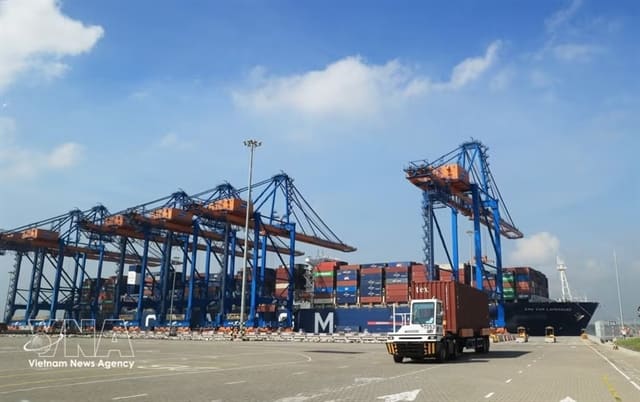
The country's position within regional supply chains has strengthened over the past eighteen months, benefiting from both established trade agreements and ongoing infrastructure improvements. Port capacity expansions in Hai Phong and Ho Chi Minh City have reduced logistics bottlenecks, while industrial zone development in northern provinces has attracted additional manufacturing investment.
Balancing Act Ahead
Yet the pace of expansion presents macroeconomic management challenges for policymakers. Rapid growth typically generates inflationary pressures, particularly in property markets and consumer goods sectors where demand can outstrip supply capacity. Vietnam's central bank will need to calibrate monetary policy carefully to sustain expansion while preventing price instability.
Currency management adds another layer of complexity. Strong growth often attracts capital inflows that can appreciate the dong, potentially eroding export competitiveness just as manufacturing momentum builds. Maintaining exchange rate stability without accumulating excessive foreign reserves requires precise intervention timing.
Labor market dynamics also merit attention. Accelerating industrial activity has tightened skilled worker availability in key manufacturing hubs, pushing wage growth higher in technical and supervisory roles. While wage increases support domestic consumption, they can compress profit margins for exporters competing on cost efficiency.
Regional Context
The upgraded forecasts position Vietnam among the fastest-growing economies in Southeast Asia, outpacing regional peers facing slower recoveries. Indonesia and Thailand are projected to expand in the 4 to 5 percent range through 2027, while the Philippines aims for 6 to 7 percent growth, making Vietnam's trajectory notably steeper.
This growth differential reflects Vietnam's success in attracting the manufacturing investment that neighboring countries have pursued with varying results. The combination of competitive labor costs, improving infrastructure, and stable policy frameworks has given Vietnam an edge in securing production relocations from higher-cost markets.
Standard Chartered's projection of 11 percent growth in 2027 would represent Vietnam's strongest expansion since the post-pandemic rebound, signaling confidence that current momentum can be maintained. Achieving that pace will require continued infrastructure investment, workforce development, and macroeconomic stability - a combination that has historically proven difficult to sustain at such elevated growth rates.
The coming quarters will test whether Vietnam's policymakers can manage the tensions inherent in rapid expansion: supporting growth while containing inflation, attracting capital while managing currency pressures, and expanding industrial capacity while ensuring labor market balance. How they navigate these trade-offs will determine whether the current optimism translates into durable prosperity.
RELATED STORIES
Samsung's Vietnam Operations Post 23% Profit Jump to $2.3 Billion
Tran Quoc Bao · 3 min
Chinese Brands Capture Vietnam's $92 Million Robot Vacuum Market
Siti Nuraini · 3 min
Vietnam Bets $76 Billion Funding Gap Can Lure Capital Without Copying Rivals
Priyanka V. Rao · 4 min

Five ASEAN Members Back Regional Oil Stockpile as Study Nears Completion
Tran Quoc Bao · 3 min
Spot something wrong? Email editor@briefasia.com. We log every correction publicly.