Asia · Trending
Vietnam Gold Demand Drops 31% as Price Declines Dampen Investor Appetite
The country's investment gold demand fell to 6.5 tonnes in Q2, trailing Indonesia and Thailand as import quotas and falling prices disrupted the market
KEY TAKEAWAYS
- ·Vietnam's investment gold demand fell 31% year-on-year to 6.5 tonnes in Q2, the only decline in Southeast Asia.
- ·Falling domestic prices and constrained import quotas kept local premiums high and undermined buyer sentiment.
- ·Indonesia and Thailand led the region with 14.5 tonnes and 10.9 tonnes respectively, while Vietnam ranked third.
A Regional Outlier
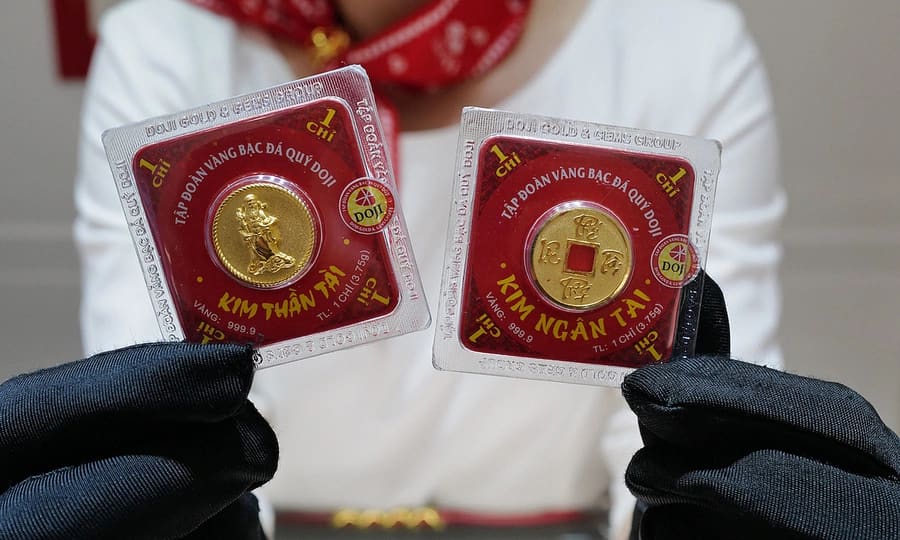
Vietnam stood alone among Southeast Asian nations in the second quarter, recording the region's only contraction in investment gold demand. Sales of gold bars and coins fell 31% year-on-year to 6.5 tonnes, according to the World Gold Council, marking a sharp divergence from neighbors that posted gains during the same period.
The decline positioned Vietnam third in the region behind Indonesia, where demand reached 14.5 tonnes, and Thailand, which sold 10.9 tonnes. Across the five-country Southeast Asian market tracked by the council, total bar and coin sales climbed 7.6% to 36.7 tonnes.
Price Dynamics and Market Distortions
Falling domestic prices played a central role in dampening Vietnamese appetite for gold. Local prices dropped 7.7% since the start of the year and tumbled 26% from the record high reached in late January. Rather than spurring bargain hunting, the decline eroded investor confidence in the metal as a store of value.
Import quotas imposed by authorities added a second layer of friction. The restrictions created supply constraints that kept local price premiums elevated, discouraging buyers even as absolute prices fell. The World Gold Council noted that these constrained quotas distorted market conditions and undermined sentiment.
The combination of falling prices and structural barriers created an environment where potential buyers stayed on the sidelines, waiting for clearer signals or better conditions.
First-Half Performance
Over the full six months, Vietnam's bar and coin demand totaled 15.6 tonnes, trailing both Indonesia at 38.1 tonnes and Thailand at 20.9 tonnes. The jewelry segment mirrored the weakness in investment demand, posting the region's steepest year-on-year drop at 28% to reach just 1.8 tonnes in the second quarter.
The jewelry decline suggests broader hesitation around gold purchases in Vietnam, extending beyond investors to consumers who traditionally buy gold ornaments for weddings and cultural occasions.
Regional Divergence
While Vietnam contracted, other Southeast Asian markets accelerated. Indonesia emerged as one of the fastest-growing gold markets globally, with second-quarter demand surging 40% year-on-year. The gains reflected both rising incomes and sustained interest in gold as inflation protection.
Thailand recorded its strongest second quarter since 2019. Buyers there responded to price corrections by increasing purchases, a pattern that did not materialize in Vietnam despite similar price movements. The difference points to structural factors beyond price, including regulatory environment and market confidence.
Malaysia and Singapore, the other two markets in the council's regional tally, maintained steady demand without the volatility seen in Vietnam or the rapid growth observed in Indonesia.
Global Context
Globally, bar and coin demand slipped 3% to 307.1 tonnes in the second quarter. The modest decline reflected mixed conditions across major markets, with weakness in some regions offset by strength in others. Vietnam's 31% contraction stood out as sharper than the global trend, underscoring the specific headwinds facing the market.
Gold prices in international markets have faced pressure from rising real interest rates and a stronger U.S. dollar, factors that typically weigh on non-yielding assets. In Vietnam, these global pressures compounded domestic challenges, creating a particularly difficult environment for demand.
What Comes Next
The outlook for Vietnamese gold demand depends on whether authorities adjust import quotas and how domestic prices evolve in the second half. If prices stabilize or begin to recover, and if supply constraints ease, demand could rebound as investors regain confidence.
However, sustained weakness would signal deeper shifts in how Vietnamese households view gold amid changing financial markets and investment options. The country's growing middle class has more access to equities, real estate, and foreign assets than in prior decades, potentially reducing gold's traditional role as the default savings vehicle.
For now, Vietnam remains an outlier in a region where gold continues to attract strong interest.
RELATED STORIES
Vietnam Ships 1.7 Million Tonnes of Coffee as Brazil Delays and EU Rules Reshape Trade
Tran Quoc Bao · 3 min
Chinese Brands Capture Vietnam's $92 Million Robot Vacuum Market
Siti Nuraini · 3 min

Five ASEAN Members Back Regional Oil Stockpile as Study Nears Completion
Tran Quoc Bao · 3 min
Vietnam's Trade Turnover Hits $770 Billion as Imports Surge Past Exports
Jun-ho Seo · 2 min
Spot something wrong? Email editor@briefasia.com. We log every correction publicly.