Asia · Business
Vietnam's Fruit Exports Surge Past $3.6 Billion on Durian Boom
The country's agricultural sector is pivoting from volume to value as durian shipments climb 46% and exports diversify beyond China
KEY TAKEAWAYS
- ·Vietnam exported $3.65 billion of fruit and vegetables in the first half of 2026, up 18% year-on-year, with durian generating $562 million and growing 46%.
- ·China accounts for the bulk of shipments, with annual growth of 65 to 70%, prompting Hanoi to negotiate market access in the U.S., Japan, South Korea and Australia to reduce single-market risk.
- ·The sector is shifting from volume expansion to quality and value-added production as cultivation area limits are reached and importing markets tighten food safety and sustainability requirements.
Durian Leads the Charge
Vietnam shipped $3.65 billion worth of fruit and vegetables in the first six months of 2026, marking an 18% increase over the same period last year, according to the Ministry of Agriculture and Environment. The second quarter alone accounted for $2.18 billion of that total.
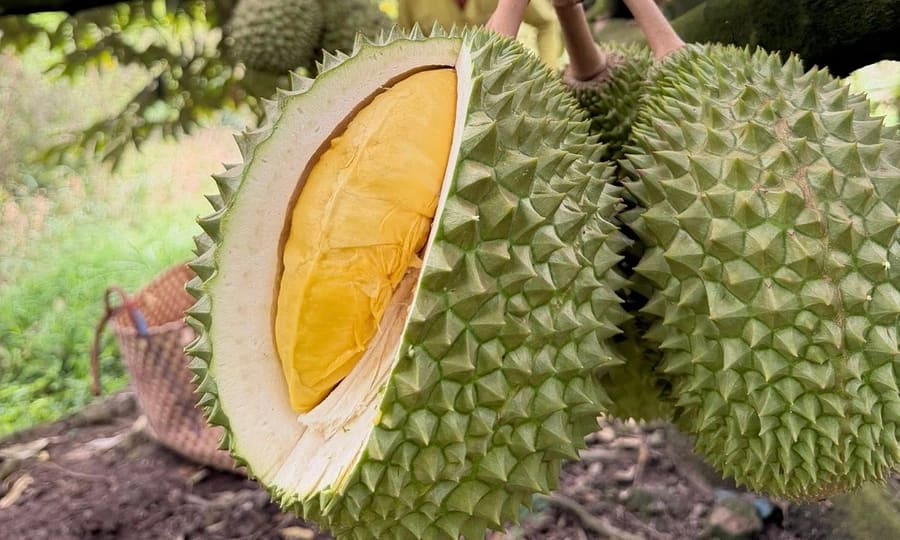
Durian now stands as the country's top fruit export, generating nearly $562 million in the first five months of the year and posting 46% growth year-on-year. The spiky fruit, which Vietnam cultivates across roughly 192,000 hectares, reaches 28 markets globally. Production is forecast to climb from 1.8 million tonnes in 2025 to between 2 and 2.1 million tonnes this year, data from the Crop Production and Plant Protection Department show.
Lychees and coconuts also recorded double-digit gains, benefiting from strong appetite in China, the United States and South Korea. The ministry projects that ample supply and steady demand will sustain export momentum through the remainder of 2026 without straining domestic prices.
China Dependency Prompts Diversification Push
China absorbs the lion's share of Vietnamese fruit and vegetable exports, with shipments to the market growing at an annual clip of 65 to 70% in recent years. Nguyen Quoc Manh, deputy director of the Crop Production and Plant Protection Department, noted that the industry's trajectory is closely linked to sustaining and broadening access in China.
Yet that concentration presents risk. The ministry is now in talks to open doors for additional Vietnamese fruits in the U.S., Japan, South Korea and Australia, aiming to spread exposure and reduce reliance on any single buyer.
Quality Over Quantity
Vietnam's fruit and vegetable sector is shifting gears. With little room left to expand cultivation areas, the focus has turned to quality improvements, higher value-added products and sustainable practices. Nguyen Quoc Manh described the pivot as a move away from the volume-driven model that defined earlier growth.
Importers are raising the bar. The European Union, China and other premium markets have tightened quality and food safety standards, creating the steepest hurdle for Vietnamese producers. At the same time, rising input costs, fueled by global economic volatility and geopolitical tensions, are squeezing margins for farmers and exporters alike.
Five-Year Blueprint
Over the next half-decade, the ministry plans to accelerate research and breeding of fruit and vegetable varieties tailored to domestic growing conditions and overseas demand. Expanding deep processing capacity and pursuing new export markets sit high on the agenda.
A low-emission crop production strategy running from 2025 to 2035 will underpin the effort, targeting a greener, more competitive industry that lifts farmer incomes while meeting international sustainability benchmarks. The blueprint reflects Hanoi's recognition that the next chapter of agricultural export growth hinges less on planting more land and more on extracting greater value from every hectare already in production.
Vietnam's fruit sector has carved out a niche in regional supply chains, particularly for tropical varieties that thrive in the Mekong Delta. Whether it can maintain momentum will depend on how quickly producers adapt to stricter quality regimes and how effectively officials unlock access to diversified markets beyond the dominant Chinese corridor.
RELATED STORIES
Vietnam's Trade Turnover Hits $770 Billion as Imports Surge Past Exports
Jun-ho Seo · 2 min

Samsung's Vietnam Operations Post 23% Profit Jump to $2.3 Billion
Tran Quoc Bao · 3 min

Viettel Opens Dominican Republic Operations as Military Telco Eyes Caribbean Expansion
Cheng Wei-Lun · 3 min
Chinese Brands Capture Vietnam's $92 Million Robot Vacuum Market
Siti Nuraini · 3 min
Spot something wrong? Email editor@briefasia.com. We log every correction publicly.