Asia · Trending
Thailand's Economy Faces Sharp Deceleration Amid Consumption Crunch
GDP growth expected to drop below 2% in Q2 as household spending weakens and tourism arrivals decline, despite export resilience
KEY TAKEAWAYS
- ·Thailand's GDP growth is forecast to slow to 1.7 percent year-on-year in Q2 2026, down from 2.8 percent in Q1, with a 0.6 percent sequential contraction.
- ·Household spending has weakened as rising costs, high debt, and an aging population constrain consumer activity despite government fiscal support.
- ·Tech investment in AI infrastructure and strong first-half export gains have partially offset weak consumption, though export momentum is expected to fade.
Household Spending Stalls Growth
Thailand's economy is set to lose momentum in the second quarter of 2026, with analysts forecasting GDP expansion of just 1.7 percent year-on-year when official figures are released on August 17. That marks a substantial retreat from the 2.8 percent pace recorded in the first three months of the year, and on a sequential basis the economy is expected to shrink by 0.6 percent quarter-on-quarter after seasonal adjustment.
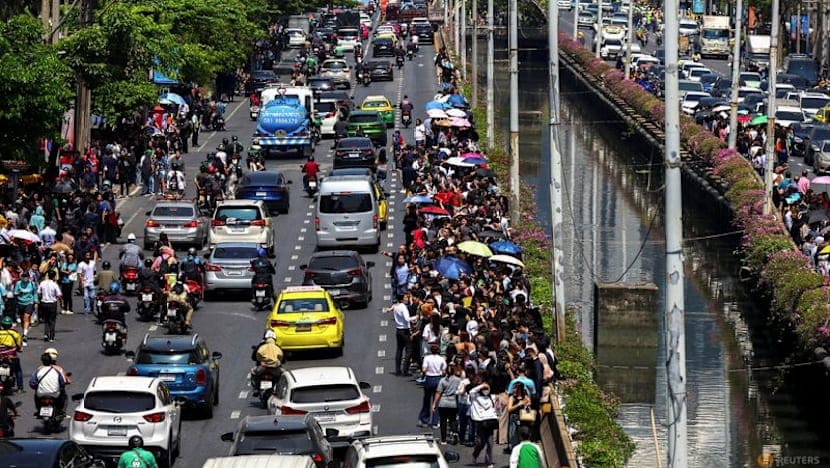
The deceleration reflects a sharp pullback in consumer activity. Household spending, traditionally a mainstay of Thai economic growth, has weakened under pressure from elevated living costs. An earlier spike in global oil prices sent ripples through transportation and goods pricing, prompting families to rein in discretionary outlays. Eugene Tan, associate economist at Moody's Analytics, noted that households have grown more cautious as costs climbed across a broad swath of categories.
Structural headwinds compound the immediate price pressures. Thailand's population is aging rapidly, crimping the size and dynamism of the workforce. At the same time, household debt remains stubbornly high, limiting the room for credit-fueled consumption even as the government rolls out fiscal measures intended to prop up demand. Skills gaps and sluggish productivity gains further constrain the economy's ability to generate income growth, according to Chamadanai Marknual, economist at Krungthai Bank.
Tourism Delivers Less Relief
The tourism sector, long a pillar of Thai output, is contributing less than hoped. Foreign visitor arrivals through the first week of August were down 3.2 percent compared with the same period a year earlier. Geopolitical uncertainty, higher travel expenses, and softer purchasing power in key source markets have all weighed on inbound traffic, limiting the industry's capacity to offset weak domestic demand.
That shortfall is significant for an economy that has historically leaned on tourist spending to smooth over domestic cycles. With arrivals trending lower, hotels, restaurants, and transport operators face thinner margins at a time when local consumers are already pulling back.
Tech Investment and Export Momentum Provide a Buffer
Not all sectors are faltering. Private investment has picked up, driven largely by spending on electronics manufacturing and artificial intelligence infrastructure. Companies are pouring capital into AI servers, data centers, and related hardware, betting on the region's role in the global tech supply chain. That flow of investment has provided a partial cushion against the consumption drag.
Exports also delivered support in the first half of the year. Shipments rose 20.8 percent year-on-year in June and climbed 17.6 percent for the January-to-June period, according to Commerce Ministry data. Much of that strength, however, appears to have been front-loaded. Ministry officials expect export growth to moderate in the second half as the early rush of orders tapers off.
The combination of robust exports and targeted tech investment has kept the economy from stalling outright, but analysts caution that these tailwinds may not be enough to sustain momentum if consumption remains weak and tourism fails to rebound.
Outlook and Policy Constraints
Looking ahead, economists surveyed in a separate poll last month forecast GDP growth of 2.4 percent in the third quarter and 2.0 percent for the full year 2026. The Bank of Thailand projects annual expansion of 2.3 percent.
Those projections imply a modest recovery in the second half, but the margin for error is narrow. Fiscal stimulus has so far proven insufficient to revive household spending, and monetary policy remains constrained by inflation concerns and the need to defend the baht. Without a significant turnaround in consumer confidence or a surprise rebound in tourist arrivals, Southeast Asia's second-largest economy faces an extended period of sub-par growth.
The challenge for policymakers is to address long-term structural issues while managing near-term cyclical weakness. An aging demographic, high debt burdens, and productivity gaps are not problems that can be solved with short-term spending programs. Yet without stronger domestic demand, Thailand risks becoming overly reliant on external sectors that are themselves vulnerable to global trade shifts and geopolitical friction.
For investors and businesses watching the region, Thailand's slowdown serves as a reminder that export strength alone cannot carry an economy when household balance sheets are stretched and demographic tailwinds have turned into headwinds.
RELATED STORIES

Thailand Targets Four Strategic Priorities Amid Global Trade Volatility
Priyanka V. Rao · 3 min
Bangkok Caps Electric Rail Fares at $1.36 Under Unified Ticketing Push
Priyanka V. Rao · 2 min

Thailand Regulator Drafts 20 Measures to Curb Retail Power Over Suppliers
Priyanka V. Rao · 3 min
Thai Consumers Lost $273 Million to Online Fraud in First Half of 2026
Priyanka V. Rao · 3 min
Spot something wrong? Email editor@briefasia.com. We log every correction publicly.