Technology · Startups
Tencent Joins $400 Million Round in Stockholm's Lovable at $13.3 Billion
The no-code platform has powered 60 million projects since late 2024, drawing fresh capital from Asia and Europe as enterprise appetite for accessible software tools accelerates.
KEY TAKEAWAYS
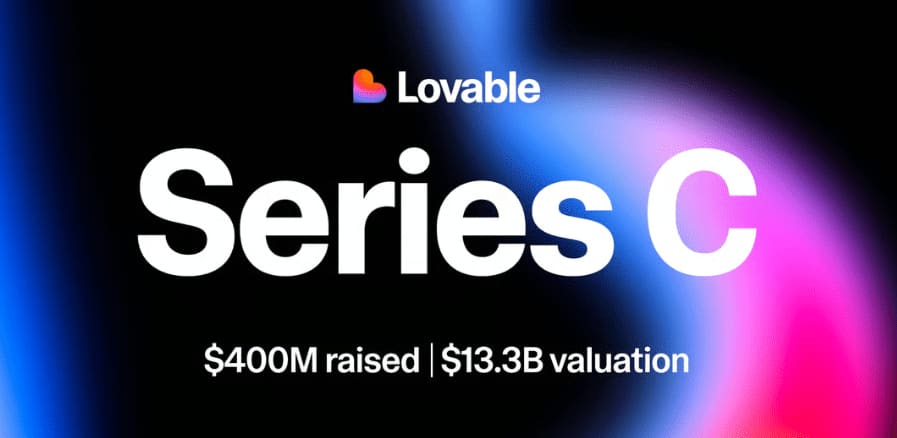
- ·Lovable closed a $400 million Series C at a $13.3 billion valuation, with Menlo Ventures and EQT co-leading and Tencent joining as a new investor.
- ·The Stockholm platform has generated over 60 million user projects since launching in November 2024, with applications receiving 900 million monthly visits.
- ·Tencent's investment extends its shift toward B2B infrastructure and developer tools, diversifying beyond consumer internet in China into European enterprise software.
A $13.3 Billion Bet on Accessible Software
Lovable, the Stockholm-based no-code platform, has secured $400 million in Series C financing at a $13.3 billion valuation, according to Menlo Ventures and EQT's Scaleup Europe Fund, which co-led the round. The investment brings Chinese internet giant Tencent into the cap table alongside new backers Balderton Capital, Carmignac, Kaszek Ventures, LTS Growth, World Innovation Lab, and Regent.
The deal marks one of the largest single rounds for a European software company in 2026 and underscores investor confidence that business users will increasingly adopt tools that eliminate traditional coding requirements. For Tencent, the investment extends its pattern of backing developer infrastructure beyond China, a strategic shift visible in its recent cloud and enterprise software plays across Southeast Asia and Europe.
Sixty Million Projects in Nine Months
Lovable launched its platform in November 2024, offering users the ability to build software and business applications through visual interfaces and natural-language commands rather than hand-written code. The company said users have created more than 60 million projects since that debut, a figure that suggests rapid adoption among small businesses, freelancers, and internal corporate teams looking to prototype or deploy lightweight applications without engineering resources.
Applications built on Lovable now receive over 900 million visits each month, according to the company. That traffic volume points to production-grade use cases rather than experimentation, a threshold that has historically separated successful no-code platforms from hobbyist tools. The metric also signals that Lovable's output is being deployed in customer-facing and operational contexts, raising the stakes for reliability and performance.
Asia Angle: Tencent's Infrastructure Thesis
Tencent's participation is the most notable Asia dimension of the round. The Shenzhen-based conglomerate has spent the past eighteen months repositioning its investment strategy toward B2B infrastructure, cloud services, and developer tools as regulatory pressure and slowing consumer internet growth at home prompted a search for returns in adjacent categories.
Lovable fits that mandate. The platform competes directly with Microsoft Power Apps, Salesforce Lightning, and a clutch of well-funded U.S. peers including Retool and Bubble. By backing a European player with demonstrated traction, Tencent gains exposure to enterprise software demand in markets where its own cloud footprint remains limited but where its capital and go-to-market expertise can unlock distribution partnerships.
The investment also reflects a broader pattern among Asian technology investors: diversifying into Europe's growing software sector. SoftBank, Alibaba, and Singapore's sovereign funds have all increased their European allocations over the past two years, drawn by lower valuations relative to Silicon Valley and a regulatory environment that has become friendlier to venture-backed software companies.
The No-Code Market Heats Up
Lovable's valuation and user metrics arrive as the no-code and low-code software category experiences a second wave of institutional interest. After an initial surge during the pandemic, when remote work forced companies to digitize processes quickly, the market entered a consolidation phase in 2024. Platforms that failed to demonstrate repeatable revenue or sticky user bases saw valuations compress or were acquired at discounts.
Lovable appears to have avoided that fate. The 60 million project figure and 900 million monthly visits suggest the platform has found product-market fit with a segment of users who need to ship software faster than traditional development cycles allow. Whether that translates into durable revenue depends on Lovable's ability to convert free or low-tier users into enterprise contracts, a transition that has proven challenging for no-code peers.
The competitive landscape is crowded. Airtable, valued at $11 billion in 2021, has pivoted toward workflow automation and enterprise data management. Notion, another Stockholm contemporary, has added database and integration features that overlap with Lovable's offering. Microsoft continues to bundle Power Apps with Office 365, giving it a distribution advantage that independent platforms struggle to match.
What Comes Next
The $400 million infusion will likely fund aggressive hiring in sales and customer success, areas where no-code platforms must invest heavily to move upmarket. Lovable will also need to expand its template library, integration ecosystem, and compliance certifications if it intends to compete for enterprise accounts in regulated industries like finance and healthcare.
Geographically, the round's composition suggests a multi-region expansion strategy. Kaszek Ventures, based in São Paulo, brings Latin American connections; Tencent and World Innovation Lab open pathways in Asia; and Balderton and EQT anchor European growth. That portfolio of backers positions Lovable to pursue localized go-to-market motions rather than a single global playbook, a approach that has worked for infrastructure software companies navigating diverse regulatory and procurement environments.
The test for Lovable will be whether its user growth translates into revenue growth at a pace that justifies the $13.3 billion valuation. No-code platforms have historically struggled with monetization, as free tiers attract hobbyists and small teams unwilling to pay for advanced features. If Lovable can demonstrate that its 60 million projects represent real business value and repeatable spending, the round will look prescient. If not, the company will face the same valuation pressure that has reshaped the category over the past two years.
RELATED STORIES

Tencent's Hy3 AI Model Sees 68x Usage Surge as Company Readies Hy4 Release
Cheng Wei-Lun · 3 min

Phantom Blade Zero Demo Draws Eight Million Views as Pre-Orders Open
Cheng Wei-Lun · 2 min

Alibaba Cloud Opens Agent Testing Platform With Cross-Border E-Commerce Challenge
Cheng Wei-Lun · 3 min

China Tablet Market Shrinks as Commercial Buyers Rush Ahead of Price Hikes
Cheng Wei-Lun · 3 min
Spot something wrong? Email editor@briefasia.com. We log every correction publicly.