Finance · Banking
Tala Philippines Pushes Fair Debt Collection as Digital Lending Trust Erodes
The fintech has filed cases against over 70 fake agents and joined industry efforts to regulate abusive practices, while a 2025 study found 99% of customers report no hidden fees
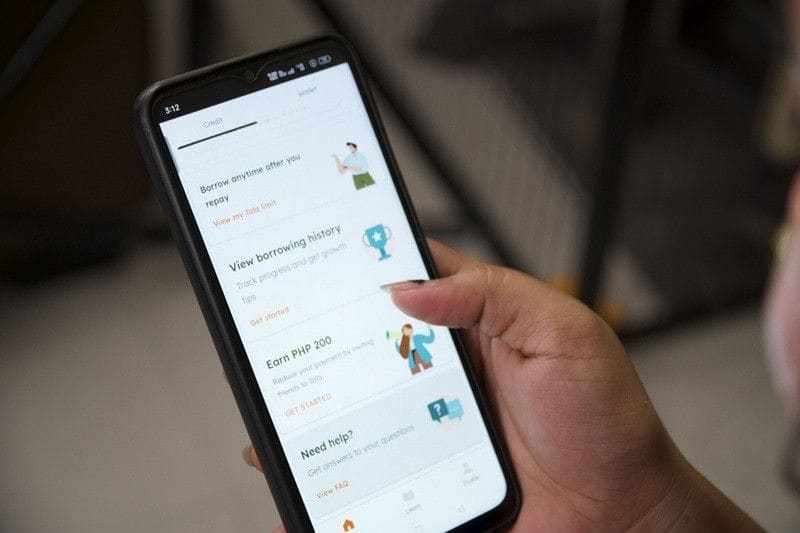
KEY TAKEAWAYS
- ·Tala Philippines has prosecuted over 70 individuals impersonating agents to scam borrowers, partnering with the National Bureau of Investigation on enforcement.
- ·A 2025 study by 60 Decibels found 99 percent of Tala customers reported no hidden or unexpected fees, a benchmark in a market where opacity remains common.
- ·The company advocates regulatory reform through its Global Debt Collection with Dignity Initiative, proposing standards on transparency, privacy, and communication for national regulators to adopt.
A Tale of Two Lending Experiences
Ginalyn's first encounter with online credit left her shaken. The lender sent threats, disclosed her debt to third parties, and turned what should have been a financial tool into a source of anxiety. She swore off digital lending entirely until she encountered Tala, a Manila-based fintech that allowed her to choose her own repayment dates and sent polite reminders rather than harassment. The contrast reshaped her relationship with borrowed money.
Her story captures the dual realities of digital lending in the Philippines today. For millions locked out of traditional banking, app-based credit offers a pathway to working capital, emergency funds, and household stability. Yet the same technology that democratizes access has also enabled a shadow market of unregulated lenders who deploy public shaming, hidden fees, and privacy violations. The result is a sector at a crossroads: trust is fragile, regulatory scrutiny is intensifying, and the gap between compliant platforms and predatory actors is widening.
The Cost of Rogue Operators
The Philippines has seen explosive growth in digital lending since 2018, driven by high smartphone penetration, low formal credit access, and the pandemic's acceleration of cashless services. The Securities and Exchange Commission has registered dozens of lending platforms, but enforcement remains uneven. Borrowers continue to report unauthorized contact-list harvesting, defamatory messages sent to employers and family members, and surprise charges that double effective interest rates.
These abuses do more than harm individual borrowers. They poison the well for the entire industry. When a single bad actor goes viral on social media, it tarnishes every app in the space, making it harder for compliant lenders to reach underserved segments. Regulators respond with blanket restrictions, and the cycle repeats.
Industry groups including the Consumer Lending Association of the Philippines have publicly backed tougher rules on collection practices, recognizing that self-policing is no longer sufficient. Recent regulatory moves have introduced penalties for harassment and mandated clearer disclosure standards, but implementation gaps remain wide.
Transparency Before the First Peso
Tala's approach begins before a loan is disbursed. The platform displays all fees, repayment schedules, and due dates upfront, and allows borrowers to select payment dates that align with their income cycles, whether that is a monthly salary or irregular cash flow from a small business. A 60 Decibels study conducted in 2025 found that 99 percent of Tala customers reported never encountering unexpected or hidden charges, a benchmark that stands out in a market where fee opacity remains common.
The company also offers a feature called Grow with Tala, which shows eligible borrowers their next guaranteed credit limit increase before their current loan matures. The idea is to reduce the anxiety that comes with uncertainty about future access, a psychological burden that often pushes people toward multiple simultaneous loans or more expensive alternatives.
Moritz Gastl, president and general manager of Tala Philippines, framed the strategy in terms of partnership rather than extraction. Access and protection must advance together, he argued, or financial inclusion remains incomplete. The firm's risk models rely on proprietary algorithms and real-time decisioning rather than traditional collateral, which allows it to serve borrowers without formal credit histories. But the technology is only half the equation. The other half is behavioral: how the platform communicates, how it handles missed payments, and how it treats customers when things go wrong.
Prosecution and Prevention
Tala has taken enforcement into its own hands where regulation falls short. In partnership with the National Bureau of Investigation, the company has filed cases against more than 70 individuals who impersonated Tala agents to scam borrowers. These fraudsters typically pose as customer service representatives, demand upfront fees, or threaten legal action to extract payments for nonexistent debts. The scams exploit the brand recognition of legitimate platforms and further erode trust in the sector.
The firm has also joined forces with the Consumer Lending Association of the Philippines and engaged directly with regulators to advocate for policies that prohibit abusive collection tactics. The goal is not just to clean up Tala's own operations but to raise the floor for the entire industry. A rising tide of bad press hurts everyone, and self-regulation has proven insufficient.
Regional Parallels and Divergence
The Philippines is not alone in grappling with the dark side of fintech credit. Indonesia, India, and Kenya have all experienced similar waves of predatory lending, followed by regulatory crackdowns. In Indonesia, the Financial Services Authority delisted hundreds of unregistered lenders in 2021 and imposed strict caps on interest rates. India's Reserve Bank introduced a self-regulatory organization model for digital lenders in 2022, requiring membership for market access. Kenya, where Tala also operates, has seen consumer protection provisions embedded into its digital credit regulations since 2020.
What distinguishes the Philippine context is the fragmentation of oversight. The SEC regulates lending companies, the Bangko Sentral ng Pilipinas oversees banks and payment systems, and the Department of Trade and Industry handles consumer complaints. Coordination is improving, but gaps remain, especially in enforcement against fly-by-night operators who rebrand and relaunch after being shut down.
The Dignity Doctrine
Tala has branded its philosophy as Debt with Dignity, a framework that treats respectful communication and privacy protection as non-negotiable elements of credit provision. The company prohibits contact with third parties, forbids public shaming, and trains collection staff to use neutral, solution-oriented language. When a borrower misses a payment, the response is an invitation to discuss options, not a threat.
This approach is now being formalized through Tala's Global Debt Collection with Dignity Initiative, which aims to create a model framework that national regulators can adapt. The initiative draws on best practices from multiple markets and proposes standards around transparency, privacy, communication frequency, and dispute resolution. It is an attempt to move the industry from reactive compliance to proactive norm-setting.
What Comes Next
The test will be whether these principles scale beyond a single platform. Tala's customer base in the Philippines numbers in the hundreds of thousands, but the broader digital lending market serves millions. For the sector to mature, the standards that Tala and a handful of peers have adopted must become table stakes, enforced by regulators and expected by borrowers.
The regulatory environment is tightening. The SEC has signaled that it will continue to penalize abusive practices, and industry groups are coalescing around shared standards. But enforcement capacity remains constrained, and the incentive structure for rogue operators has not fundamentally changed. High margins, low barriers to entry, and weak prosecution odds still make predatory lending attractive for those willing to operate in the shadows.
For borrowers like Ginalyn, the difference between a good loan and a bad one is not just the interest rate. It is whether the lender treats her as a partner or a mark. That distinction, more than any single policy, will determine whether digital credit becomes a tool for mobility or another mechanism of extraction. Tala's bet is that dignity is not just the right thing to do but the only sustainable path forward for an industry under scrutiny. The next few years will reveal whether the market agrees.
RELATED STORIES
Fuse Financing Lends $406 Billion to 11.1 Million Filipinos in Q1
Priyanka V. Rao · 3 min

Concentrix Launches Matched Retirement Accounts for 100,000 Workers in the Philippines
Priyanka V. Rao · 3 min
Philippine Remittances Hit $3.04 Billion in June, Highest Monthly Inflow This Year
Priyanka V. Rao · 4 min

Mystery Investor Backs Philippine Broadcaster's $120 Million Capital Raise
Priyanka V. Rao · 3 min
Spot something wrong? Email editor@briefasia.com. We log every correction publicly.