Asia · Business
Taiwan Regulator Extends Grab-Foodpanda Review Until October
Fair Trade Commission seeks 60 more working days to assess whether Uber's stake in Grab could undermine competition in Taiwan's delivery market
KEY TAKEAWAYS
- ·Taiwan's Fair Trade Commission extended review of Grab's $600 million Foodpanda acquisition to October 27, adding 60 working days to assess Uber's 13 percent stake in Grab.
- ·The regulator is examining whether Uber's ownership and voting rights could undermine competition between Uber Eats and a merged Grab-Foodpanda entity in Taiwan's delivery market.
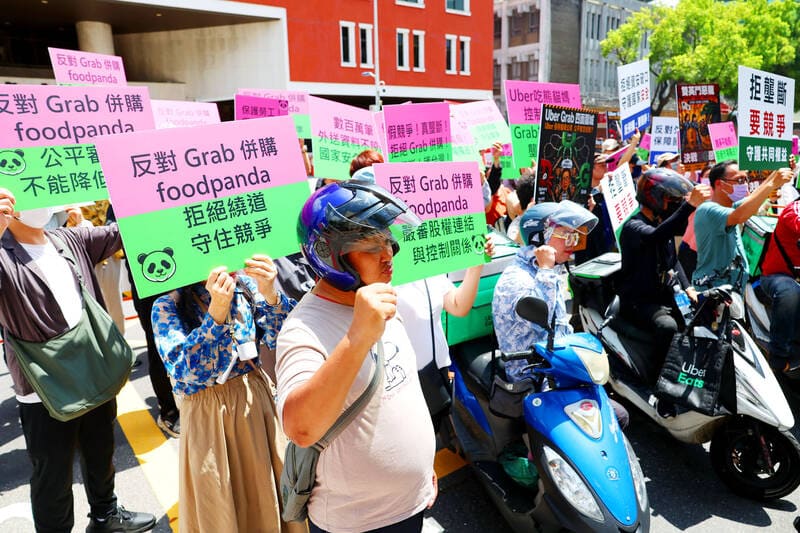
- ·Delivery workers protested outside the commission, demanding rejection of the deal over concerns that overlapping ownership could enable coordinated pricing and harm worker conditions.
Review Extended to Assess Uber's Influence
Taiwan's Fair Trade Commission extended its examination of Grab Holdings' proposed $600 million acquisition of Foodpanda's Taiwan operations until October 27, adding 60 working days to the original timeline. The regulator flagged concerns about whether Uber Technologies' 13 percent ownership stake and 3.7 percent voting rights in Grab could compromise genuine competition between Uber Eats and the merged entity.
The commission said further analysis is required to determine how Uber's investment might affect the "incentive and ability" of the platforms to compete after the transaction closes. Grab submitted its complete merger application on June 16, triggering an initial 30-working-day review period that would have concluded this week.
Market Structure Under Scrutiny
Foodpanda and Uber Eats currently dominate Taiwan's food delivery landscape. The proposed deal sits within a broader restructuring of regional delivery assets: Uber agreed to acquire Delivery Hero for $14.8 billion, excluding the Taiwan operations, which Delivery Hero is selling separately to Singapore-based Grab.
The Fair Trade Commission's extension reflects heightened sensitivity to concentration in platform markets. Taiwan's antitrust framework allows the regulator to extend review periods when competitive dynamics remain unclear, particularly in sectors where network effects and data advantages create high barriers to entry.
Worker Pushback Intensifies
Dozens of delivery workers gathered outside the commission's Taipei office, demanding rejection of the deal. Protesters arrived on motorcycles and held placards reading "Fight monopolies, demand competition."
National Delivery Union chairman Arery Chen told reporters the union does not oppose Grab's entry into Taiwan but wants clarity on Uber's influence given its position as Grab's largest shareholder. "Platforms can pursue acquisitions, but we cannot allow Taiwan's market to be left with two companies in name only that, in practice, share common interests and do not genuinely compete," Chen said.
Delivery driver Leo Hsu warned that workers would face deteriorating conditions if the transaction proceeds. He argued that overlapping ownership could enable coordinated pricing and commission structures, eroding the competitive pressure that currently protects gig workers' earnings.
Regional Precedent and Regulatory Coordination
The Taiwan review unfolds against a backdrop of intensifying scrutiny of platform consolidation across Southeast and East Asia. Regulators in multiple jurisdictions have examined whether minority stakes and board representation can create soft collusion, even when companies nominally compete.
Uber's stake in Grab dates to 2018, when Uber exited Southeast Asian ride-hailing markets and transferred its regional operations to Grab in exchange for equity. That deal drew regulatory attention in Singapore and the Philippines, setting precedents for how authorities evaluate cross-holdings in platform markets.
Taiwan's October 27 deadline gives the Fair Trade Commission time to model various competitive scenarios, including whether Uber's board observer rights or information-sharing agreements could dampen rivalry. The extended timeline also allows the regulator to coordinate with counterparts in other jurisdictions examining related transactions.
What Comes Next
The commission will assess whether structural remedies - such as limits on information sharing, governance firewalls, or divestiture of Uber's Grab stake in Taiwan - could address competitive concerns without blocking the transaction outright. Grab and Delivery Hero may propose behavioral commitments, though enforceable remedies in fast-moving digital markets have proven difficult to design.
If the commission clears the deal, Taiwan's delivery market will consolidate into a structure where Uber holds direct control of one major platform and indirect influence over the other. If it blocks the acquisition, Foodpanda's parent company will need to find an alternative buyer or continue operating the Taiwan unit independently, complicating Delivery Hero's broader exit strategy.
Worker groups have signaled they will continue to press for rejection, framing the debate as a test of whether Taiwan's competition framework can adapt to platform economics.
RELATED STORIES
Taiwan Consumer Confidence Falls Amid Record Growth Forecasts
Cheng Wei-Lun · 2 min
Eurasian Security Bloc Convenes as Shein Prices Hong Kong IPO
Cheng Wei-Lun · 3 min
Taiwan's National Security Council Expands Role in Defense Strategy
Cheng Wei-Lun · 3 min
China Steel Pretax Profit Falls 55% as Asian Demand Weakens
Cheng Wei-Lun · 2 min
Spot something wrong? Email editor@briefasia.com. We log every correction publicly.