Asia · Politics
Taiwan Legislature Advances Bill to Relax Foreign Telecom Ownership Limits
Transportation Committee approves amendments that could allow satellite operators like SpaceX to enter market with majority ownership
KEY TAKEAWAYS
- ·Taiwan's Transportation Committee approved amendments exempting satellite communications providers from foreign ownership caps of 49 percent direct and 60 percent total, subject to National Communications Commission approval based on security and industry factors.
- ·Minister of Digital Affairs Lin Yi-ching said SpaceX has expressed limited interest in Taiwan's market, citing 99.9 percent mobile network coverage, though the ministry is uncertain whether this reflects genuine assessment or negotiation tactics.
- ·The Taiwan Communications Society called for national security review mechanisms, local operational requirements, and data governance safeguards before allowing foreign satellite operators market access without traditional ownership restrictions.
Legislative Committee Clears Path for Satellite Operators
Taiwan's Transportation Committee approved draft amendments to the Telecommunications Management Act on July 13 that would allow foreign satellite communications providers to bypass existing ownership restrictions. The move addresses a regulatory barrier that has kept low Earth orbit (LEO) satellite services out of the island's market.
Current regulations require the chairperson of any public telecommunications operator to hold Taiwanese nationality. Foreign direct shareholding is capped at 49 percent, with combined direct and indirect foreign ownership limited to 60 percent. The proposed amendments would create exemptions for satellite communications providers, subject to approval from the National Communications Commission based on national security, network security, spectrum use, and industry development considerations.
The committee added a supplementary resolution requiring regulators to prioritize whether satellite ground stations and data storage would be located within Taiwan's territory when evaluating applications.
Resilience Argument Drives Reform
Legislator Huang Chien-hao of the Chinese Nationalist Party, who co-initiated the bill, argued that LEO satellite systems would strengthen Taiwan's communications resilience. The island depends heavily on submarine cables for external connectivity and terrestrial base stations or fiber networks for domestic traffic.
Introducing satellite systems would provide backup during emergencies and complement existing infrastructure, according to the proposal. National Communications Commission official Chen Chung-shu noted that while foreign providers already operating in Taiwan can be managed under current rules, the amendments would offer greater flexibility for new entrants.
Ministry Questions SpaceX Interest
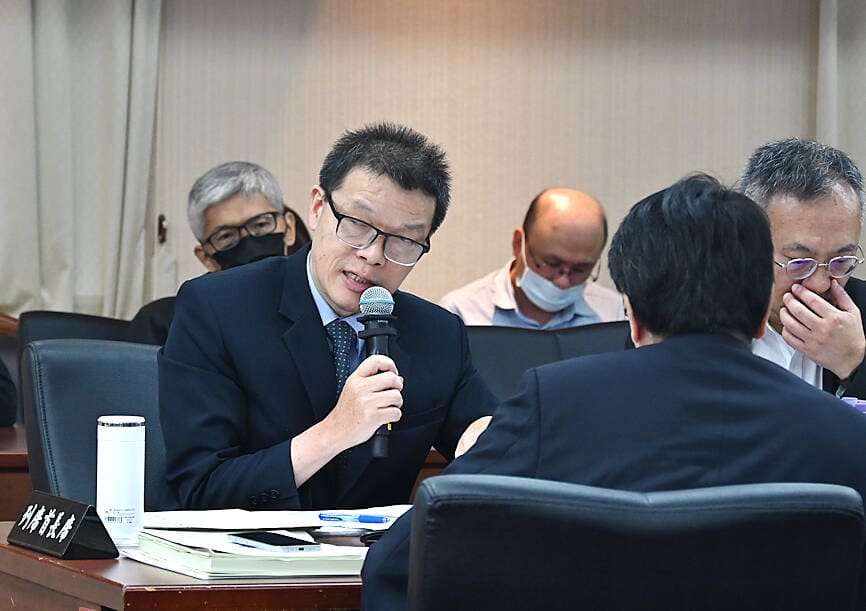
Minister of Digital Affairs Lin Yi-ching said SpaceX has shown limited enthusiasm for Taiwan's market. The company reportedly views Taiwan's commercial opportunity as constrained, given that 4G and 5G networks already cover 99.9 percent of the population. Lin acknowledged uncertainty about whether this represents SpaceX's genuine assessment or a negotiating position.
The ministry is attempting further discussions with the company, though final approval authority rests with the National Communications Commission. Lin confirmed that national security and telecommunications resilience concerns fall within his ministry's remit.
Industry Group Calls for Safeguards
The Taiwan Communications Society issued a statement supporting the introduction of LEO satellite services but cautioning against regulatory changes that compromise oversight. The group warned that relaxing ownership and shareholding requirements without establishing mechanisms for national security review, local operations, data governance, lawful interception, fraud prevention, cybersecurity, and market exit protocols would increase long-term governance risks.
Society chairperson Wang Wei-ching emphasized that market access must not proceed without ensuring regular government supervision and intervention capability. She pointed out that while satellite services can operate across borders, corporate accountability cannot be offshored.
Wang cited Japan's approach, where mobile operators KDDI, NTT DoCoMo, and Softbank launched satellite direct-to-device services in partnership with Starlink, integrating satellite capacity into local telecommunications and public safety systems. The society recommended that foreign satellite operators entering Taiwan establish legal entities with substantive local operations and the ability to fulfill obligations.
Regulatory Framework Still Under Construction
The society urged that operators involved in satellite direct-to-device services or using Taiwan's mobile spectrum, numbering resources, or core network infrastructure should partner with licensed local telecommunications operators. It also called for domestic ground stations, gateways, or equivalent regulatory nodes.
The proposed amendments represent a significant shift in Taiwan's telecommunications policy, balancing the technical benefits of satellite connectivity against sovereignty and oversight concerns. The bill must pass full legislative review before taking effect, and the National Communications Commission would need to develop detailed implementation guidelines for the new exemption framework.
Taiwan's approach will be closely watched across Asia, where governments are weighing similar trade-offs between attracting advanced satellite services and maintaining regulatory control over critical communications infrastructure. The island's strategic position and security environment add complexity to decisions that in other markets might be purely commercial.
RELATED STORIES
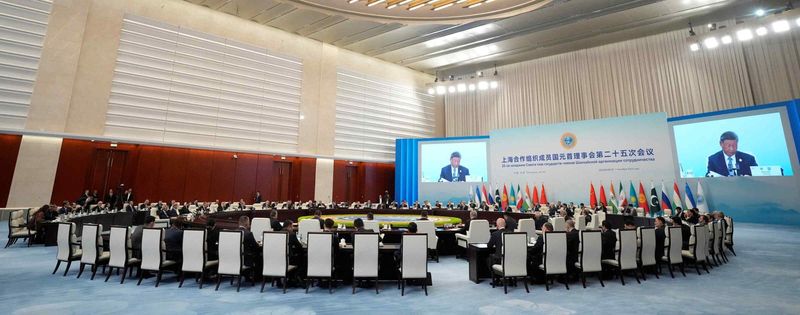
Eurasian Security Bloc Convenes as Shein Prices Hong Kong IPO
Cheng Wei-Lun · 3 min
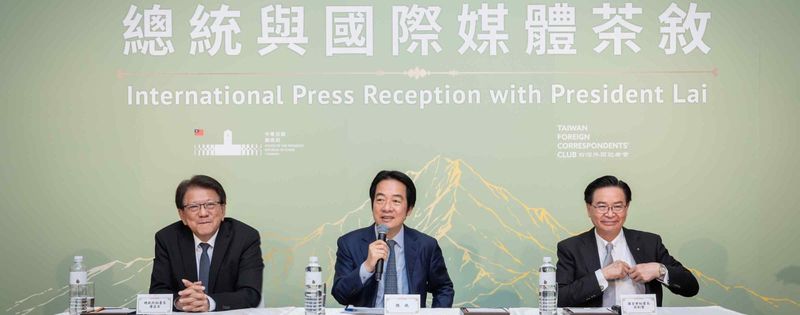
Taiwan's National Security Council Expands Role in Defense Strategy
Cheng Wei-Lun · 3 min

Taiwan Consumer Confidence Falls Amid Record Growth Forecasts
Cheng Wei-Lun · 2 min

Taiwan Suppliers Face Delivery Delays as Beijing Slows Critical Materials Clearances
Cheng Wei-Lun · 3 min
Spot something wrong? Email editor@briefasia.com. We log every correction publicly.