Asia · Business
Taiwan Growth Forecast Climbs Above 10% on AI Chip Surge
Private research institute expects GDP to exceed double digits in 2026, surpassing government estimates as chip demand drives record expansion
KEY TAKEAWAYS
- ·Taiwan Institute of Economic Research will release a 2026 GDP forecast exceeding 10 percent, up from its April estimate of 7.56 percent, driven by AI semiconductor demand.
- ·Advanced chip packaging lines and GPU production are operating at full capacity, with Taiwan Semiconductor Manufacturing Co facing extended lead times through 2026.
- ·The government plans to train 500,000 AI specialists by 2040 to expand Taiwan's role beyond hardware into AI-enabled services across industries.
Double-Digit Growth on the Horizon
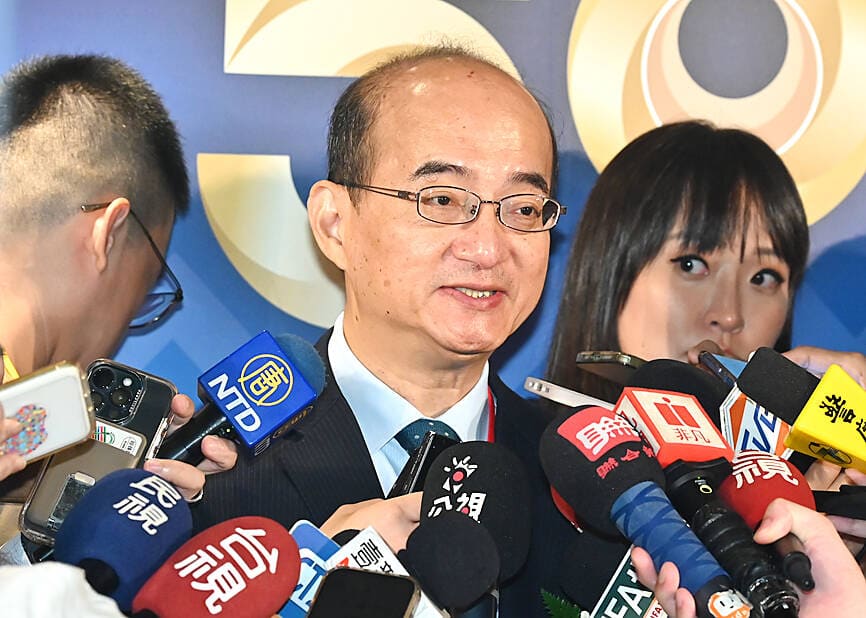
Taiwan's economic expansion is accelerating beyond earlier projections, with the Taiwan Institute of Economic Research set to release a forecast exceeding 10 percent GDP growth for 2026. President Chang Chien-yi told reporters the upgrade reflects sustained momentum from AI-related semiconductor exports, a sector now running at full production capacity.
The institute last revised its outlook in April, raising the 2026 estimate to 7.56 percent from an initial January forecast. That 3.51 percentage-point jump already signaled confidence in the technology cycle, but recent order books have prompted a further reassessment. An official update is scheduled for release later this week.
Taiwan's statistics agency projected 9.64 percent growth in May, while Academia Sinica lifted its own estimate to 10.16 percent last week, marking the highest among major domestic forecasters. The convergence around double-digit expansion underscores the breadth of demand for Taiwan's advanced packaging and fabrication services.
Capacity Constraints Signal Strength
Graphics processing units and tensor processing units remain in tight supply, with foundries operating near theoretical limits. Advanced packaging lines, including chip-on-wafer-on-substrate configurations, face extended lead times as hyperscale cloud providers and AI infrastructure builders compete for allocation.
Chang noted that assembly and integration services are seeing parallel strain. Taiwan Semiconductor Manufacturing Co's most sophisticated packaging nodes are sold out quarters in advance, a dynamic that has persisted since late 2024 and shows no sign of easing.
"Business opportunities created by AI will continue," Chang said, projecting the trend through 2028. He expects robust growth to carry into 2027, supported by multi-year capital expenditure commitments from global technology firms.
Market Volatility and Structural Demand
Recent equity-market turbulence has raised questions about valuation and capital discipline. A selloff in chip stocks last week pushed a key semiconductor index into bear-market territory, down 20 percent from its peak. Concerns center on competitive pressure from lower-cost AI models and whether infrastructure spending will deliver expected returns.
Chang acknowledged that some startups may fail but argued the underlying industry trajectory remains intact. The emergence of cost-effective AI systems has not diminished demand for cutting-edge silicon; instead, it has broadened the addressable market and accelerated deployment timelines.
Taiwan's position in the supply chain insulates it from software-layer disruption. Foundries and packaging specialists serve customers across the AI stack, from hyperscalers investing in proprietary accelerators to established chip designers scaling existing architectures.
Policy Push for AI Services
Economic Affairs Minister Kung Ming-hsin outlined plans to expand Taiwan's role beyond hardware manufacturing. The government aims to train 500,000 AI specialists by 2040, embedding the technology across industries to strengthen the island's competitive position.
Kung emphasized that Taiwan can provide not only chips but also AI-enabled services, diversifying revenue streams and capturing more value from the technology transition. The workforce initiative targets sectors including finance, healthcare, manufacturing, and logistics, areas where automation and predictive analytics promise productivity gains.
Investment in talent development reflects awareness that hardware leadership alone may not sustain long-term growth. As AI commoditizes certain chip functions and design tools lower barriers to entry, Taiwan's semiconductor ecosystem must move up the value chain to maintain margin and strategic relevance.
Regional Context and Capital Flows
Taiwan's forecast stands out in a regional landscape marked by uneven post-pandemic recoveries. Export-driven economies across Asia have benefited from technology spending, but few match Taiwan's concentration in leading-edge nodes and packaging capabilities.
The island's GDP trajectory also highlights the geographic distribution of AI infrastructure investment. North American and European cloud operators are placing orders years in advance, locking in capacity and underwriting expansion at Taiwanese fabs and assembly plants.
That capital flow has macroeconomic implications. Foreign exchange reserves have climbed, the current account surplus has widened, and corporate profits are funding domestic capital expenditure at record levels. Policymakers face the challenge of managing currency appreciation and ensuring gains reach beyond the semiconductor sector.
The 2026 growth outlook, if realized, would mark Taiwan's strongest annual expansion in decades and cement its position as the critical node in global AI supply chains. Whether that momentum extends beyond 2028 will depend on the pace of architectural innovation, the economics of next-generation packaging, and competition from fabs in the United States, Japan, and Europe now coming online with government support.
RELATED STORIES
Taiwan Indicts Nvidia Manager in Chip-Smuggling Investigation
Cheng Wei-Lun · 4 min

Taiwan Consumer Confidence Falls Amid Record Growth Forecasts
Cheng Wei-Lun · 2 min
Eurasian Security Bloc Convenes as Shein Prices Hong Kong IPO
Cheng Wei-Lun · 3 min
Manila's Chip Industry Still Stalled in Assembly While Taipei Built Fabs
Priyanka V. Rao · 4 min
Spot something wrong? Email editor@briefasia.com. We log every correction publicly.