Asia · Politics
Taiwan Urged to Build Drone Swarm Defense Against Chinese Threat
A senior U.S. diplomat advocates for mass drone deployment as Taiwan showcases non-Chinese supply chains at Tokyo aerospace expo
KEY TAKEAWAYS
- ·A U.S. official has called for Taiwan to deploy thousands of drones in a hornet's nest defense strategy to deter Chinese military action.
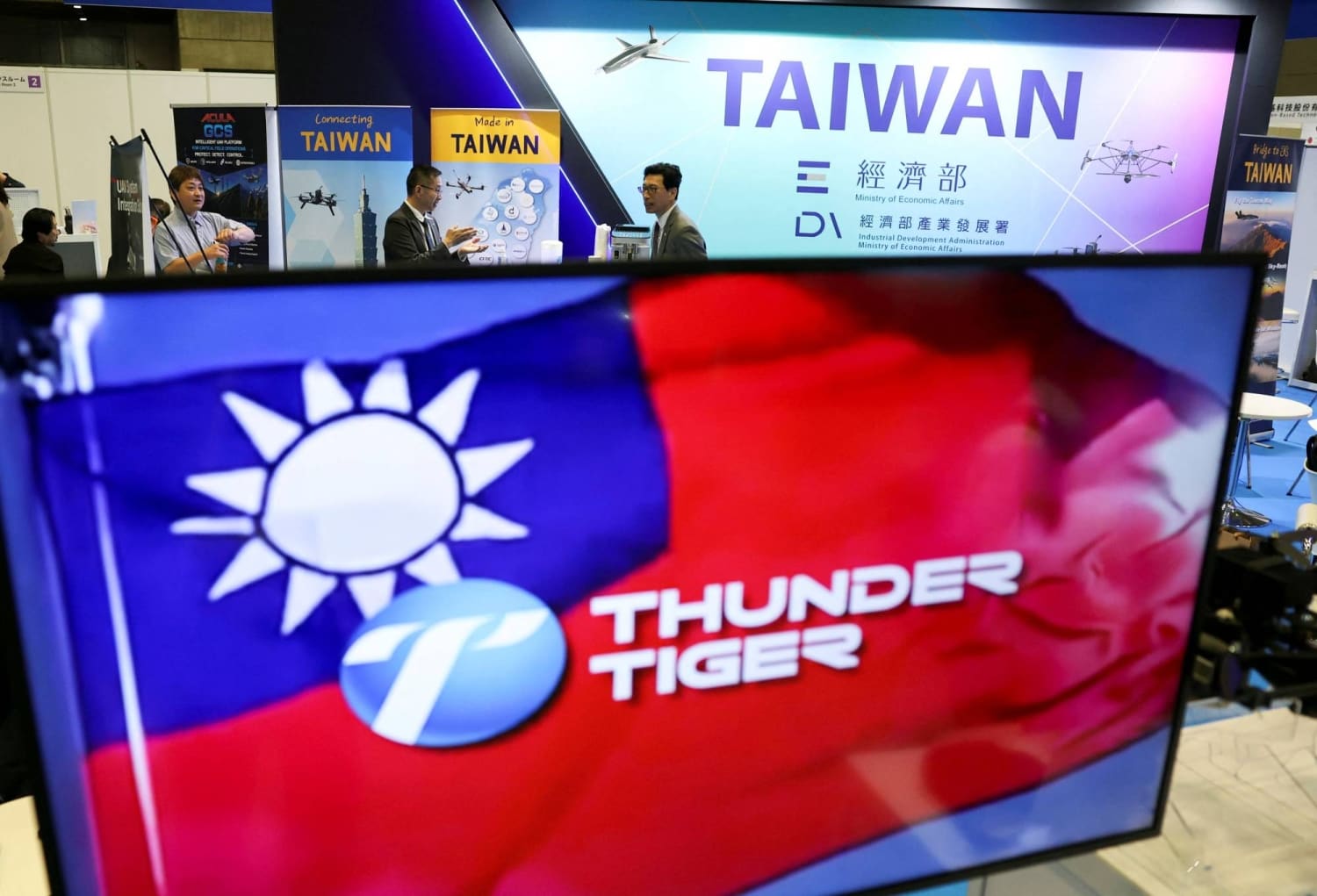
- ·Taiwan's aerospace companies showcased non-Chinese drone supply chains at Japan Drone 2026 in Chiba, emphasizing supply chain independence from Beijing.
- ·The drone swarm approach relies on overwhelming numbers of cost-effective platforms rather than sophisticated individual systems to complicate aggressor operations.
A New Defense Doctrine
A senior U.S. diplomat has recommended that Taiwan adopt a "hornet's nest" strategy of mass drone deployment to strengthen its defense posture amid rising cross-strait tensions. The proposal envisions thousands of unmanned aerial systems capable of swarming potential aggressors, creating a formidable barrier that would complicate any military action.
The concept marks a shift in thinking about asymmetric defense for the self-governed island, which faces persistent military pressure from Beijing. Rather than relying solely on conventional weapons systems, the drone swarm approach would leverage cost-effective platforms that can be produced at scale and operated with minimal training.
Showcasing Supply Chain Independence
Taiwan's aerospace and technology sector displayed its capabilities at Japan Drone 2026 and International Advanced Air Mobility Expo in Chiba this June. The Taiwan Pavilion featured companies specializing in drone manufacturing and components, with a deliberate emphasis on supply chains that bypass Chinese suppliers.
The exhibition timing coincides with growing regional concern over Beijing's military exercises around Taiwan and increasing pressure on the island's air defense identification zone. Japanese and U.S. officials attended the event, signaling trilateral coordination on defense technology and industrial cooperation.
Taiwan's drone manufacturers have accelerated development programs over the past two years, focusing on surveillance, reconnaissance, and potentially armed platforms. Several companies at the expo demonstrated quadcopters and fixed-wing designs intended for both civilian and military applications.
Regional Defense Technology Cooperation
The push for drone-based defense aligns with broader efforts across Indo-Pacific democracies to develop distributed, resilient military capabilities that can withstand initial strikes and continue operating. Japan has similarly expanded its unmanned systems programs, while South Korea and Australia have invested in counter-drone technologies and swarm coordination systems.
Taiwan's defense ministry has increased procurement budgets for unmanned platforms, though specific figures remain classified. Industry observers note that local manufacturers have formed partnerships with firms in the United States, Japan, and Europe to access advanced sensors, communication systems, and artificial intelligence software for autonomous operations.
The hornet's nest concept relies on overwhelming numbers rather than individual platform sophistication. Hundreds or thousands of relatively simple drones could saturate enemy air defenses, provide real-time battlefield intelligence, and potentially deliver munitions against high-value targets such as amphibious vessels or command posts.
Operational and Industrial Challenges
Implementing such a strategy presents logistical hurdles. Taiwan would need robust command and control infrastructure to coordinate large drone formations, electronic warfare capabilities to protect communications links, and trained personnel to manage complex operations. The island's rugged terrain and dense urban areas offer both advantages and complications for drone deployment.
Supply chain resilience remains a priority. While Taiwan produces advanced semiconductors that power drone systems, the island imports many components for airframes, batteries, and propulsion. Diversifying suppliers away from mainland China reduces vulnerability to embargo or sabotage but increases costs and complicates logistics.
The U.S. diplomatic push for drone proliferation reflects Washington's recognition that Taiwan must adopt creative defense solutions given the conventional force imbalance across the strait. American security assistance has increasingly focused on mobile, survivable systems rather than expensive platforms that could be destroyed in the opening hours of conflict.
Regional analysts note that drone swarms would not replace traditional air and naval forces but could buy critical time for reinforcements and international response. The psychological impact of facing thousands of unmanned platforms could also factor into Beijing's calculations about the costs of military action.
Taiwan's defense planners continue evaluating how drone technology fits within broader military modernization efforts, including coastal defense systems, precision strike missiles, and reserve force expansion. The coming months will reveal whether Taipei commits significant resources to the hornet's nest vision or pursues a more balanced procurement strategy.
RELATED STORIES

Taiwan Indicts Nvidia Manager in Chip-Smuggling Investigation
Cheng Wei-Lun · 4 min

Itochu and Taiwan IT Leader Back Taiwanese Chip Firms' Kyushu Push
Cheng Wei-Lun · 3 min
Tokyo Summit Pushes Trilateral Tech Alliance Among Taiwan, Japan, and US
Cheng Wei-Lun · 3 min
Eurasian Security Bloc Convenes as Shein Prices Hong Kong IPO
Cheng Wei-Lun · 3 min
Spot something wrong? Email editor@briefasia.com. We log every correction publicly.